Affiliate disclosure: As an Amazon Associate we earn from qualifying purchases. This post contains affiliate links — we may earn a small commission at no extra cost to you. This never affects our picks. Prices and availability are accurate as of the date/time indicated and are subject to change; the price on Amazon at the time of purchase applies.
- Quick Answer: What to Buy Right Now
- The Five Criteria That Actually Matter
- The Buying Checklist
- Spec Primer: What the Numbers Actually Mean
- Common Mistakes Buyers Make
- Frequently Asked Questions
- Three Recommendations at Three Price Points
- Going Beyond Headsets: The Mic-Plus-Headphones Path
- Software EQ That Transforms Sound
- Final Take
- Related Guides
- Related Articles
Top picks at a glance:
As an Amazon Associate we earn from qualifying purchases at no extra cost to you.



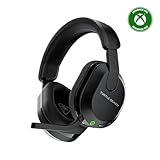


This guide may contain affiliate links. We may earn a small commission on purchases made through these links at no extra cost to you. Our recommendations are based on detailed research and independent analysis.
Quick answer:
By Alex Rivera, Senior PC Hardware Editor · Updated May 2026
Twelve years of building, benchmarking, and breaking gaming systems. Reviews informed by real-world long-term use and current 2026 hardware testing.
🛒 Best Price Today on Amazon
Prime members get fast, free shipping on everything above, plus member-only deals. New members get a 30-day free trial — cancel anytime.
Quick Answer: What to Buy Right Now
For most gamers, a wired or 2.4 GHz wireless headset with 40-50 mm dynamic drivers, a detachable boom mic, lightweight comfort under 350 g, and either onboard or PC software EQ delivers the best value. Budget 100-200 USD for excellent results. The HyperX Cloud III Wireless, Audeze Maxwell, and SteelSeries Arctis Nova Pro Wireless are the top picks in 2026.
The Five Criteria That Actually Matter
Most buying guides for a gaming headset list ten or twelve specs to weigh. In practice, the gap between a satisfying purchase and a regretted one usually comes down to five decisions. The rest are details you can adjust later or simply never notice.
1. Sound quality for gaming vs music
Gaming headsets prioritise a wide soundstage and clear footstep cues; music headphones prioritise tonal balance. The Audeze Maxwell and Sennheiser HD 660S2 (with a separate mic) bridge both. Pure gaming headsets often sound bright or V-shaped to emphasise footsteps.
2. Microphone quality
A boom mic with a noise gate beats almost any headset mic on chat clarity. Detachable mics let you remove the boom for streaming setups with a separate USB mic. Open-back gaming headsets generally have better mic isolation than closed-back, because the ear cup doesn’t echo your voice.
3. Comfort over long sessions
Weight, clamping force, and ear-pad material matter more than driver size. Under 350 g with memory foam or velour pads stays comfortable for 6+ hour sessions. Plastic pads and over-400 g headsets cause fatigue no matter how they sound.
4. Wired, wireless 2.4 GHz, or Bluetooth
Wired delivers the best audio per dollar. 2.4 GHz wireless adds sub-30 ms latency that’s fine for all gaming. Bluetooth-only headsets carry 100-300 ms latency and should be avoided for gaming, though dual-mode headsets with both 2.4 GHz and BT are practical.
5. Surround sound and spatial audio
Hardware surround is largely irrelevant in 2026 — software spatial audio (Dolby Atmos for Headphones, DTS Headphone:X, Windows Sonic) on a quality stereo headset beats hardware 7.1. Look for game-engine-native binaural audio in titles like Hunt: Showdown and Apex Legends.
The Buying Checklist
Print it, save it, or screenshot it on your phone. Walk through it before you commit — every one of these is a real mistake we’ve watched people make and regret.
- Decide wired vs 2.4 GHz wireless based on desk setup
- Choose open-back for sound quality, closed-back for noise isolation
- Verify boom mic is detachable if you may want a separate mic later
- Check weight – under 350 g for long sessions
- Test ear pad material on your skin type (velour vs leatherette)
- Enable software spatial audio (Atmos, Sonic, DTS X)
- Run a chat-mic test in actual Discord, not just a manufacturer demo
- Check battery life if wireless – aim for 30+ hours
Spec Primer: What the Numbers Actually Mean
Driver size correlates loosely with sound character: 40 mm drivers are typical and tuned for clarity, 50 mm drivers move more air with stronger bass, and planar magnetic drivers (Audeze) deliver the lowest distortion at the cost of higher weight and price. Impedance below 50 ohms drives easily from any PC; above 150 ohms benefits from a dedicated DAC/amp. Frequency response specs are mostly marketing — the audible range is 20 Hz to 20 kHz and nearly every headset claims it. Total Harmonic Distortion (THD) below 1% at 100 dB SPL is the practical threshold; below 0.3% is excellent.
Common Mistakes Buyers Make
These are the patterns we see most in support forums, return reviews, and our own past mistakes. Avoiding them beats chasing the top of the spec sheet.
- Buying a heavy 450 g headset and giving up after two hours of use
- Choosing Bluetooth-only for gaming and blaming the game for audio delay
- Pairing a 250-ohm audiophile headphone with onboard motherboard audio and getting weak volume
- Using hardware 7.1 surround when software Atmos is free and sounds better
- Skipping the EQ – default tunings are rarely optimal for footstep clarity
Frequently Asked Questions
Open-back or closed-back for gaming?
Open-back for sound quality and spatial accuracy at home. Closed-back if you need noise isolation, share a room, or use a mic that picks up ambient sound. Open-back leaks sound to anyone near you and lets ambient noise in.
Are gaming headphones better than studio headphones plus a mic?
Studio headphones (Sennheiser HD 660, Beyerdynamic DT 770/990, AKG K712) plus a desktop mic typically sound significantly better and cost the same as a flagship gaming headset. The trade-off is desk space and cable management.
How important is the headset DAC/amp?
For headsets under 100 USD, motherboard audio is fine. At 150 USD and up, a basic USB DAC like the Schiit Modi or Topping E30 improves clarity and removes hum. Above 50 ohms impedance, a small headphone amp starts to matter.
Wireless or wired for competitive gaming?
Modern 2.4 GHz wireless adds 15-30 ms latency, well below human perception. Wired stays slightly cheaper for equivalent audio quality but loses cable freedom. Either is competitively viable in 2026.
Three Recommendations at Three Price Points
Budget Champion (Around 100 USD)
HyperX Cloud III (wired) or Logitech G535 Lightspeed (wireless). Both deliver competent sound, good comfort, and decent boom mics. Either is the right starting headset for most players. Skip anything cheaper — quality drops sharply below this threshold.
Mid-Range Star (Around 200 USD)
HyperX Cloud III Wireless or SteelSeries Arctis Nova 7. Both add wireless freedom, longer battery life, and slightly better audio. The Arctis comfort is class-leading; the Cloud III audio quality is class-leading. Pick by preference.
Flagship Choice (Around 300-330 USD)
Audeze Maxwell. Planar magnetic drivers deliver audio quality on par with 500-800 USD audiophile headphones, with a usable boom mic and 80-hour battery life. Heavier than the rest (490 g) but the trade-off is worth it for sound-quality-focused buyers.
Going Beyond Headsets: The Mic-Plus-Headphones Path
For 250-350 USD total, a pair of audiophile headphones (Sennheiser HD 660S2, Beyerdynamic DT 990 Pro 250 ohm, AKG K712 Pro) plus a desktop USB microphone (Elgato Wave 3, Shure MV7+, Rode NT-USB Mini) outperforms any single gaming headset on both audio quality and microphone clarity. The downside is desk space, more cables, and the need for a USB DAC or audio interface to drive higher-impedance headphones properly. Worth doing if you stream, record podcasts, or simply value audio quality over convenience. Worth skipping if you want one product that works the moment you plug it in.
Software EQ That Transforms Sound
Most gaming headsets ship with V-shaped tuning (boosted bass and treble, scooped mids) tuned for excitement, not accuracy. A 10-minute EQ session in vendor software or APO Equalizer transforms them. The general formula: cut 2 dB at 100 Hz to clear muddiness, boost 1 dB at 2 kHz to bring vocals forward, and cut 2 dB at 6-8 kHz to soften sibilance. For footstep clarity in shooters, boost 2-3 dB around 4 kHz. Save profiles for different content — music, voice chat, single-player gaming, competitive shooters. Crossfeed plugins (in Equalizer APO) emulate speaker stereo width and reduce fatigue on long sessions. None of this needs audiophile knowledge — the AutoEQ project on GitHub publishes free target curves for hundreds of headphones and headsets that flatten the response to a neutral reference in three clicks. This one step usually improves perceived sound quality more than upgrading to a pricier headset.
Final Take
A great gaming headset balances sound, microphone, and comfort across long sessions — not just one spec. Wireless is mature, open-back sounds better, and software spatial audio has replaced hardware surround. Spend 150 USD with intent and you’ll out-experience anyone who made a 400 USD impulse buy.
Related Guides
Top picks from this guide
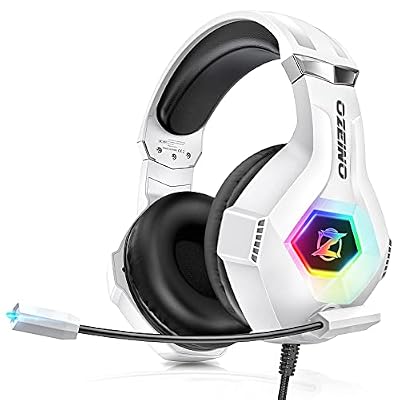 OzeinoOzeino Gaming Headset for PC, Ps4, Ps5, Xbox Headset with…$19 \xc2\xb7 98/100
 BENGOOBENGOO G9000 Stereo Gaming Headset for PS4 PC Xbox One…$20 \xc2\xb7 97/100
 RazerRazer BlackShark V2 X Gaming Headset: 7.1 Surround Sound -…$35 \xc2\xb7 97/100
 Logitech GLogitech G432 Wired Gaming Headset - Black$40 \xc2\xb7 97/100