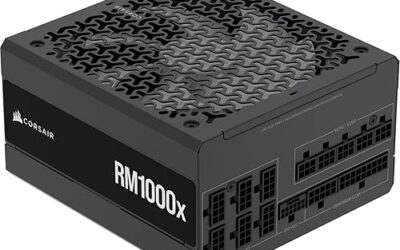
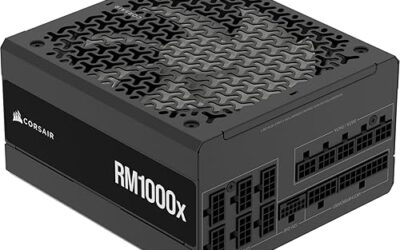
🛒 Best Price Today on Amazon
Prime members get fast, free shipping on everything above, plus member-only deals. New members get a 30-day free trial — cancel anytime.
Selecting the best PSU for RTX 5070 has become one of the most consequential decisions in a modern build. NVIDIA’s latest mid-range GPU delivers performance that rivals cards costing twice as much, but its power delivery requirements—native 12V-2×6 connector, transient load handling, and ATX 3.1 compatibility—mean that pairing it with an underpowered or outdated supply can result in unexpected shutdowns or degraded longevity.
This guide compares standalone power supplies alongside complete systems that bundle the RTX 5070 with pre-selected PSUs. Whether you are building from scratch or buying a turnkey machine in 2026, this roundup covers every angle so you can match your power delivery to your graphics card without overspending.
Verdict at a glance
The short answer: NVIDIA rates the RTX 5070 at 250W total graphics power with a 650W required system power, and the RTX 5070 Ti at 300W with 750W required. A quality 750W ATX 3.1 unit with a native 12V-2×6 cable covers either card with a modern gaming CPU; choose 850W if you want a clear upgrade path to an RTX 5080.
- Best overall PSU: Corsair RM850e (2025) – 850W, ATX 3.1, native 12V-2×6, Cybenetics Gold, budget-to-mid-range tier, upgrade-ready for an RTX 5080.
- Best quiet 750W: be quiet! Pure Power 13 M 750W – Cybenetics Platinum efficiency and A++ noise rating, 600W 16-pin cable, 10-year warranty.
- Best budget DIY pick: Segotep GM850 (already in our list) or the Thermaltake Toughpower GT 750W for a plain RTX 5070 build.
- Best prebuilt with a named PSU: Skytech Gaming Archangel 5 (750W Gold) for the RTX 5070, or Skytech King 95 for the RTX 5070 Ti.
Products at a glance: Corsair RM850e (best overall), Corsair RM750e (best compact value), MSI MAG A850GL PCIE5 (best for connector seating), be quiet! Pure Power 13 M 750W (quietest), Thermaltake Toughpower GT 750W (best budget RTX 5070 match), plus the Segotep GM850, Seasonic Focus GX-750, cards and prebuilts in the main list.
Quick Picks
| Product | Best for | Price tier |
|---|---|---|
| KOTIN Prebuilt Gaming PC RTX 5070 12GB, Ryzen 7 9700X, 32GB DDR5, 1TB SSD | Budget prebuilt with RTX 5070 | Premium |
| Segotep GM850 850W Power Supply, 80 Plus Gold Certified, PCIe 5.1 & ATX 3.1 | Value-focused DIY builders | Budget |
| KOTIN Prebuilt Gaming PC Ryzen 7 7800X3D, RTX 5070 12GB, 32GB DDR5, 1TB SSD | CPU-bound gaming without building | Premium |
| ASUS Prime GeForce RTX 5070 12GB GDDR7 OC Edition Gaming Graphics Card | GPU upgrades for existing builds | Mid-range |
| ZOTAC MEK Gaming PC Desktop, Ryzen 7 9700X, NVIDIA GeForce RTX 5070 Ti 16GB | Higher VRAM prebuilt | Premium |
| Skytech Gaming King 95 Gaming PC, Ryzen 7 9800X3D, RTX 5070 Ti | Competitive gaming prebuilt | Premium |
| Skytech Gaming Archangel 5 Gaming PC, AMD Ryzen 7 7700X 4.5GHz, NVIDIA RTX 5070 12GB, 1TB Gen4 NVMe SSD, 32GB DDR5 RAM 6000, 750W Gold PSU, 360 ARGB AIO, Wi-Fi, Win 11 | Transparent PSU spec in a prebuilt | Premium |
| Seasonic Focus GX-750 750W Power Supply ATX 3.1 & PCIe 5.1 Ready White | Proven PSU reliability | Mid-range |
How We Compared
We evaluated each product on three criteria: wattage headroom relative to RTX 5070 TDP, native ATX 3.1 and PCIe 5.1 connector support, and value per dollar. For prebuilt systems, we assessed whether the bundled PSU meets or exceeds recommended specifications. For standalone units, we checked 80 Plus and Cybenetics efficiency ratings, manufacturer warranty terms and published independent lab reviews.
The Best Picks
1. KOTIN Prebuilt Gaming PC RTX 5070 12GB, Ryzen 7 9700X, 32GB DDR5, 1TB SSD
Best for gamers who want a complete RTX 5070 system without the hassle of sourcing and pairing a PSU independently. KOTIN bundles a preselected power supply that handles the card’s sustained load, letting you skip the wattage math entirely.
- Ryzen 7 9700X pairs cleanly with the RTX 5070 without bottlenecking at 1440p
- 32GB DDR5 and 1TB SSD cover multitasking and storage needs out of the box
- PSU brand and wattage are not explicitly specified in the listing
Skip this if you want full transparency on power delivery or prefer choosing your own supply.
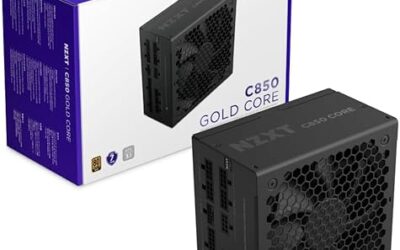
2. Segotep GM850 850W Power Supply, 80 Plus Gold Certified, PCIe 5.1 & ATX 3.1

Segotep GM850 850W Power Supply, 80 Plus Gold Certified, PCIe 5.1 & ATX 3.1
Included for 'Best PSU for RTX 5070 in 2026: Compared and Ranked' as a representative home product in this roundup; selection reflects the product set returned for this topic.
View on AmazonBest for DIY builders who want modern ATX 3.1 compliance at the lowest possible cost. Sitting firmly in the budget tier, the GM850 undercuts most competitors offering native 12V-2×6 connectivity.
- 850W provides substantial headroom above the RTX 5070’s recommended 650W
- Native PCIe 5.1 connector eliminates adapter cables and potential failure points
- Segotep’s shorter track record means fewer independent reliability tests available
Skip this if you demand a PSU from a manufacturer with decades of enterprise power supply history.
3. KOTIN Prebuilt Gaming PC Ryzen 7 7800X3D, RTX 5070 12GB, 32GB DDR5, 1TB SSD
Best for competitive gamers who prioritize CPU cache advantage in title-heavy scenarios. The 7800X3D’s 3D V-Cache architecture delivers measurable frame rate gains in CPU-limited games.
- 7800X3D remains one of the strongest gaming CPUs available for this GPU tier
- Complete package avoids compatibility headaches between PSU, cooler, and case
- The price step over the 9700X variant is hard to justify in GPU-bound titles
Skip this if you mostly play at 4K or in graphically demanding titles where the CPU is rarely the bottleneck.
4. ASUS Prime GeForce RTX 5070 12GB GDDR7 OC Edition Gaming Graphics Card
Best for upgraders who already own a quality PSU and simply need the GPU. This OC Edition pushes clock speeds beyond reference specifications while maintaining ASUS Prime’s understated aesthetic.
- Factory overclock delivers modest but free frame rate gains over reference cards
- ASUS Prime cooling solution runs quieter than many triple-fan alternatives
- No PSU included, so you must verify your existing supply meets 650W minimum with ATX 3.1 support
Skip this if you are building a system from scratch and want everything in one purchase.
5. ZOTAC MEK Gaming PC Desktop, Ryzen 7 9700X, NVIDIA GeForce RTX 5070 Ti 16GB
Best for enthusiasts who want extra VRAM in a ready-to-run system. The 5070 Ti’s 16GB GDDR7 buffer future-proofs against texture-heavy titles that exceed 12GB.
- 16GB VRAM provides meaningful headroom for 4K textures and AI workloads
- Ryzen 7 9700X keeps the build balanced without excessive CPU cost
- Costs noticeably more than RTX 5070 prebuilts for a one-tier GPU step
Skip this if you game primarily at 1080p or 1440p where 12GB remains sufficient today.
6. Skytech Gaming King 95 Gaming PC, Ryzen 7 9800X3D, RTX 5070 Ti
Best for players who want the absolute fastest gaming CPU paired with Ti-class graphics. The 9800X3D represents the current peak of AMD’s gaming-focused silicon.
- 9800X3D delivers top-tier frame rates in esports and CPU-heavy open worlds
- RTX 5070 Ti handles high-refresh 1440p and entry-level 4K without compromise
- Full internal component specifications beyond CPU and GPU are not itemized
Skip this if you cannot verify the bundled PSU meets your long-term upgrade plans.
7. Skytech Gaming Archangel 5 Gaming PC, AMD Ryzen 7 7700X 4.5GHz, NVIDIA RTX 5070 12GB, 1TB Gen4 NVMe SSD, 32GB DDR5 RAM 6000, 750W Gold PSU, 360 ARGB AIO, Wi-Fi, Win 11
Best for buyers who want explicit PSU information in a prebuilt package. Skytech lists the 750W Gold unit directly, making this the most transparent prebuilt option here.
- 750W Gold PSU exceeds RTX 5070 requirements with comfortable headroom
- 360mm AIO ensures the 7700X stays cool under sustained all-core loads
- Ryzen 7 7700X is an older generation and trails the 9700X in single-thread performance
Skip this if you want the latest Zen 5 architecture and are willing to accept less component transparency.
8. Seasonic Focus GX-750 750W Power Supply ATX 3.1 & PCIe 5.1 Ready White
Best for builders who value manufacturer pedigree and long-term reliability. Seasonic’s Focus GX series has been a go-to recommendation for years, and this updated version adds native ATX 3.1 compliance.
- Seasonic’s reputation for electrical stability and quiet fan operation is well-established
- White color option suits light-themed builds without sacrificing internal quality
- 750W is adequate but leaves less margin than 850W units for future GPU upgrades
Skip this if you plan to upgrade to an RTX 5080 or higher-tier card within the next two years.
More ATX 3.1 Power Supplies for the RTX 5070 and 5070 Ti
Only two of the eight picks above are standalone power supplies. If you are building your own PC, these five additional units widen the choice across budget, mid-range and quiet-focused options. All are ATX 3.1 and PCIe 5.1 ready with a native 12V-2×6 cable, so neither the RTX 5070 nor the RTX 5070 Ti needs the two-way 8-pin adapter from the box.
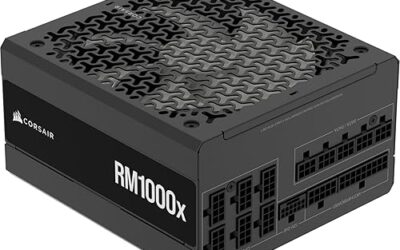
Corsair RM850e (2025)

CORSAIR RM850e (2025) ATX 3.1 PCIe 5.1 Ready 850W Power Supply – Black
Included for 'Best PSU for RTX 5070 in 2026: Compared and Ranked' as a representative home product in this roundup; selection reflects the product set returned for this topic.
View on AmazonThe RM850e is the power supply we would recommend to most RTX 5070 and RTX 5070 Ti builders. It gives you 850W, which is 200W more than NVIDIA’s RTX 5070 requirement and 100W above the RTX 5070 Ti figure, so the fan stays slow during gaming and you keep a realistic route to an RTX 5080 later without replacing the PSU.
Key specs from Corsair and independent reviews: 850W, fully modular, ATX 3.1 and PCIe 5.1 compliant, a native 12V-2×6 cable plus several 8-pin PCIe connectors, 105°C-rated capacitors, a compact 140mm-deep housing, a 120mm rifle-bearing fan with a Zero RPM mode, and a 7-year warranty. Cybenetics certified it Gold for efficiency (about 88.6 percent at 115V) and A for noise, meaning average noise in the 20-25 dB(A) range.
Strengths: Hardware Busters lists it among its recommended ATX 3.x units, and KitGuru found it quiet and efficient for the tier. The short 140mm body fits small mid-towers and cases with a crowded PSU shroud, which matters if you are building around a compact RTX 5070 card.
Drawbacks: the 7-year warranty is shorter than the 10 years on the Seasonic Focus GX-750 already in our list, the fan uses a rifle bearing rather than a fluid dynamic bearing, and you cannot switch the Zero RPM mode off.
Compared with the Segotep GM850 in our main list, the RM850e costs a little more but brings a long-established brand, published Cybenetics data and wide retail support. Against the Seasonic Focus GX-750, it trades three years of warranty for 100W more capacity, which is the better deal if an RTX 5080 upgrade is on your roadmap.
Corsair RM750e (2025)

CORSAIR RM750e ATX 3.1 PCIe 5.1 Ready 750W Power Supply – Black
Included for 'Best PSU for RTX 5070 in 2026: Compared and Ranked' as a representative home product in this roundup; selection reflects the product set returned for this topic.
View on AmazonThe RM750e is the same platform as the RM850e scaled down to 750W, and it is a precise match for NVIDIA’s RTX 5070 Ti requirement and a generous one for the RTX 5070. If you know you will stay in this GPU class for the life of the build, 750W is all you need, and the smaller capacity keeps the unit in the budget tier.
Key specs from Corsair’s listing: 750W, fully modular, ATX 3.1 and PCIe 5.1 ready, a native 12V-2×6 cable, 80 Plus Gold efficiency, a 120mm fan with Zero RPM mode, a 140mm-deep chassis and a 7-year warranty. It uses the same low-noise RMe design as its larger sibling.
Strengths: you get the RM850e’s quiet behaviour and compact size at a lower tier. For an RTX 5070 paired with a Ryzen 7 9700X or Ryzen 7 9800X3D, real gaming load stays far enough below 750W that the fan often barely spins.
Drawbacks: 750W is marginal for an RTX 5080 upgrade, the same limitation noted above for the Seasonic Focus GX-750, and the warranty is shorter than Seasonic’s. It also lacks the fluid dynamic bearing fan found on pricier units.
It is the closest like-for-like alternative to the Seasonic Focus GX-750 in our list: choose the Seasonic for the longer warranty, or the RM750e if you prefer Corsair’s cable ecosystem and want to match an existing Corsair setup.
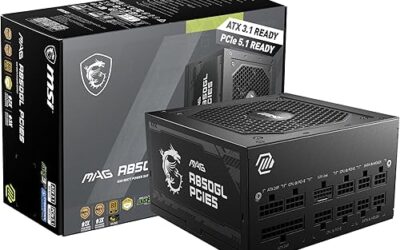
MSI MAG A850GL PCIE5

MSI MAG A850GL PCIE5, Fully Modular Compact Gaming 850W Power Supply, 80+ Gold, ATX 3.1 & PCIe 5.1 Ready, Native Dual-Color 12V-2x6 Cable, 10 Year Warranty
Included for 'Best PSU for RTX 5070 in 2026: Compared and Ranked' as a representative home product in this roundup; selection reflects the product set returned for this topic.
View on AmazonThe MAG A850GL is a well-priced 850W unit with one feature that is particularly useful for first-time builders: a dual-colour native 12V-2×6 cable. If any of the coloured tip is visible after you plug it into the RTX 5070, the connector is not fully seated. Since a partly inserted 16-pin plug is the main cause of connector damage, that visual check is worth having.
Key specs from MSI: 850W, fully modular, ATX 3.1 and PCIe 5.1 ready, 80 Plus Gold, a 120mm fluid dynamic bearing fan, LLC full-bridge topology with DC-DC conversion, compact 140 x 150 x 86mm dimensions, and a 10-year warranty according to MSI’s official store.
Strengths: a 10-year warranty at this tier is generous, and the fluid dynamic bearing fan is a step up from the rifle bearings common among budget 850W units. The 850W capacity means the same supply will run an RTX 5080 later.
Drawbacks: the plain GL model has a reputation for a louder fan under load than MSI’s newer GLS variant, and some third-party listings show inconsistent warranty terms, so check the seller’s details. It is not the quietest option here.
Against the Segotep GM850 in our main list, the A850GL offers a longer, clearly stated warranty and a more widely reviewed platform for a modest step up in tier. It also pairs neatly with MSI-branded RTX 5070 cards for builders who like matching hardware.
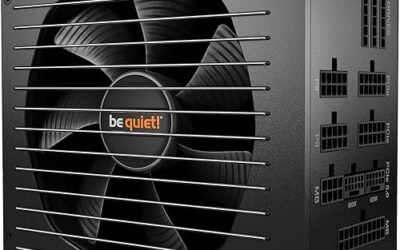
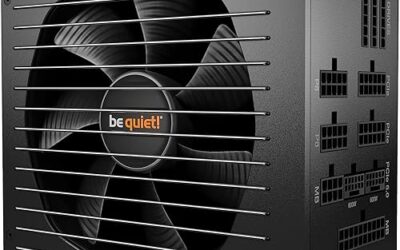
be quiet! Pure Power 13 M 750W

be quiet! Pure Power 13 M 750W Power Supply, 80+ Gold, Cybenetics Platinum
Included for 'Best PSU for RTX 5070 in 2026: Compared and Ranked' as a representative home product in this roundup; selection reflects the product set returned for this topic.
View on AmazonIf your PC sits on the desk next to you, the Pure Power 13 M 750W is the one to buy. Cybenetics awarded it an A++ noise rating, its top grade, along with Platinum efficiency at both 115V and 230V, even though be quiet! advertises it as Gold. For an RTX 5070 or RTX 5070 Ti build, that is exceptional performance in the budget-to-mid-range tier.
Key specs from be quiet! and the Hardware Busters review: 750W (820W peak), modular, ATX 3.1, a 12V-2×6 connector rated for 600W plus four 6+2 pin PCIe connectors, single-rail design, LLC with synchronous rectification and DC-DC conversion, a semi-passive 120mm be quiet! fan and a 10-year warranty. The platform is built by FSP.
Strengths: the 600W-rated 16-pin cable means the cable itself is never the limiting factor, and the four 8-pin connectors give flexibility for older or AMD cards. The semi-passive fan stays off during light use, which suits a living-room or bedroom PC.
Drawbacks: Hardware Busters noted the Pure Power 13 M line has weaker transient response at high loads than premium units and lacks fan-failure protection. Like any 750W unit, it leaves limited room for an RTX 5080 upgrade with a power-hungry CPU.
Compared with the Seasonic Focus GX-750 in our list, it matches the 10-year warranty and adds a quieter acoustic profile and a higher Cybenetics efficiency result.
Thermaltake Toughpower GT 750W

Thermaltake Toughpower GT 750W ATX 3.1 Standard Power Supply; 80 Plus Gold Efficiency; Smart Zero Fan; Native 300W PCIe 5.1 Connector; PS-TPT-0750FNFAGU-3; 5 Year Warranty
Included for 'Best PSU for RTX 5070 in 2026: Compared and Ranked' as a representative home product in this roundup; selection reflects the product set returned for this topic.
View on AmazonThe Toughpower GT 750W is the most affordable route to a native 12V-2×6 cable for a standard RTX 5070. Thermaltake positions the GT line for value-focused builders, and the black 750W model’s listing specifies a native 300W PCIe 5.1 connector, which exactly matches the 300W cable NVIDIA allows for both the RTX 5070 and RTX 5070 Ti.
Key specs from Thermaltake’s listing: 750W, fully modular, ATX 3.1 with support for 200 percent power excursions, 80 Plus Gold efficiency, a 120mm hydraulic-bearing fan with Smart Zero Fan mode, compact 150 x 86 x 140mm dimensions and a 5-year warranty.
Strengths: it is one of the lowest-tier units that still gives you ATX 3.1 compliance and a native connector. The short chassis fits compact cases, and the zero-fan mode keeps desktop use quiet.
Drawbacks: the 5-year warranty is half what Seasonic, MSI and be quiet! offer, independent lab data is scarce, and the 300W cable rules out an RTX 5080 without switching to the 8-pin adapter. Treat it as a PSU for a build that stays in the RTX 5070 class.
Against our existing picks, it sits below the Segotep GM850 on capacity and below the Seasonic Focus GX-750 on warranty, but it is a sensible choice for a tight RTX 5070 budget build where the GPU is the final upgrade.
RTX 5070 power supply comparison
| PSU | Wattage | Efficiency (Cybenetics where available) | Native 12V-2×6 rating | Warranty | RTX 5080 upgrade-ready? | Price tier |
|---|---|---|---|---|---|---|
| Corsair RM850e (2025) | 850W | Cybenetics Gold | Yes | 7 years | Yes | Budget to mid-range |
| Corsair RM750e (2025) | 750W | 80 Plus Gold | Yes | 7 years | Marginal | Budget |
| MSI MAG A850GL PCIE5 | 850W | 80 Plus Gold | Yes, dual-colour | 10 years | Yes | Budget |
| be quiet! Pure Power 13 M 750W | 750W | Cybenetics Platinum, A++ noise | 600W | 10 years | Marginal | Budget to mid-range |
| Thermaltake Toughpower GT 750W | 750W | 80 Plus Gold | 300W | 5 years | No (adapter only) | Budget |
| Segotep GM850 (main list) | 850W | 80 Plus Gold | Yes | See listing | Yes | Budget |
| Seasonic Focus GX-750 (main list) | 750W | 80 Plus Gold | Yes | 10 years | Marginal | Mid-range |
Buying Guide
Wattage: How Much Headroom Do You Actually Need?
NVIDIA recommends a 650W supply for the RTX 5070, but that figure assumes a modest CPU and no other power-hungry peripherals. Pair the card with a Ryzen 7 9700X or higher, three or more drives, and multiple fans, and your sustained draw climbs toward 500W. A 750W unit gives you roughly 250W of breathing room; an 850W unit pushes that to 350W, which matters if you plan to upgrade your GPU later.
ATX 3.1 and the 12V-2×6 Connector
ATX 3.1 replaced the original 12VHPWR connector with the 12V-2×6 standard, which features shorter sense pins to prevent incomplete mating. The RTX 5070 uses this connector natively. A supply labeled ATX 3.1 Ready includes the cable, while older ATX 3.0 or ATX 2.x units require adapters that add bulk and potential failure points inside your case.
Efficiency Ratings and Real-World Cost
80 Plus Gold certification guarantees at least 90% efficiency at 50% load. For a system drawing around 500W, that translates to roughly 25W less waste heat than a typical Bronze unit. Over thousands of hours of gaming, the electricity savings alone can offset the price difference between a Bronze and Gold supply, making Gold the practical minimum for this GPU tier.
Wattage by CPU and GPU Pairing
NVIDIA’s required system power figures assume a Ryzen 9 9950X test system, so a lighter gaming CPU leaves extra margin and an Intel 14th-gen K chip eats into it. This table combines NVIDIA’s official RTX 5070 and RTX 5070 Ti specs with CPU makers’ rated power and published full-system measurements from hardware outlets.
| Pairing | GPU power (NVIDIA TGP) | Minimum quality PSU | Recommended for headroom |
|---|---|---|---|
| Ryzen 5 9600X / Ryzen 7 9700X + RTX 5070 | 250W | 650W | 750W |
| Ryzen 7 9800X3D / 9850X3D + RTX 5070 | 250W | 650W | 750W |
| Ryzen 7 9800X3D / 9850X3D + RTX 5070 Ti | 300W | 750W | 850W |
| Core Ultra 7 265K + RTX 5070 Ti | 300W | 750W | 850W |
| Core i7-14700K / i9-14900K + RTX 5070 Ti | 300W | 850W | 1000W |
| Any build planning an RTX 5080 later | 360W after upgrade | 850W | 850W-1000W |
Native 12V-2×6 Cable vs the Two 8-Pin Adapter
Both the RTX 5070 and RTX 5070 Ti use a single 16-pin power input. NVIDIA allows either a native PCIe Gen 5 cable rated for 300W or more, or the bundled adapter fed by two 8-pin PCIe cables. Some partner RTX 5070 Ti cards from MSI and others ship with a three-way adapter instead, so check what is in your box.
- Never split one cable. NVIDIA requires independent 8-pin cables for each adapter input. Several melted-connector reports on RTX 5070 and 5070 Ti cards involved a single PSU cable with a daisy-chain pigtail feeding both inputs.
- Native is tidier and safer. A native cable removes one connection point and a bulky adapter block from behind the side panel.
- Match the cable rating to future plans. A 300W 16-pin cable is fine for either card today but not for an RTX 5080, which requires 450W or more.
What ATX 3.1 and PCIe 5.1 Actually Mean
ATX 3.1 is Intel’s current power supply design guide. Compared with ATX 3.0, it replaced the 12VHPWR plug with the 12V-2×6 connector, whose shorter sense pins stop the card from drawing full power if the plug is not seated, and it adjusted hold-up time requirements. It keeps ATX 3.0’s requirement that a unit tolerate short power excursions well above its rating, which matters because modern GPUs spike briefly under sudden loads. PCIe 5.1 is the matching graphics card specification that sets connector power limits and sideband signalling. A unit marked ATX 3.1 and PCIe 5.1 ready is the cleanest match for any RTX 50-series card.
Cybenetics vs 80 Plus Ratings
80 Plus checks efficiency at a few load points. Cybenetics tests across a wide spread of loads, publishes a full report and adds a separate noise grade, from A++ (quietest) downward. That is why the be quiet! Pure Power 13 M shows Gold on the box but earned Platinum from Cybenetics. When two 750W or 850W units look identical on paper, the Cybenetics efficiency and noise ratings are the best tie-breaker.
Our Verdict
The Corsair RM850e (2025) is the best overall PSU for most RTX 5070 and RTX 5070 Ti builds, pairing 850W of capacity, ATX 3.1 compliance and a native 12V-2×6 cable with room for a later RTX 5080. On pure value, the Segotep GM850 delivers 850W and ATX 3.1 compliance in the budget tier. If brand pedigree and a 10-year warranty matter more, the Seasonic Focus GX-750 is a safe mid-range bet. Among prebuilts, the Skytech Archangel 5 stands out because it is the only option that explicitly lists its 750W Gold PSU, removing all guesswork about power delivery.
FAQ
Do I need an 850W PSU for an RTX 5070?
No. The RTX 5070 draws around 250W under load. A quality 750W Gold unit handles it comfortably alongside any current-gen CPU. An 850W supply becomes worthwhile only if you plan a future GPU upgrade or run multiple drives and high-performance peripherals.
What happens if I use an ATX 2.x PSU with the RTX 5070?
You will need a 12VHPWR adapter to convert two or three 8-pin PCIe cables into the single 12V-2×6 connector the card expects. These adapters work, but they introduce cable clutter and rely on connectors that have historically been linked to melting incidents when not fully seated.
Is a prebuilt PSU as good as buying a separate one?
It depends entirely on the system. The Skytech Archangel 5 ships with a named 750W Gold unit that meets recommendations. Others, like certain KOTIN configurations, do not specify the brand or wattage, making it impossible to confirm quality without opening the case.
Can I use the same PSU to upgrade from an RTX 5070 to a 5080?
A 750W supply is marginal for the RTX 5080’s higher transient spikes. If you buy an 850W unit like the Corsair RM850e or Segotep GM850 now, you retain a reasonable upgrade path without replacing your power supply later.
Is a 650W PSU enough for the RTX 5070?
For a quality ATX 3.1 unit and a mainstream gaming CPU such as a Ryzen 7 9700X or 9800X3D, yes, since 650W is NVIDIA’s official requirement. A 750W unit costs little more, runs quieter and gives you margin for extra drives and fans, so it is the better buy for a new build.
Does the RTX 5070 Ti need a bigger PSU than the RTX 5070?
Yes. NVIDIA raises the requirement from 650W to 750W because the RTX 5070 Ti’s total graphics power is 300W versus 250W. Both cards accept a 300W native 12V-2×6 cable.
Is a fully modular PSU worth it?
For most builders, yes. You only install the cables you need, which improves airflow and makes it easy to swap in a native 12V-2×6 cable. All of the new picks above are fully modular or modular.