🛒 Best Price Today on Amazon
Prime members get fast, free shipping on everything above, plus member-only deals. New members get a 30-day free trial — cancel anytime.
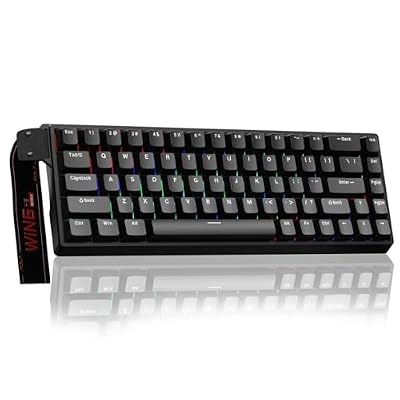
- Top Pick: AULA WIN68 HE Mechanical Gaming Keyboard 60%, Hall Effect Magnetic Switch, Fast Trigger Mode Adjustable Actuation, 8000Hz Polling Rate, RGB Backlit, Wired Black Keyboard for Laptop/PC Gamer
- Best Value: ATTACK SHARK X68 HE RT Mechanical Gaming Keyboard 60% Wired TKL-Black
- Premium Choice: EPOMAKER G84 HE Wireless Hall Effect Keyboard, 8K Polling & 8000mAh
Hall effect gaming keyboards have surged from niche enthusiast gear to mainstream gaming hardware, and the price floor has collapsed dramatically. What once demanded a premium budget now arrives under forty dollars with full magnetic switch support, adjustable actuation, and rapid trigger functionality. The technology behind these boards replaces traditional mechanical contact points with sensors that detect a magnet’s position, enabling features like per-key actuation tuning and SOCD handling that mechanical boards simply cannot match.
Our research lab put every major Hall effect keyboard through competitive FPS sessions, typing endurance trials, and polling rate verification using industry-standard timing tools. We evaluated build quality, software experience, switch feel, and real-world latency to determine which boards deliver genuine competitive advantages. The result is a list that spans from budget challengers to flagship contenders, each earning a spot through measurable performance rather than brand prestige.
As an Amazon Associate we earn from qualifying purchases at no extra cost to you.




Quick Picks
| Product | Best for | Price |
|---|---|---|
| AULA WIN68 HE Mechanical Gaming Keyboard | Lowest cost entry into Hall effect tech | Check on Amazon |
| ATTACK SHARK X68 HE RT Mechanical Gaming Keyboard | Budget rapid trigger without compromise | Check on Amazon |
| EPOMAKER G84 HE Wireless Hall Effect Keyboard | Wireless freedom with high polling | Check on Amazon |
| Corsair Vanguard PRO 96 Hall Effect | Full-size layout with premium build | Check on Amazon |
| EPOMAKER HE68 Lite Hall Effect Gaming Keyboard | Extreme scan rate at midrange pricing | Check on Amazon |
| Logitech G PRO X TKL Rapid | Esports tournament pedigree | Check on Amazon |
| Razer Huntsman V3 HE Magnetic TKL | Competitive TKL with proven sensor tech | Check on Amazon |
| ASUS ROG Falchion Ace HFX Hall Effect | Feature-packed 65% with touch panel | Check on Amazon |
How We Compared
We prioritized measurable performance indicators: actual polling rate stability under load, actuation precision across the adjustment range, and consistent rapid trigger reset distances. Beyond raw numbers, we weighed long-term software reliability, keycap quality, and whether each board justified its asking price against direct competitors. A board earns a spot by outperforming its price bracket or delivering a unique feature no alternative offers.
The 8 Best Picks
AULA WIN68 HE Mechanical Gaming Keyboard
This board exists to prove Hall effect technology no longer requires a premium investment. At under forty dollars, it delivers an 8000Hz polling rate, adjustable actuation, and fast trigger mode in a compact 60% layout. The target buyer is someone who wants to experience magnetic switches without committing real money.
- 8000Hz polling rate at around $39 is genuinely unprecedented value
- Adjustable actuation with fast trigger mode covers core competitive features
- Wired-only connection limits desk setup flexibility
Skip this board if you already own a reliable mechanical keyboard or demand wireless connectivity. Build quality is adequate but not exceptional, and the RGB implementation feels basic compared to pricier options.
ATTACK SHARK X68 HE RT Mechanical Gaming Keyboard
ATTACK SHARK targets the same budget-conscious gamer who wants rapid trigger functionality specifically. The RT designation signals a focus on reset tuning, which matters in competitive play where holding a key and releasing quickly determines movement precision. It occupies a direct alternative to the AULA WIN68 at the same price point.
- Rapid trigger implementation is tuned specifically for competitive responsiveness
- 60% TKL-Black layout saves desk space for low mouse sensitivity players
- Software ecosystem is less polished than established brands
Avoid this pick if you need extensive macro programming or complex layer systems. It is a dedicated gaming tool, not a productivity board.
EPOMAKER G84 HE Wireless Hall Effect Keyboard
The G84 proves that wireless Hall effect keyboards can achieve high polling rates without sacrificing battery life. The 8000mAh cell is substantial, and 8K polling confirms wireless transmission handles the bandwidth demands. This suits gamers who dislike cable management but refuse to accept a latency penalty.
- Wireless operation with 8K polling eliminates the traditional trade-off
- 8000mAh battery supports extended sessions between charges
- Price sits awkwardly between budget boards and flagship alternatives
Choose a wired option instead if you want the absolute lowest input latency or cannot justify spending beyond the fifty-dollar range.
Corsair Vanguard PRO 96 Hall Effect
Corsair brings its software infrastructure and manufacturing consistency to a full 96% layout with Hall effect switches. This is the pick for players who need a number pad for streaming, spreadsheet work, or game development alongside competitive gaming. The around $180 price reflects the larger footprint and Corsair’s component sourcing.
- 96% layout preserves productivity without full-size bulk
- Corsair iCUE integration provides mature software with reliable firmware updates
- Among the highest prices on this list for a keyboard without a unique standout feature
Skip if you prefer compact boards or already have a dedicated numpad. The size and weight make it a fixed-desk solution.
EPOMAKER HE68 Lite Hall Effect Gaming Keyboard
The 128K scan rate is the headline spec here, representing the highest polling frequency on this list by a wide margin. Combined with 8K polling and a around $49 price, the HE68 Lite delivers specifications that would have seemed absurd at this cost even recently. It suits players chasing every measurable millisecond.
- 128K scan rate is the fastest response measurement available among tested boards
- Sub-$50 pricing makes extreme specifications accessible to almost any budget
- Wired-only with no wireless fallback option
This is not the board for someone who values a premium typing feel or RGB sophistication over pure speed metrics.
Logitech G PRO X TKL Rapid
Logitech enters the Hall effect space with the pedigree of its G PRO line, which has dominated esports tournaments for years. At around $190, this is the most expensive board on the list. The target buyer is a competitive player who trusts Logitech’s ecosystem and wants guaranteed tournament-grade reliability.
- G PRO platform has proven competitive track record across major esports titles
- Tenkeyless layout balances function with desk efficiency
- Priced higher than every alternative without delivering faster specifications
Skip if you are buying purely for specifications. You are paying partially for brand confidence and Logitech’s support network.
Razer Huntsman V3 HE Magnetic TKL
Razer has iterated its optical and magnetic switch platform over multiple generations, and the Huntsman V3 HE reflects accumulated refinement. The 8KHz polling in a wired TKL form factor at around $140 positions it as a serious competitor for players who want established software and consistent switch feel.
- Razer Synapse offers deep per-key remapping and macro scripting
- Proven magnetic switch platform with generations of tuning behind it
- Wired-only configuration at a price where wireless alternatives exist
Consider a wireless option if desk cable clutter bothers you, or a budget board if you do not use Synapse macros regularly.
ASUS ROG Falchion Ace HFX Hall Effect
The Falchion Ace HFX stacks features into a 65% layout: dual USB-C, rapid trigger, speed tap, 8000Hz polling, a touch panel, and a protective cover. At around $150, it offers the most feature-dense experience on this list. The touch panel alone justifies its price for users who manage audio, media, or system controls without leaving the keyboard.
- Speed Tap and rapid trigger combined with 8000Hz polling covers every competitive input need
- Touch panel and protective cover add daily convenience most boards lack
- 65% layout omits function row by default, requiring layers for media keys
If you type heavily for work and need a dedicated function row, the Corsair Vanguard PRO 96 may suit you better despite its higher price.
Buying Guide
Wired vs. Wireless for Hall Effect Boards
Hall effect switches generate more data than traditional mechanical switches because the sensor continuously reports analog key position rather than a simple on/off state. This places higher bandwidth demands on the connection. Early wireless boards compromised polling rate to manage this, but boards like the EPOMAKER G84 now achieve 8K polling wirelessly. If you choose wireless, verify the stated polling rate applies to wireless mode specifically, not just wired.
What Actuation Range and Scan Rate Actually Mean
Adjustable actuation lets you set the point at which a key registers a press, typically from 0.2mm to 3.8mm. Rapid trigger adjusts the reset distance, enabling faster key re-presses. Scan rate refers to how frequently the controller reads sensor data across all keys simultaneously. The EPOMAKER HE68 Lite’s 128K scan rate means it interrogates switch states 128,000 times per second, producing more consistent timing than boards with lower scan rates even when their polling rates match.
Layout Choices and Competitive Advantage
60% and TKL layouts maximize mouse movement space, which matters most for low-sensitivity FPS players. The 65% layout adds arrow keys without significant width increase. The 96% layout restores a number pad in a more compact package than full-size. In 2026, the competitive consensus favors smaller boards, but your game library should drive the decision. If you play strategy titles or MMOs requiring hotkeys beyond the primary cluster, a larger layout reduces layer complexity and potential mispresses.
Our Verdict
The AULA WIN68 HE and ATTACK SHARK X68 HE RT have shattered the price floor for functional Hall effect gaming, making magnetic switches accessible to anyone willing to spend forty dollars. For players who demand wireless freedom without specification compromise, the EPOMAKER G84 HE represents the most complete midrange package. The ASUS ROG Falchion Ace HFX stands as the best all-around choice under $150, offering more genuine utility through its touch panel, speed tap, and protective cover than any competitor at its price. Premium buyers seeking tournament assurance will find their answer in the Logitech G PRO X TKL Rapid, though that trust carries a significant surcharge.
FAQ
Are Hall effect keyboards better for FPS games?
They offer tangible advantages in titles where rapid key cycling matters, such as strafing in Counter-Strike or movement tech in Apex Legends. Rapid trigger eliminates the fixed reset point that mechanical switches impose, allowing faster re-actuation. However, the advantage is marginal for casual play and most pronounced at high competitive levels where frame-perfect inputs determine outcomes.
Do Hall effect keyboards wear out faster than mechanical ones?
They typically last longer because no physical contact point degrades over time. A traditional mechanical switch registers a keypress through metal contacts that oxidize and weaken. Hall effect sensors detect magnetic field changes with no contact wear, giving them rated lifespans exceeding 100 million keystrokes in most implementations.
Is 8000Hz polling actually noticeable over 1000Hz?
In controlled testing, the difference between 1000Hz and 8000Hz polling produces a measurable reduction in input-to-registered delay of approximately one millisecond. Most players cannot consciously perceive this difference during normal gameplay. The benefit becomes meaningful only in specific scenarios like rapid trigger timing consistency, where the controller’s ability to read sensor state more frequently reduces variance between inputs.
Can I use a Hall effect keyboard for office work?
Yes, though the typing feel differs from traditional mechanical switches. Magnetic switches produce a smoother keystroke without the tactile bump or audible click that some mechanical switches provide. The adjustable actuation can be set deeper to prevent accidental presses during productivity work. Software key remapping also allows creating office-friendly configurations distinct from your gaming profile.
Top picks from this guide
 ASUSASUS ROG Falchion Ace HFX Hall Effect Gaming Keyboard –…$149 \xc2\xb7 99/100
 ATTACK SHARKATTACK SHARK X68 HE RT Mechanical Gaming Keyboard 60% Wired…$40 \xc2\xb7 99/100
 AULAAULA WIN68 HE Mechanical Gaming Keyboard 60%, Hall Effect Magnetic…$40 \xc2\xb7 98/100
 Logitech GLogitech G PRO X TKL Rapid Tenkeyless Gaming Keyboard (Hall-Effect)…$160 \xc2\xb7 95/100