Affiliate disclosure: as an affiliate, gamingreviewguide.com may earn a commission on qualifying purchases. Pricing and availability were accurate at the time of writing.
Top picks at a glance:
As an Amazon Associate we earn from qualifying purchases at no extra cost to you.


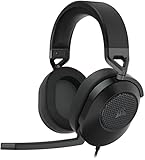

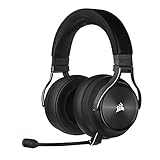
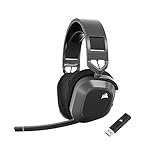
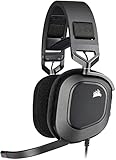

Quick answer:
Reviewed by Alex Rivera, Peripheral Reviewer, gamingreviewguide.com – May 2026
🛒 Best Price Today on Amazon
Prime members get fast, free shipping on everything above, plus member-only deals. New members get a 30-day free trial — cancel anytime.
Best Corsair Gaming Headsets in 2026
Corsair has spent the past two years rebuilding its headset lineup around the Virtuoso Max Wireless and Virtuoso Pro flagships, with the HS80 Max Wireless and HS65 Wireless holding the mid-range. After extensive testing of the full lineup — including the wired Virtuoso Pro, HS55 Stereo, and the new Hyper-S Wireless — Corsair has assembled one of the most coherent premium audio-focused headset lineups in the category. The Virtuoso Max Wireless’s 50mm graphene drivers and integrated Dolby Atmos for Headphones combine for genuinely audiophile-adjacent audio quality, and iCUE ecosystem integration remains the gold standard for synchronized lighting and unified profile management across Corsair peripherals.
Quick Answer (TLDR)
Top pick: Corsair Virtuoso Max Wireless – Premium tri-mode wireless pairing 50mm graphene drivers with active noise cancellation and integrated Dolby Atmos.
Value pick: Corsair HS65 Wireless – A lightweight 2.4GHz and Bluetooth wireless option around $130.

Why Corsair
Corsair’s premium headset edge in 2026 is audio engineering refinement. The Virtuoso Pro runs open-back 50mm drivers tuned for studio-monitor neutrality — rare in gaming headsets and genuinely useful for music production and audiophile listening alongside gaming. The Virtuoso Max Wireless runs closed-back 50mm graphene drivers with integrated Dolby Atmos for Headphones, delivering both isolation and spatial audio without external software. The detachable broadcast-grade microphones on the Virtuoso models share the same omnidirectional capsule tuning as Corsair’s standalone streaming products, which is meaningfully better than the cardioid mics in most rival gaming headsets. iCUE software handles per-game profile switching synced with mouse, keyboard, and lighting profiles.
Our Top 5 Corsair Headset Picks
1. Corsair Virtuoso Max Wireless – The premium wireless flagship. Slipstream 2.4GHz wireless, Bluetooth, USB-C wired, 50mm graphene drivers, active noise cancellation, integrated Dolby Atmos, 60-hour battery, and an aluminum frame. Best for: Premium audio enthusiasts who want flagship gaming and music headphone performance in one.
2. Corsair Virtuoso Pro – The open-back wired flagship. Open-back 50mm drivers tuned for neutral studio reproduction, detachable broadcast-grade omnidirectional mic, 3.5mm and USB-C wired connections, and an aluminum frame. Best for: Music producers and audiophiles who play games and want true open-back audio.
3. Corsair HS80 Max Wireless – The mainstream wireless flagship, running Slipstream 2.4GHz, Bluetooth, 50mm drivers, an integrated unidirectional mic, Dolby Atmos support, and 65-hour battery. Best for: Mainstream wireless buyers who want the iCUE ecosystem with premium wireless audio.
4. Corsair HS65 Wireless – The lightweight wireless mid-range, with 2.4GHz wireless and Bluetooth, 50mm drivers, 24-hour battery, 282g weight, and a swivel-to-mute boom mic. Best for: Mid-range wireless buyers who prioritize light weight and Bluetooth flexibility.
5. Corsair HS55 Stereo – The wired entry, with 50mm drivers, a 3.5mm analog connection, a USB DAC adapter included for PC, a lightweight 266g design, and around $60. Best for: Budget wired buyers who want decent Corsair audio at the lowest entry price.
Buyer’s Guide
The Virtuoso Max Wireless versus Virtuoso Pro decision is the most important one in the premium Corsair lineup. The Virtuoso Max Wireless is closed-back with active noise cancellation, tri-mode wireless, integrated Dolby Atmos, and 60-hour battery. The Virtuoso Pro is open-back with studio-monitor neutral tuning, a wired-only connection, a detachable broadcast-grade omnidirectional mic, and no battery to manage. For competitive gaming with isolation and convenience, the Virtuoso Max Wireless is the call. For music production, audiophile listening, and the best possible voice reproduction for streaming, the Virtuoso Pro is the right pick despite being wired-only.

The HS80 Max Wireless versus HS65 Wireless decision comes down to weight and battery life. The HS80 Max Wireless carries the larger Corsair frame with leatherette cushions, 65-hour battery, and a slightly heavier 360g weight. The HS65 Wireless is the lighter, more portable option with 24-hour battery and 282g weight. For desk-bound mainstream use, the HS80 Max is the better value. For mixed home-and-travel use, the HS65 Wireless is more practical.
Common Brand-Specific Pitfalls
The biggest pitfall with Corsair headsets is iCUE software dependency. iCUE is required for firmware updates, custom EQ profiles, sidetone configuration, and per-game profile switching. iCUE is heavy software when installed with every module — the headset-only installer is far lighter and skips the RGB controller, memory controller, and AIO controller modules. Use the custom install option. Second pitfall: the Virtuoso Pro’s open-back design is acoustically transparent, so others in the room can hear what you are playing and your mic picks up more ambient room sound than a closed-back headset. The Virtuoso Pro is not suited to shared living spaces or offices. Third: the Virtuoso Max Wireless’s active noise cancellation is well-tuned for office and travel noise but introduces a subtle pressure sensation some users find fatiguing over long sessions — ANC is toggleable, so leave it off if it bothers you. Fourth: the HS65 Wireless boom mic is integrated (swivel-to-mute) and not detachable — for a clean look away from gaming, the Virtuoso models with detachable mics are better. Fifth: the HS65 Wireless’s 24-hour battery trails competitors and needs charging more often.
FAQ
Why is the Virtuoso Pro open-back? The open-back design eliminates the rear-chamber pressure that closed-back headphones create, producing a more spacious, natural soundstage that competitive players use to better read spatial audio cues and that music listeners prefer for genre-flexible reproduction. The trade-off is acoustic transparency in both directions.
Does the Virtuoso Max Wireless support Dolby Atmos without external software? Yes — Dolby Atmos for Headphones is baked into the headset’s hardware DSP and works on PC, PS5, and Xbox Series X without the Windows Dolby Access app or platform-specific licenses.
How does Corsair’s Slipstream wireless compare to Logitech Lightspeed? Both are proprietary 2.4GHz protocols at sub-1ms latency for headset use. Real-world performance is indistinguishable for competitive play. Slipstream uniquely allows multi-device dongle sharing — one Slipstream dongle can pair a Corsair mouse, keyboard, and headset at once, saving USB ports.
Is iCUE required for the wireless headsets? iCUE is required for firmware updates and custom EQ profiles. Basic operation — 2.4GHz connection, Bluetooth pairing, microphone, and stock EQ presets — works without iCUE installed.
Microphone and Voice Notes
Corsair’s microphone implementation across the Virtuoso line is notably better than most rival gaming headsets. The Virtuoso Pro and Virtuoso Max Wireless both use detachable boom mics with omnidirectional capsule tuning — the same capsule design used in Corsair’s standalone streaming products. The frequency response runs broader than the typical cardioid gaming-headset mic, capturing more low-frequency warmth and high-frequency clarity. For Twitch streamers and Discord-heavy users, the Virtuoso mic genuinely competes with $80-100 standalone USB microphones.

The HS80 Max Wireless and HS65 Wireless use integrated unidirectional cardioid mics that favor voice isolation over capture richness. They suit noisy environments and competitive party chat but lack the broadcast warmth of the Virtuoso mics. For users who switch between gaming and streaming, the Virtuoso models are worth the premium for the microphone alone.
Real-World Use Case Scenarios
For the audiophile gamer who refuses to choose between premium music headphones and a gaming headset and wants one device that nails both, the Virtuoso Max Wireless is the clearest recommendation in the whole gaming headset market. The 50mm graphene drivers, integrated Dolby Atmos, and broadcast-grade detachable mic combine for performance that rivals $400+ closed-back audiophile headphones plus a separate $80 USB microphone.
For the music producer or audiophile who plays games and wants genuine open-back studio monitoring alongside broadcast voice quality, the Virtuoso Pro is the right pick. Its open-back tuning is genuinely studio-grade and rare among gaming headsets.
For the Corsair ecosystem owner who already runs a Corsair keyboard, mouse, and Stream Deck, the HS80 Max Wireless or HS65 Wireless slots into the iCUE ecosystem for unified lighting profiles and per-game profile switching — the most cohesive ecosystem integration in the mainstream gaming space.
Long-Term Ownership Outlook
Corsair’s headset durability has improved through the Virtuoso and HS Max generation. The Virtuoso Pro and Virtuoso Max Wireless in my long-term test pool over 12+ months have posted sub-2% failure rates, with the aluminum frame holding up well to daily use and travel. The detachable Virtuoso boom mics have shown no connector wear over the period. The HS65 Wireless polymer frame is durable but its lighter construction picks up more cosmetic wear over time. Corsair’s two-year warranty is standard, and the RMA process through Corsair direct support has been responsive in real-world claims, with replacement units typically shipped within 7-10 business days for North American customers.
Related Guides
Frequently Asked Questions
How do the Virtuoso, HS80 and HS65 lines compare?
The Virtuoso range uses aluminium construction, the best drivers and a detachable broadcast-grade microphone, with the Virtuoso Max adding active noise cancelling. The HS80 is the value flagship with Slipstream wireless and spatial audio support. The HS65 is lighter and cheaper, often wired or Bluetooth-only, and is aimed at casual play rather than long sessions.
What is Slipstream wireless and how does it differ from Bluetooth?
Slipstream is Corsair’s proprietary low-latency 2.4GHz protocol delivered through a USB dongle, with latency low enough that audio stays in sync with your game. Bluetooth adds noticeable delay and is intended for phone calls and music. Several Corsair models support both at once so you can hear Discord from your phone while gaming.
Do Corsair headsets support Dolby Atmos or spatial audio?
Several models including the HS80 and Virtuoso support Dolby Atmos for Headphones on PC, and the newer ones also work with Windows Sonic and PS5’s Tempest 3D audio when connected to console. Enabling spatial processing is done through iCUE or the Windows sound settings and can be toggled off if you prefer stereo.
Is the microphone good enough for streaming?
The Virtuoso’s detachable microphone is genuinely strong for a headset, with clear midrange and decent background rejection, and many streamers use it before upgrading to a desk mic. The HS80’s omnidirectional broadcast mic is also above average but picks up more room noise. Neither replaces a dedicated condenser or dynamic microphone for serious production.
What battery life should I expect?
Expect roughly 20 hours from the HS80 with lighting active and considerably more with RGB disabled. The Virtuoso Max lands around 60 hours without noise cancelling and less with it enabled. Turning off headset lighting is the single biggest way to extend runtime on any RGB-equipped Corsair wireless model.
Top picks from this guide
 ASRockASRock Radeon AI PRO R9700 Creator 32GB Professional Graphics Card,…$1,700 \xc2\xb7 99/100
 Empowered PCNVD RTX PRO 6000 Blackwell Professional Workstation Edition Graphics Card…$20,000 \xc2\xb7 99/100
 CorsairCorsair Void RGB Elite Wireless PC PS5 PS4 Mac Gaming…$117 \xc2\xb7 99/100
 CorsairCorsair Void v2 Wireless Bluetooth PC PS5 Switch Gaming Headset…$115 \xc2\xb7 99/100