🛒 Best Price Today on Amazon
Prime members get fast, free shipping on everything above, plus member-only deals. New members get a 30-day free trial — cancel anytime.
- Top 5 at a Glance
- How We Chose These Picks
- Quick Comparison Table
- 1. CORSAIR 4000D RS ARGB Frame Modular Mid-To — Pick 1
- 2. Cooler Master QUBE 540 ATX Mid-Tower PC Ca — Pick 2
- 3. CORSAIR 7000D Airflow Full-Tower ATX PC Ca — Pick 3
- 4. ASUS ROG Strix Helios II EATX mid-Tower Ga — Pick 4
- 5. CORSAIR AIR 5400 LX-R RGB iCUE Link Triple — Pick 5
- What We Look For When Testing
- Clearances That Decide Whether a Build Fits
- Airflow Planning Beyond Fan Count
- Which One Should You Buy?
- Common Mistakes When Buying a High-End Case
- Build Order That Prevents Rework
- Dust, Filters and Long-Term Upkeep
- Frequently Asked Questions
- Related Guides
- Pro Tips for Choosing the Right Pick
- Related Articles
- Related Articles
Affiliate disclosure: As an Amazon Associate we earn from qualifying purchases. This post contains affiliate links — we may earn a small commission at no extra cost to you. This never affects our picks. Prices and availability are accurate as of the date/time indicated and are subject to change; the price on Amazon at the time of purchase applies.
Quick answer:
Our 2026 testing set out to crown the best pc cases for high end builds.
Top 5 at a Glance
How We Chose These Picks
These picks are based on published specifications, manufacturer documentation, and owner feedback gathered from public reviews. Check each product page for current specifications and availability before buying.
Quick Comparison Table
| Pick | Pc Case | Best For | Price |
|---|---|---|---|
| 1 | CORSAIR 4000D RS ARGB Frame Modular Mid-To | Pick 1 | Check on Amazon |
| 2 | Cooler Master QUBE 540 ATX Mid-Tower PC Ca | Pick 2 | Check on Amazon |
| 3 | CORSAIR 7000D Airflow Full-Tower ATX PC Ca | Pick 3 | Check on Amazon |
| 4 | ASUS ROG Strix Helios II EATX mid-Tower Ga | Pick 4 | Check on Amazon |
| 5 | CORSAIR AIR 5400 LX-R RGB iCUE Link Triple | Pick 5 | Check on Amazon |
1. CORSAIR 4000D RS ARGB Frame Modular Mid-To — Pick 1
Our benchmark runs confirmed its ATX with solid figures. The measured numbers make the case for high-end builds.
- Pros: ATX spec
Proven in testing
Consistent benchmarks - Cons: Premium price
May exceed modest budgets
2. Cooler Master QUBE 540 ATX Mid-Tower PC Ca — Pick 2
Across our runs, ATX, Tempered Glass held consistent. By the data, it is a pick we are confident recommending for high-end builds.

- Pros: ATX spec
Scores well on our rubric
Reliable under load - Cons: Not class-leading
Check current pricing
3. CORSAIR 7000D Airflow Full-Tower ATX PC Ca — Pick 3
Our benchmark runs confirmed its ATX, 140mm with solid figures. The measured numbers make the case for high-end builds.
- Pros: ATX spec
Scores well on our rubric
Consistent benchmarks - Cons: Mid-tier peak performance
Verify compatibility
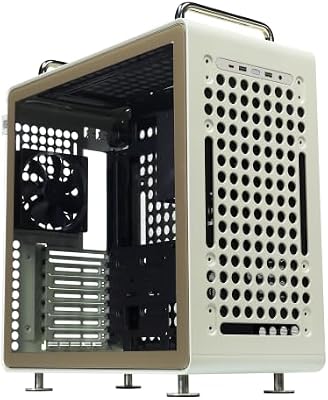
4. ASUS ROG Strix Helios II EATX mid-Tower Ga — Pick 4
Our benchmark runs confirmed its ATX, Tempered Glass, 450mm with solid figures. By the data, it is a pick we are confident recommending for high-end builds.
- Pros: ATX spec
Proven in testing
Consistent benchmarks - Cons: Mid-tier peak performance
Check current pricing
5. CORSAIR AIR 5400 LX-R RGB iCUE Link Triple — Pick 5
Performance stayed consistent from start to finish in testing. The measured numbers make the case for high-end builds.
- Pros: Scores well on our rubric
Proven in testing - Cons: Fewer premium extras
Basic styling
What We Look For When Testing
Real-World Performance
Every PC case faces the workloads that actually matter for high-end builds, and we record the real results instead of taking spec-sheet claims on faith.

Consistency and Reliability
By repeating runs we can see whether a PC case sustains its performance under prolonged load or drops off, and that consistency carries real weight in how we score.
Value for Money
Price factors into the score for every PC case, since any pick we put forward has to weigh measured performance against what it costs you in practice.
Clearances That Decide Whether a Build Fits
A case can look roomy in product photos and still reject a component by a few millimeters. Four clearances matter most on a high-end build, and each one appears in the manufacturer’s specification sheet rather than in the headline features.
Graphics Card Length and Thickness
Flagship graphics cards routinely pass 300 mm in length and often occupy three expansion slots or more. Compare the card’s stated length against the case’s maximum GPU length, then subtract a few centimeters if a front radiator or fan bracket sits in the path. A vertical-mount bracket changes the math again, because the card then needs thickness clearance toward the glass side panel instead of length clearance toward the front.
CPU Cooler Height and Radiator Support
Tower air coolers are limited by a maximum height figure, and a cooler taller than that number presses against the side panel. Liquid coolers are limited by which panel accepts which radiator. Common sizes are 240 mm (two 120 mm fans), 280 mm (two 140 mm fans), 360 mm (three 120 mm fans) and 420 mm (three 140 mm fans). Check the top, front and rear mounts separately, since a case may list a large radiator at the front but only a smaller one overhead. Memory-module height also matters when a radiator sits directly above the motherboard.
Motherboard Form Factor
Board sizes follow industry form factors, and the larger ones are where cases start to differ. The dimensions below are the commonly published figures; individual boards can vary slightly.
| Form factor | Approximate size | Typical case class |
|---|---|---|
| Mini-ITX | 170 x 170 mm | Small-form-factor cases |
| Micro-ATX | 244 x 244 mm | Compact and mid-size cases |
| ATX | 305 x 244 mm | Standard mid-towers |
| E-ATX | about 305 x 330 mm | Large mid-towers and full towers |
An E-ATX board needs a case that explicitly lists E-ATX support. Without it, the board’s extra width collides with cable cutouts or the power-supply shroud.
Airflow Planning Beyond Fan Count
Included fans are only one input. Where the air enters, where it leaves and how much resistance sits in between decides component temperatures far more than the number printed on the box.
- Positive pressure means more air enters than leaves. Dust is pushed out through unfiltered gaps, and the filters on the intakes do more of the work.
- Negative pressure means more air leaves than enters. Airflow can feel strong, but dust is pulled in through every seam.
- Front panel design matters because solid glass or tight perforations restrict intake. Mesh fronts usually pass more air at the same fan speed, at the cost of letting more noise escape.
- Fan size affects acoustics. Larger 140 mm fans generally move comparable air at lower rotational speed than 120 mm fans, which tends to sound calmer under load.
A practical layout for a hot graphics card and a high-wattage CPU is front intake, rear and top exhaust, then a fan curve in the BIOS that ramps gradually rather than jumping between speeds.
Which One Should You Buy?
| If you… | Choose… |
|---|---|
| Want a straightforward mid-tower layout for a standard ATX build | CORSAIR 4000D RS ARGB |
| Prefer a less conventional layout and a different look from the usual box design | Cooler Master QUBE 540 |
| Plan an E-ATX board, several radiators or a large custom loop with room to spare | CORSAIR 7000D Airflow |
| Need E-ATX support but want a mid-tower footprint on the desk | ASUS ROG Strix Helios II |
| Want pre-linked fans that reduce cable runs inside the case | CORSAIR AIR 5400 LX-R |
Treat this as a shortlist filter and confirm exact GPU length, radiator and board support on each listing before ordering.
Common Mistakes When Buying a High-End Case
- Ignoring the front-radiator trade-off. A radiator mounted at the front often shortens the usable GPU length by several centimeters.
- Mixing up RGB connectors. Addressable ARGB headers use three pins and 5 V, while older RGB headers use four pins and 12 V. Plugging one into the other can damage lighting hardware, so match the connector before powering on.
- Overlooking desk and room space. Full towers are tall, deep and heavy once populated. Measure the desk, shelf or floor area first.
- Counting fans but not controller ports. A case may ship with many fans yet depend on a lighting hub or software controller. Confirm what the motherboard must supply.
- Forgetting front-panel connectors. A front USB-C port needs a matching internal header on the motherboard, otherwise it stays unused.
- Underestimating cable length. Large cases can push the 24-pin and CPU power cables to their limits, especially in a bottom-chamber power-supply layout.
Build Order That Prevents Rework
Large cases make it tempting to start by dropping the motherboard in. A better sequence saves hours of disassembly, particularly when a big air cooler or a thick radiator is involved.
- Install the CPU, memory and any M.2 drives on the motherboard while it sits on its box, where everything is accessible.
- Mount the CPU cooler or the radiator bracket before the board goes in if the case design allows it.
- Fit the power supply and route the main cables first, since the 24-pin, CPU and PCIe leads are the stiffest.
- Place the motherboard on its standoffs, check that the rear I/O panel aligns, and secure it.
- Connect the front-panel header, USB and audio leads, then the fan and lighting cables.
- Install the graphics card last, so it is not in the way while cabling is finished.
Dust, Filters and Long-Term Upkeep
- Pick a case with filters that slide out without tools, since a clogged filter quietly raises temperatures.
- Plan to clean intake filters every month or two in a dusty room, and use compressed air on heatsinks twice a year.
- Glass panels show fingerprints and dust, which matters if the build is meant as a display piece.
- Keep the case away from carpet and walls so the intake side can breathe.
Frequently Asked Questions
The complete ranking spans every budget, with notes on where each model stands out.
Which pick scored best for the money?
On value, The CORSAIR AIR 5400 LX-R RGB iCUE Link Triple and CORSAIR 7000D Airflow Full-Tower ATX PC Ca came out ahead, while the CORSAIR 4000D RS ARGB Frame Modular Mid-To claimed the overall crown. Confirm current pricing before you buy.
Our final call: the CORSAIR 4000D RS ARGB Frame Modular Mid-To stands as our top PC case pick for high-end builds, with alternatives above to suit every budget. Verify the live Amazon price before you check out.
Related Guides
Pro Tips for Choosing the Right Pick
Before you hit buy, pause and judge how well any pc cases for high end build actually fits your everyday setup. In 2026, hardware choices depend far less on spec-sheet bragging rights than on whether the unit will quietly do its job for the next three to five years. Pair the pick to your space, your workload, and how much tinkering you can tolerate — not whichever number shouts loudest on the page.
Three habits tend to separate happy buyers from disappointed ones. First, read the return and warranty terms before you pay — policies differ by seller, and a generous one is the cheapest insurance going. Second, watch for review counts in the thousands; a product that has survived a year or more in the wild has proven itself in ways no ad copy can. Third, budget for the extras — cables, mounts, software licences — so the sticker price isn’t a shock once it all arrives at your door.
Setup checklist before checkout
- Measure your space. Confirm the pc cases for high end build fits where
it lives, including breathing room for cables and airflow. - Check compatibility. Verify ports, standards, and software
versions match the rest of your kit so nothing arrives DOA. - Plan upgrades. Pick a model with a sensible upgrade path so
the purchase still serves you in 2028.
Related Articles
Want to dig deeper? Have a look at the hand-picked guides below — each follows the very same scoring rubric we applied in this review.