🛒 Best Price Today on Amazon
Prime members get fast, free shipping on everything above, plus member-only deals. New members get a 30-day free trial — cancel anytime.
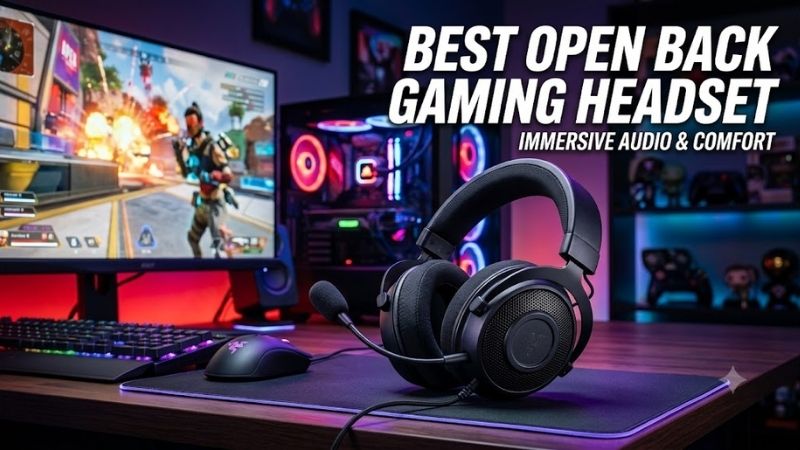
The best open back gaming headset can make directional audio feel wider and more natural while keeping your ears cooler during long sessions. The trade-off is sound leakage and almost no isolation. For gaming, prioritize accurate imaging, comfortable pads, a clear microphone, and easy compatibility with your PC or console.
Quick answer: For most people in 2026, the best open back gaming headset for competitive pc play is the Headset — our #1 rated choice. See the full ranked comparison, alternatives and buying advice below.
Best Open Back Gaming Headsets at a Glance
| Headset | Best For | Connection | Main Strength |
|---|---|---|---|
| Drop + EPOS PC38X | Overall gaming | Wired 3.5 mm | Excellent imaging and integrated mic |
| Turtle Beach Atlas Air | Wireless gaming | 2.4 GHz, Bluetooth, 3.5 mm | Rare wireless open-back design |
| Audio-Technica ATH-GDL3 | Competitive FPS | Wired 3.5 mm | Extremely lightweight construction |
| Corsair VIRTUOSO PRO | Streaming and content creation | Wired 3.5 mm | 50 mm graphene drivers and detachable mic |
| Drop + Sennheiser PC37X | Value-focused wired gaming | Wired 3.5 mm | Proven open-back gaming design |
1. Drop + EPOS PC38X
Best For: Most competitive and immersive gaming setups
The Drop + EPOS PC38X remains one of the clearest examples of an open-back headphone design adapted properly for gaming. Its open earcups create a spacious presentation, while the tuning avoids overwhelming positional cues with excessive bass. That balance works particularly well in shooters where direction matters.
Its dynamic drivers use a 28-ohm impedance, making the headset relatively easy to run from common PC audio outputs, controllers, and compatible mobile hardware. An external amplifier is generally unnecessary for basic operation, which keeps the setup simpler than higher-impedance audiophile headphones used with separate microphones.
The integrated boom microphone makes the PC38X more convenient than converting a traditional open-back headphone into a gaming headset. Raising the microphone mutes it, so users can disable voice chat quickly without searching for a software control. This is useful during Discord calls, multiplayer matches, and streaming sessions.
At roughly 253 grams without the cable, the headset is also relatively light for extended gaming. Its oval earcups distribute pressure around the ears rather than resting directly on them. Clamp can feel firm when new, but the overall design remains better suited to long competitive sessions than many heavier wireless models.
Key Features
- Open-back over-ear design
- 28-ohm impedance
- 10 Hz to 30 kHz listed frequency response
- Approximately 253 g without cable
- Integrated boom microphone
- Flip-to-mute microphone function
- Replaceable ear pads
- Wired analog connection
- Separate PC and console-style cables
What Makes It Different
The PC38X does not simply add a microphone to an audiophile-style chassis. Its acoustic presentation is tuned around gaming priorities, combining clear positional information with enough body for explosions, dialogue, and music. It therefore works as an all-purpose gaming headset instead of a highly specialized competitive tool.
Pros
- Strong directional imaging
- Wide open-back presentation
- Lightweight construction
- Integrated flip-to-mute microphone
- Easy to drive from common devices
- Suitable for competitive and immersive games
Cons
- Leaks substantial sound
- Provides almost no outside-noise isolation
- Wired-only operation
- Initial clamp can feel firm
Use Case: Competitive FPS games, RPGs, multiplayer titles, Discord communication, PC gaming, and console gaming in a quiet room.
Who It’s For: Gamers who want an integrated microphone and open-back spatial presentation without building a separate headphone, microphone, and amplifier setup.
2. Turtle Beach Atlas Air
Best For: Wireless open-back gaming
The Turtle Beach Atlas Air stands out because wireless open-back gaming headsets are uncommon. It combines a breathable open earcup design with low-latency 2.4 GHz wireless, Bluetooth, and optional 3.5 mm operation. This gives players more freedom than traditional open-back models that remain permanently tethered to the desk.
Its 40 mm drivers cover a listed 20 Hz to 40 kHz frequency range, while PC mode supports high-resolution 24-bit audio operation. The open housing helps create a less enclosed presentation than conventional wireless gaming headsets, although the exact sense of width still depends on the game mix and individual hearing.
At approximately 301 grams with the microphone installed, the Atlas Air remains relatively light for a wireless gaming headset. Its floating headband and fabric-covered memory-foam cushions reduce heat accumulation, which is particularly useful during longer sessions when sealed leatherette earcups can become noticeably warm.
The detachable unidirectional microphone supports flip-to-mute operation and can be adjusted through Turtle Beach software on PC. Xbox users should note that wireless compatibility differs from PC and PlayStation use, with Xbox operation relying on the wired connection rather than the included low-latency wireless transmitter.
Key Features
- Open-back wireless design
- 40 mm drivers
- 20 Hz to 40 kHz listed frequency response
- 2.4 GHz low-latency wireless
- Bluetooth connectivity
- 3.5 mm wired mode
- Approximately 301 g with microphone
- Detachable flip-to-mute microphone
- Fabric memory-foam cushions
What Makes It Different
Most open-back gaming headsets are wired because the category has traditionally developed from audiophile headphones. Atlas Air removes that limitation by combining an open acoustic design with gaming-focused wireless connectivity, making it useful for players who want a wider sound presentation without remaining physically attached to the PC.
Pros
- Wireless open-back operation
- Bluetooth and 3.5 mm alternatives
- Lightweight for a wireless headset
- Detachable microphone
- Breathable ear cushions
- PC software customization
Cons
- Open design leaks audio
- Xbox wireless support is limited
- Requires charging in wireless mode
- More electronics than simple wired alternatives
Use Case: Wireless PC gaming, PlayStation gaming, Bluetooth listening, streaming, and players who frequently move away from the desk.
Who It’s For: Gamers who want open-back acoustics but consider a wired connection too restrictive for their normal setup.
3. Audio-Technica ATH-GDL3
Best For: Competitive FPS and lightweight comfort
The Audio-Technica ATH-GDL3 is specifically designed as an open-back gaming headset rather than a converted studio headphone. Its 45 mm dynamic drivers sit inside a highly ventilated enclosure, producing an airy presentation that makes it easier to distinguish directional effects without the sealed sensation of conventional closed gaming headsets.
Weight is one of its biggest advantages. The headset weighs about 220 grams without its cable and roughly 227 grams with the detachable microphone installed. That is exceptionally light compared with many gaming headsets, helping reduce pressure on the head and neck during several hours of FPS, MMO, or strategy gameplay.
Audio-Technica includes both a shorter four-pole cable for consoles and compatible combined audio jacks and a longer PC cable with separate microphone and headphone plugs. This makes the ATH-GDL3 practical across several platforms without requiring users to permanently adapt a desktop-oriented cable for controller use.
The detachable boom microphone also separates the headset from audiophile alternatives that require an external mic. On-headset volume adjustment and microphone muting simplify communication controls. The main compromise is that the extremely open construction provides little protection from keyboard noise, fans, televisions, or conversations nearby.
Key Features
- Open-back gaming design
- 45 mm dynamic drivers
- 45-ohm impedance
- 10 Hz to 35 kHz listed frequency response
- Approximately 220 g without cable
- Detachable boom microphone
- Detachable console cable
- Separate PC audio and microphone cable
- On-headset volume and mute controls
What Makes It Different
The ATH-GDL3 prioritizes low weight more aggressively than most gaming headsets. That matters because positional audio advantages are less useful if the headset becomes uncomfortable after an hour. Its open structure, light chassis, and fabric contact areas make it especially attractive for long competitive sessions in quiet rooms.
Pros
- Extremely lightweight
- Spacious open-back sound
- Detachable microphone
- Separate PC and console cables
- Easy-to-reach controls
- Suitable for long sessions
Cons
- Minimal sound isolation
- Sound easily leaks outward
- Bass impact is less enclosed than closed-back designs
- Lightweight construction may feel less substantial
Use Case: Competitive shooters, esports practice, long PC sessions, console gaming, and players sensitive to heavy headsets.
Who It’s For: Gamers who place comfort and directional clarity ahead of wireless features, heavy bass, or noise isolation.
4. Corsair VIRTUOSO PRO
Best For: Streaming and creator-focused gaming setups
The Corsair VIRTUOSO PRO takes a more studio-oriented approach to gaming audio. It uses custom 50 mm graphene drivers inside open earcups and connects through a standard 3.5 mm analog interface. The design targets gamers and creators who already use audio interfaces, DACs, mixers, or dedicated streaming equipment.
Its drivers have a listed frequency response of 20 Hz to 40 kHz and an impedance of 32 ohms. That relatively low impedance makes the headset straightforward to integrate with many PCs and consoles, while the analog connection avoids tying the audio experience to proprietary USB processing or required desktop software.
The detachable unidirectional microphone is useful for normal game chat but can also be removed entirely when a dedicated broadcast microphone is available. Corsair includes cabling for standard headset use and separated microphone and headphone connectivity, making the VIRTUOSO PRO easier to integrate into more complicated creator audio setups.
At approximately 338 grams, it is heavier than the PC38X or ATH-GDL3, but soft cloth memory-foam ear pads help manage comfort. Aluminum reinforcement gives the chassis a more substantial feel than extremely lightweight plastic designs, though users prioritizing minimum head weight may prefer Audio-Technica’s alternative.
Key Features
- Open-back over-ear construction
- Custom 50 mm graphene drivers
- 20 Hz to 40 kHz listed frequency response
- 32-ohm impedance
- Approximately 338 g weight
- Detachable unidirectional microphone
- Soft cloth memory-foam ear pads
- Aluminum-reinforced construction
- Universal 3.5 mm connection
What Makes It Different
The VIRTUOSO PRO is built for gaming setups that overlap with content creation. Its removable mic, analog cabling, and compatibility with external audio hardware allow it to work as a conventional gaming headset or as the monitoring headphone in a streaming setup using a separate XLR or USB microphone.
Pros
- 50 mm graphene drivers
- Open, spacious presentation
- Detachable microphone
- Works with external audio gear
- Soft fabric pads
- Broad platform compatibility through 3.5 mm
Cons
- Heavier than several rivals
- No wireless mode
- Open cups provide no meaningful isolation
- Less convenient than USB headsets for simple setups
Use Case: PC gaming, streaming, voice recording, audio-interface setups, console gaming, and mixed gaming-content creation workstations.
Who It’s For: Gamers who already use dedicated audio equipment or want a headset that integrates cleanly into a creator-oriented desk setup.
5. Drop + Sennheiser PC37X
Best For: Value-focused wired gaming
The Drop + Sennheiser PC37X follows an older but proven formula: open-back dynamic drivers, a lightweight chassis, velour-style pads, and an integrated gaming microphone. It lacks some refinements of newer premium models, yet its core design remains well suited to positional gaming and long desktop sessions.
Its listed 50-ohm impedance remains manageable for many desktop audio outputs, while the open earcups create more natural space around directional effects than many inexpensive closed gaming headsets. The presentation is useful for FPS players because footsteps and environmental cues are not compressed into an overly narrow headstage.
The integrated boom microphone includes a flip-to-mute function, keeping voice-chat controls simple. A volume wheel on the earcup also allows quick level changes without opening software. These physical controls are particularly useful during multiplayer sessions when players need immediate adjustments without leaving the game screen.
At around 290 grams, the PC37X is still reasonably light and uses an over-ear fit intended for extended desktop use. Its biggest limitation is flexibility: this is a traditional wired gaming headset rather than a multi-platform wireless system, so it makes the most sense when the user spends most gaming time at one PC.
Key Features
- Open-back over-ear design
- 50-ohm impedance
- 15 Hz to 28 kHz listed frequency response
- Approximately 290 g weight
- Boom microphone
- Flip-to-mute microphone operation
- On-ear volume control
- Replaceable ear pads
- Wired 3.5 mm connectivity
What Makes It Different
The PC37X offers the fundamentals that made open-back gaming headsets popular without adding wireless hardware, complex software, or creator-oriented features. Its straightforward design is especially useful for PC players who want positional clarity and voice chat in one headset while keeping the system relatively simple.
Pros
- Spacious gaming presentation
- Integrated boom microphone
- Flip-to-mute operation
- Comfortable over-ear design
- Straightforward analog connection
- Good fit for desktop gaming
Cons
- Wired-only
- Older design than newer alternatives
- No meaningful noise isolation
- Limited portability
Use Case: Desktop PC gaming, FPS titles, multiplayer communication, strategy games, and users building a straightforward wired setup.
Who It’s For: Players who want a traditional open-back gaming headset with an integrated microphone and do not need wireless connectivity.
How to Choose the Best Open Back Gaming Headset
Prioritize Imaging, Not Just Soundstage
Soundstage describes the perceived size of the audio space, while imaging describes how accurately sounds can be positioned within it. Competitive gamers need both, but imaging is often more important. An extremely wide headset is not useful if footsteps, gunfire, and movement cannot be located consistently within that space.
Understand the Open-Back Trade-Off
Open earcups allow sound to escape in both directions. You will hear people, keyboards, fans, televisions, and other room noise more clearly, while nearby people can hear your game audio. This design works best in private, quiet rooms and is a poor choice for shared offices, travel, or noisy gaming spaces.
Check Microphone Requirements
A true gaming headset includes a microphone, while many popular open-back audiophile headphones do not. Using a separate USB or XLR mic can produce a more flexible creator setup, but it adds cost and desk hardware. An integrated boom microphone is simpler for Discord, multiplayer communication, and console use.
Consider Wired vs Wireless
Wired open-back headsets remain common because analog connectivity is simple and does not require batteries. Wireless models provide more movement freedom but add charging and radio hardware. Choose wireless when convenience matters; choose wired when the headset normally stays attached to a stationary PC, DAC, or audio interface.
Look at Headset Weight
Weight becomes noticeable during long gaming sessions, especially when combined with strong clamping force. Models around the low-to-mid 200-gram range can feel considerably less fatiguing than heavier wireless designs. Pad shape, headband pressure, and weight distribution still matter alongside the number on the specification sheet.
Do You Need a DAC or Amplifier?
Low-impedance gaming headsets such as the PC38X, ATH-GDL3, and VIRTUOSO PRO are designed to work with common consumer sources. An amplifier is not automatically required. External DACs and amps become more relevant when using demanding audiophile headphones or when the existing PC audio output has obvious noise problems.
Do Not Choose by Frequency Range Alone
A specification such as 10 Hz to 40 kHz does not tell you whether a headset has accurate positional audio. Human hearing, driver tuning, distortion, earcup design, and individual anatomy matter far more. For gaming, focus on imaging, comfort, microphone performance, and compatibility rather than buying the widest printed frequency range.
Open Back vs Closed Back Gaming Headsets
Open-back headsets usually create a more spacious, less sealed listening experience and allow heat to escape through the earcups. This can make long sessions more comfortable and positional effects more natural. The downside is that outside noise remains audible, bass often feels less pressurized, and game audio leaks into the room.
Closed-back headsets isolate the user more effectively and generally work better in shared rooms, LAN events, or homes with frequent background noise. Their stronger acoustic seal can also produce more physical bass impact. For a quiet private gaming room, however, open-back designs can provide a more natural sense of space.
FAQ
Are Open Back Headsets Better for Gaming?
Open-back headsets can be excellent for gaming because their spacious presentation often makes environmental audio feel more natural. They are especially useful for competitive shooters and immersive single-player games. However, they are not universally better because noisy rooms can overwhelm their lack of isolation.
Are Open Back Headsets Better for FPS Games?
They can be, provided the headset also has accurate imaging. A wide soundstage makes the game environment feel less confined, while strong imaging helps locate footsteps and gunfire. Competitive performance depends on positional accuracy rather than openness alone, so tuning and driver behavior remain important.
Do Open Back Gaming Headsets Leak Sound?
Yes. Sound leakage is a normal consequence of open-back construction rather than a defect. Someone sitting nearby may hear music, dialogue, gunfire, or voice chat from the headset. Users who share bedrooms, offices, or gaming spaces should consider whether this leakage will disturb other people before buying.
Can People Around Me Hear My Game?
At moderate to high listening levels, people nearby can usually hear at least some audio from an open-back headset. The exact amount depends on volume and headset design. These models are therefore best used in private rooms where leakage is not a concern rather than libraries, offices, or shared late-night spaces.
Is Wireless Open Back Gaming Audio Available?
Yes, but the selection is much smaller than for closed-back wireless headsets. Turtle Beach Atlas Air is designed specifically around wireless open-back gaming and also supports Bluetooth and wired operation. Most other open-back gaming models still use analog cables because the category historically developed around wired audio designs.
Do I Need a Separate Microphone?
Not if you choose a headset such as the PC38X, Atlas Air, ATH-GDL3, VIRTUOSO PRO, or PC37X, since each includes a gaming microphone. Separate microphones become useful for streamers and creators who want greater placement control, higher-end recording options, or independent processing for voice audio.
Conclusion
The best open back gaming headset should combine positional accuracy, breathable comfort, and a microphone that matches your setup. PC38X remains a strong wired all-rounder, Atlas Air adds wireless freedom, ATH-GDL3 prioritizes low weight, VIRTUOSO PRO suits creators, and PC37X keeps the traditional formula simple.
Ready to decide? Our #1 pick for 2026 is the Headset.
Live price & availability on Amazon.