🛒 Best Price Today on Amazon
Prime members get fast, free shipping on everything above, plus member-only deals. New members get a 30-day free trial — cancel anytime.
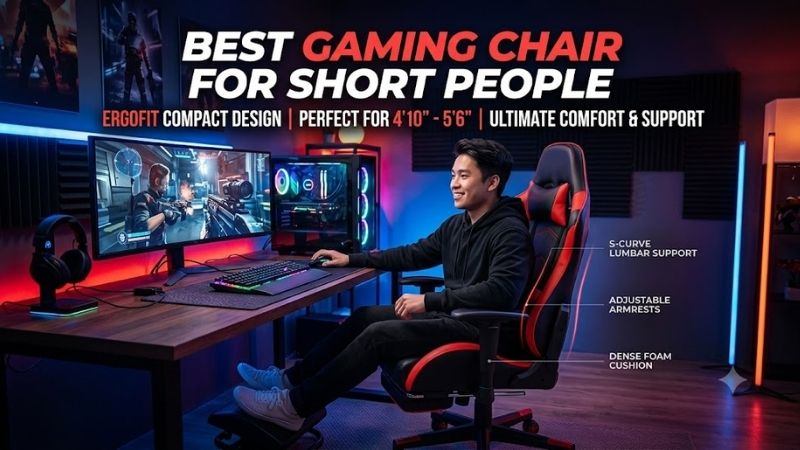
Finding the best gaming chair for short people is mostly about fit, not flashy features. A lower seat, shallower cushion, correctly positioned lumbar support, and adjustable armrests can prevent dangling feet or pressure behind the knees. These six chairs offer dimensions or sizing that make sense for smaller gamers.
Quick answer: For most people in 2026, the best gaming chair for short people is the Gaming Chair — our #1 rated choice. See the full ranked comparison, alternatives and buying advice below.
Quick Comparison
| Gaming Chair | Best For | Recommended Height | Seat Depth | Key Advantage |
|---|---|---|---|---|
| Secretlab TITAN Evo Small | Best overall fit | Up to 5’6″ | Compact-size seat | Purpose-built Small size |
| Vertagear SL3800 | Shallower seat | Up to 5’10” | 15.9 in | Short 405 mm seat depth |
| COUGAR Armor One | Smaller gaming frame | Small-size model | — | Compact category design |
| Razer Iskur V2 X | Users 5’3″ and taller | 5’3″–6’2″ | 485 mm | Integrated lumbar support |
| Arozzi Vernazza Standard | Relaxed seating | About 5’5″–6’3″ | Model dependent | Open seat design |
| Corsair TC100 Relaxed | Wider compact setup | Up to 6’2″ | 50 cm | 45 cm minimum seat height |
Secretlab TITAN Evo Small
Best For: Overall fit for shorter gamers
Key Features:
- Small size specifically offered for shorter users
- Recommended for users up to 169 cm or 5’6″
- Built-in adjustable lumbar system
- 4D adjustable armrests
- Recline from 85 to 165 degrees
- Magnetic head pillow
Secretlab is unusual among major gaming-chair brands because the TITAN Evo is produced in genuinely different sizes rather than using one frame for nearly everyone. Secretlab recommends the Small version for users up to 169 cm, or roughly 5’6″, making it one of the clearest starting points for shorter gamers.
The smaller frame matters because simply lowering a large gaming chair does not change its seat depth, backrest proportions, or lumbar location. With a chair sized around shorter users, it is easier to sit against the backrest while keeping the knees comfortably near the seat edge instead of having the cushion press into the legs.
Its integrated L-ADAPT lumbar system can be adjusted instead of relying entirely on a loose lumbar pillow. The chair also has 4D armrests and an 85-to-165-degree recline range. Those adjustments help smaller users align their elbows with a keyboard and reposition the backrest without changing the chair itself.
What Makes It Different: The TITAN Evo Small is not simply marketed as compact. It belongs to a three-size range with specific height guidance for each version. That makes selection less dependent on guessing whether a one-size gaming chair will work for a 5’2″, 5’4″, or 5’6″ user.
Pros:
- Dedicated Small size
- Recommended for users up to 5’6″
- Adjustable built-in lumbar support
- 4D armrests
- Wide recline range
- Multiple upholstery choices
Cons:
- Premium feature set may be unnecessary for casual use
- Firm supportive cushioning may not suit users wanting a plush chair
Use Case: Long gaming and desk sessions where a smaller user wants a chair proportioned around their body instead of adapting to an oversized racing-style frame.
Who It’s For: Shorter gamers who want a feature-rich chair and prefer choosing a manufacturer-defined Small size rather than relying only on seat-height specifications.
For users below average height, the TITAN Evo Small is especially relevant because several fit variables change together. Seat height is important, but backrest geometry, lumbar placement, armrest position, and seat depth can matter just as much. A properly scaled chair reduces the number of compromises required to reach the desk comfortably.
Vertagear SL3800
Best For: Short seat depth and compact leg support
Key Features:
- Recommended for users up to 5’10”
- 15.9-inch seat depth
- 20.9-inch seat width
- Adjustable seat height
- ContourMax lumbar system
- VertaAir seat design
- 3D armrests
The Vertagear SL3800 is particularly interesting for short users because its seat depth is listed at 405 mm, or 15.9 inches. That is substantially more relevant than a chair simply having a low gas lift because a shallow seat lets shorter thighs reach the front edge without excessive pressure behind the knees.
Vertagear recommends the SL3800 for users up to 178 cm, or 5’10”, rather than positioning it as a large-person chair. The seat measures 530 mm wide, allowing some lateral room despite its shorter depth. This combination can suit users who need compact front-to-back dimensions without wanting a narrow bucket-style seat.
Its ContourMax lumbar design uses memory foam with flexible support modules, while the VertaAir seat is designed around pressure distribution. The 3D armrests add positional adjustment, and the backrest can recline to 140 degrees. Together, those features allow more ergonomic tuning than a basic fixed racing chair.
What Makes It Different: The standout specification is the 15.9-inch seat depth. Short users often struggle with deep gaming chairs even when the seat can be lowered sufficiently. A shorter cushion helps the user reach the backrest while maintaining space between the front edge of the seat and the back of the knees.
Pros:
- Shallow 15.9-inch seat
- Wide open seating surface
- Adjustable lumbar design
- 3D armrests
- Up to 140-degree recline
- Designed for users below 5’10”
Cons:
- Maximum height guidance is not a minimum-height recommendation
- Users well below 5’0″ should still verify minimum seat height
Use Case: Shorter gamers who regularly find that gaming-chair cushions extend too far beneath their thighs.
Who It’s For: Users who prioritize seat depth and leg comfort over the heavily bolstered feel of traditional racing-style gaming chairs.
The SL3800 demonstrates why measurements matter more than generic labels such as small or medium. A short user may fit comfortably in a moderately wide seat as long as the depth, height, armrests, and lumbar position work correctly. For this reason, its 405 mm seat depth is arguably more useful than an aggressively narrow design.
COUGAR Armor One
Best For: Traditional gaming-chair styling in a smaller size
Key Features:
- Classified as Small by COUGAR
- 120 kg weight support
- Height adjustment
- Adjustable tilt resistance
- Reclining backrest
- Adjustable armrests
- Steel frame
COUGAR categorizes the Armor One as a Small model in its own chair comparison, while larger products such as the Armor and Armor S sit in the Mid category and the Armor Titan occupies the Max position. That gives buyers a useful signal when they want traditional gaming-chair styling without automatically selecting a large frame.
The Armor One provides piston-based height adjustment, adjustable tilting resistance, and a reclining backrest. COUGAR also specifies a steel frame and support for up to 120 kg. These features make it more adaptable than a fixed office chair while preserving the tall-back, racing-inspired design many gaming setups use.
The main limitation is that COUGAR does not provide the same clear short-user height recommendation found on the TITAN Evo Small. Calling a chair Small does not guarantee perfect leg geometry, so buyers should still compare their desk height and preferred sitting position before assuming the frame will fit extremely short users.
What Makes It Different: Armor One is useful for buyers who specifically want the visual style of a conventional high-back gaming chair in a smaller product category. It does not attempt to replace gaming aesthetics with office-chair styling, which may matter for an RGB battlestation or dedicated gaming room.
Pros:
- Classified as a Small gaming chair
- Steel frame
- Adjustable height
- Reclining backrest
- Adjustable tilt resistance
- Traditional gaming appearance
Cons:
- Less detailed short-user sizing guidance
- Separate lumbar pillow rather than advanced integrated adjustment
Use Case: Gaming setups where the owner wants a compact-looking racing chair with familiar recline and height adjustment.
Who It’s For: Shorter gamers who want a classic gaming-chair aesthetic and are willing to confirm their own leg and desk measurements before purchasing.
The Armor One makes more sense for users who already know roughly what chair dimensions work for them. Its Small classification helps narrow the search, but it should not replace measurement. If your feet barely reach the floor in typical chairs, minimum seat height and cushion depth should be checked before aesthetics or recline angle.
Razer Iskur V2 X
Best For: Shorter users who want integrated lumbar support
Key Features:
- Recommended height of 160–190 cm
- 430 mm seat-base width
- 485 mm seat depth
- Integrated lumbar support
- 2D armrests
- Up to 152-degree recline
- Molded foam cushioning
Razer recommends the Iskur V2 X for users from 160 to 190 cm, approximately 5’3″ to 6’2″. That means it becomes relevant for shorter adults around 5’3″ and above, although it is not designed for extremely petite users. Its seat base measures 430 mm wide with a depth of 485 mm.
The integrated lumbar arch is fixed rather than independently adjustable, which simplifies the chair but makes proper body fit more important. The seat uses molded foam, while the 2D armrests adjust in height and swivel inward or outward. Razer also allows the backrest to recline to approximately 152 degrees.
For someone around the bottom of Razer’s recommended range, the 485 mm seat depth deserves attention. A user should be able to sit against the lumbar support without the seat edge pressing behind the knees. If the cushion feels too deep during a test sit, a lower seat alone will not completely correct the geometry.
What Makes It Different: Instead of using a removable lumbar cushion, the Iskur V2 X shapes lumbar support directly into the backrest. That creates a cleaner sitting surface and removes a pillow that can shift during play, although the fixed lumbar profile offers less tuning than a fully adjustable system.
Pros:
- Official 160 cm minimum recommendation
- Integrated lumbar support
- Wide seating surface
- Adjustable armrests
- 152-degree recline
- Fabric upholstery
Cons:
- Integrated lumbar support is not adjustable
- 485 mm seat depth may still feel long for very short legs
Use Case: Gamers around 5’3″ to 5’6″ who want built-in lower-back support without moving lumbar pillows.
Who It’s For: Smaller users who fall inside Razer’s recommended height range and prefer a simpler ergonomic gaming chair.
The Iskur V2 X should be considered differently from the TITAN Evo Small. Secretlab specifically offers a scaled Small chair, while Razer gives one Iskur V2 X a broad 160-to-190 cm user range. The Razer can still fit shorter adults, but users near or below 160 cm should be more cautious about seat depth and backrest positioning.
Arozzi Vernazza Standard
Best For: Shorter users who prefer an open seat
Key Features:
- Standard size suitable from about 165 cm
- Open seat design
- Up to 165-degree recline
- 4D armrests on Supersoft version
- Memory-foam neck and lumbar pillows
- 145 kg weight capacity
Arozzi lists the standard Vernazza for users approximately 165 to 190 cm tall, making it suitable for shorter adults around 5’5″ and above rather than truly petite users. Unlike heavily bolstered bucket seats, the Vernazza uses a more open seat shape, which gives the legs additional freedom to change position.
The Supersoft version includes 4D armrests plus memory-foam neck and lumbar pillows, while the backrest reclines to 165 degrees. Arozzi also lists a 145 kg weight capacity for the standard model. These characteristics favor gamers who want a softer, less restrictive sitting position during long mixed gaming and work sessions.
An open seat can help smaller users who dislike side bolsters pressing against their legs, but openness does not automatically mean petite ergonomics. At about 165 cm and above, the standard Vernazza becomes a more logical candidate. Users substantially shorter than that should prioritize a purpose-built small chair instead.
What Makes It Different: The Vernazza emphasizes a broad, unobstructed seating surface rather than holding the thighs between pronounced bolsters. This can benefit gamers who sit cross-legged occasionally or change posture frequently, although maintaining good support remains important during extended keyboard and mouse sessions.
Pros:
- Open seat design
- Standard size starts around 165 cm
- 165-degree recline
- Available fabric options
- Memory-foam support pillows
- Adjustable armrests on Supersoft model
Cons:
- Not intended for very petite users
- Pillow-based lumbar support can move
Use Case: Short-to-average-height gamers who prefer relaxed seating positions rather than a narrow racing bucket.
Who It’s For: Users around 5’5″ and taller who want an open gaming chair with generous recline and softer upholstery options.
The Vernazza belongs on this list because not every short gamer is narrow or wants the smallest possible seat. Body proportions differ, and some users have shorter overall height but prefer more hip room. Its standard model provides another option for people who want lower-height compatibility without tight side bolsters around the seat.
Corsair TC100 Relaxed
Best For: Shorter gamers who need additional seat width
Key Features:
- 45–55 cm seat-height range
- 50 cm seat depth
- 54 cm seat-base width
- 81 cm backrest height
- Adjustable armrests
- Fabric or leatherette options
- Maximum user height listed at 188 cm
The Corsair TC100 Relaxed has a minimum seat height of 45 cm, increasing to 55 cm through its gas-lift range. Its seat measures 50 cm deep and 54 cm wide, while Corsair lists a maximum user height of 188 cm. Those numbers make it worth considering for shorter gamers who still want a relatively broad seat.
Its 50 cm depth is the key limitation for petite users. Someone with short thighs may struggle to reach the backrest while keeping a healthy gap behind the knees. The TC100 therefore makes more sense for short users with proportionally longer legs than for someone choosing purely on total height or wanting the smallest chair available.
Corsair offers the TC100 Relaxed in fabric and leatherette versions, with a broader seating style intended to provide additional freedom of movement. The chair also offers adjustable height, armrests, and backrest positioning. These controls help users tune their desk posture, provided the underlying seat dimensions suit their body.
What Makes It Different: The TC100 combines a 45 cm minimum seat height with a 54 cm-wide seat base. That combination targets a different type of shorter gamer: someone who needs the chair to lower reasonably far but dislikes narrow side bolsters or wants additional room for changing leg position.
Pros:
- 45 cm minimum seat height
- Wide seat base
- Fabric and leatherette options
- Adjustable armrests
- Relaxed seating design
Cons:
- 50 cm seat depth can be excessive for petite legs
- Not specifically marketed as a short-user chair
Use Case: Short-to-average-height gamers with broader hips or longer legs who want additional seat width.
Who It’s For: Users who prioritize a roomy cushion but can comfortably use a 50 cm seat depth.
The TC100 illustrates why height alone cannot determine chair fit. Two people who are both 5’4″ can have different torso and leg proportions, causing the same seat depth to feel completely different. Measure from the back of your hips toward the knee before choosing a deeper chair, especially when buying without trying it first.
How to Choose the Best Gaming Chair for Short People
Check Minimum Seat Height First
Seat height determines whether your feet can rest flat while your knees remain close to a right angle. If the chair cannot lower enough, shorter users often place pressure beneath the thighs or compensate by sitting forward. Compare the minimum seat height with an existing chair that already places your feet comfortably on the floor.
Pay Attention to Seat Depth
Seat depth may be even more important than overall chair height. When your back touches the backrest, there should still be comfortable clearance behind your knees. An excessively deep cushion forces a short user to choose between lumbar support and leg comfort, which defeats much of the ergonomic purpose of the chair.
Do Not Automatically Choose the Narrowest Seat
Short does not necessarily mean narrow. Hip width, preferred sitting position, and body proportions should determine seat width. A compact chair can have a shallow seat while still giving enough lateral room. Avoid buying an aggressively bolstered chair only because its overall dimensions look smaller on a specification sheet.
Look for Adjustable Armrests
Armrests that sit too far apart or too high can push the shoulders upward and encourage awkward mouse positioning. Height adjustment is the minimum useful feature, while inward movement can be especially valuable for smaller frames. The goal is supporting the forearms without forcing the elbows away from the torso.
Match Lumbar Support to Your Torso
A tall-chair lumbar curve may sit too high on a short user’s back. Adjustable lumbar systems can solve this more effectively than a fixed backrest, while removable pillows allow some manual repositioning. Whatever the mechanism, the support should follow the lower-back curve rather than pushing against the middle of the spine.
Consider Your Desk Height
Even a perfectly sized gaming chair can feel wrong beside a desk that is too high. Shorter gamers often raise their chair to reach the keyboard, which leaves their feet unsupported. Ideally, choose a desk and chair combination that lets your shoulders stay relaxed while your feet remain supported and the keyboard sits near elbow level.
A Footrest Can Help, but It Should Not Fix Everything
A footrest is useful when the desk requires a slightly higher chair position, but it should not compensate for an oversized seat that is too deep or poorly proportioned. If the backrest, armrests, and cushion all fit badly, adding a footrest solves only one part of the problem rather than correcting the chair itself.
Measure Before Buying
Use a chair that fits you reasonably well as a reference. Measure the floor-to-seat height, usable cushion depth, seat width, and preferred armrest height. Comparing those figures with manufacturer specifications is much more reliable than choosing based on labels such as compact, small, ergonomic, or designed for gamers.
FAQ
What Seat Height Is Good for a Short Person?
There is no single correct seat height because leg length differs even among people of identical overall height. The useful target is a position where your feet rest securely on the floor and your knees remain comfortable without pressure under the thighs. Measure a chair that already fits rather than relying on height alone.
What Seat Depth Should Short Gamers Look For?
A shallower seat generally works better for shorter thighs because it allows the user to reach the backrest without the front cushion pressing behind the knees. Models around 16 inches deep can be easier for petite users than common 19-to-20-inch seats, although individual proportions should always determine the final choice.
Is the Secretlab TITAN Evo Small Good for Short People?
Secretlab specifically recommends the TITAN Evo Small for users up to 169 cm, or 5’6″, which makes it one of the few major gaming chairs with clear small-size guidance. It also retains adjustable lumbar support and 4D armrests, so choosing the smaller frame does not require giving up the main adjustment features.
Can Someone Under 5’3″ Use a Gaming Chair?
Yes, but manufacturer size guidance becomes more important below 5’3″. Many gaming chairs are designed around average-height adults and may have deep cushions or tall lumbar zones. A purpose-built Small size is preferable, and very petite users should compare minimum seat height and depth before purchasing.
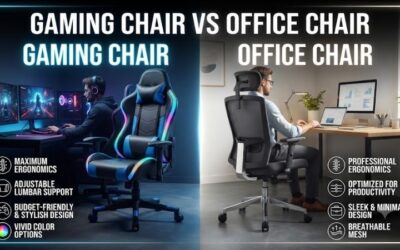
Are Gaming Chairs or Office Chairs Better for Short People?
Neither category automatically fits short users better. A properly sized gaming chair can work well, while an adjustable ergonomic office chair may offer better seat-depth controls. Focus on minimum height, seat depth, lumbar placement, armrests, and desk compatibility instead of assuming one chair category guarantees better ergonomics.
Conclusion
The best gaming chair for short people should fit leg length, torso position, and desk height instead of simply looking compact. Secretlab TITAN Evo Small offers dedicated sizing, while Vertagear SL3800 stands out for its shallow seat. Other options work best when their published dimensions match your individual proportions.
Ready to decide? Our #1 pick for 2026 is the Gaming Chair.
Live price & availability on Amazon.