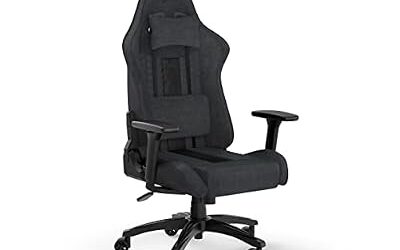
When thousands of buyers converge on the same handful of gaming chairs, the ratings tell a story worth listening to. The best-rated models earn their reputation through consistent comfort, durable construction, and support features that hold up over months of daily use, not marketing hype or a flashy paint job.
- Watch: Best Rated Gaming Chair — Video Review
- How to Choose a Well-Rated Gaming Chair
- The Best-Rated Gaming Chairs Reviewed
- What to Look For Beyond Owner Satisfaction
- Which One Should You Buy?
- Common Mistakes When Buying a Gaming Chair
- Setting Up a New Chair Properly
- Keeping a Chair in Good Shape
- Related Guides
- Frequently Asked Questions
- Final Thoughts
- Related Articles
We’ve distilled the field down to the chairs that consistently satisfy owners. Here are the best-rated gaming chairs for 2026, covering everything from pocket-spring everyday seats to heavy-duty big-and-tall builds designed to support larger players comfortably.


🎮 Get More From Your Setup — Free
Prime Gaming gives you free PC games every month, in-game loot, and a free Twitch channel sub — plus fast free shipping on all the gear above. New members get a 30-day free trial.
Watch: Best Rated Gaming Chair — Video Review
How to Choose a Well-Rated Gaming Chair
- Consistent support: High ratings usually reflect reliable lumbar and seat support that lasts beyond the first few weeks.
- Weight rating: Match the chair’s capacity to your build; big-and-tall models offer sturdier frames.
- Cushion longevity: Pocket-spring seats earn better long-term reviews than basic foam that flattens.
- Adjustability: Recline, armrests, and height adjustment let more people find a comfortable fit.
- Assembly experience: Chairs praised for straightforward assembly save you frustration on day one.
The Best-Rated Gaming Chairs Reviewed
GTPLAYER 360-Swivel with Headrest
A perennial favorite, this height-adjustable GTPLAYER earns praise for its full swivel, headrest, footrest, and clean Pearl White look, a comfortable all-rounder for gaming and work.
GTPLAYER Big and Tall (3D Saddle Cushion)
Highly rated by larger players, this 400lb-capacity chair pairs a 3D saddle cushion with pocket-spring lumbar support, delivering durable comfort and back relief.
7-Point Support Ergonomic Chair
Owners appreciate this chair’s pocket springs, wide seat, and generous recline, a well-reviewed value option that supports up to 400lbs.
N-GEN Big & Tall Gaming Chair
The N-GEN big-and-tall wins consistent marks for its padded wide seat, heavy-duty base, and reclining comfort, a sturdy pick for extended use.
LEMBERI Big and Tall (400lb Capacity)
A well-rated heavy-duty option in bold red, the LEMBERI supports up to 400lbs and earns praise for its supportive build and eye-catching style.
What to Look For Beyond Owner Satisfaction
Popularity helps narrow a crowded field, but it does not tell you whether a chair will suit your body. These are the measurable factors that explain why some chairs stay comfortable and others sag, creak or cause aches.
Fit: Seat Height, Depth and Width
Ergonomic guidance generally says your feet should rest flat with your thighs roughly parallel to the floor and your knees at around 90 to 110 degrees. The seat should leave a gap of about two to three finger widths between its front edge and the back of your knees, so the cushion does not press on your legs. A chair that is too deep forces you to slide forward and abandon the backrest. Check the stated seat depth and adjustable height range against your own leg length and desk height. This matters even more for big and tall models, since a wider seat and a heavier-duty base change the proportions.
Weight Limit and the Parts That Carry It
A stated capacity is a manufacturer’s claim unless it names a test standard. Several of the chairs here advertise heavy-duty limits, and the big and tall GTPLAYER model names a 400 lb limit in its title. Look beyond the figure to the parts that bear the load: the gas cylinder, the metal base and the seat frame. Gas lifts are graded in classes, and Class 4 is the thicker-walled, heavier-duty grade generally associated with gaming and heavy-use chairs. A named standard such as BIFMA, with a third-party certification mark, is stronger evidence than a bare number. Confirm all of this on the individual listing.
Cushion Construction and Upholstery
Foam density and layering decide how a seat feels after a few hours. Dense molded foam holds its shape longer than soft, thin padding. A pocket spring cushion, as described on the Dowinx model, uses individual springs under the foam and can feel more supportive, though it adds some weight. Upholstery also matters: fabric and suede-style covers breathe better in warm rooms, while PU leather wipes clean but can feel hot and may crack at stress points over years of daily use.
Lumbar Support and Adjustments
A fixed pillow can be moved up or down with straps, but a proper lumbar curve in the backrest is more reliable. Look for adjustable armrests that let your elbows rest near 90 degrees, a recline lock, and tilt tension that suits your weight. The monitor should sit with its top edge at or slightly below eye level and roughly an arm’s length away, and the chair must let you reach that position.
Footrests and Headrests
Several models here include a retractable footrest. It is handy for reclining, but it does not replace flat feet on the floor during normal sitting. Headrest pillows are mostly useful when reclined, and they can push the head forward if set too high in an upright position.
Which One Should You Buy?
| If you… | Choose… |
|---|---|
| Need a higher weight limit and a wider seat | The GTPLAYER Big and Tall models or the Dowinx Big and Tall, after confirming the capacity on the listing |
| Want a softer, more breathable surface for warm rooms | The Misolant fabric chair or the Dowinx suede-style chair |
| Want a spring-supported seat cushion | The Dowinx, which lists a pocket spring cushion |
| Like a footrest for recline and breaks | The N-GEN GAMING models or the Misolant, which list footrests |
| Want a rotating headrest and a 360-degree swivel | The GTPLAYER swivel model with headrest |
| Want the simplest all-black look with lumbar support | The N-GEN GAMING all-black high-back chair |
Common Mistakes When Buying a Gaming Chair
- Trusting the weight limit alone. A high number on the title means little if the cylinder, base and frame are not described. Look for a named standard and a heavy-duty gas lift.
- Buying by look. Racing-style bolsters can feel narrow and hold heat. Pick a shape that fits your hips and shoulders, not just a color scheme.
- Setting the chair too high. A seat set for the keyboard leaves feet dangling, which presses on the thighs. Raise the desk or use a footstool instead.
- Relying on a lumbar pillow to fix a poor fit. Pillows move, so check whether the backrest curve itself suits your lower back.
- Ignoring assembly and parts. Heavy chairs take two people to build, and loose bolts cause creaking. Re-tighten fasteners after the first few weeks of use.
- Forgetting the floor. Hard casters can scratch wood. A mat or soft-wheel casters protects the surface and reduces noise.
Setting Up a New Chair Properly
Even a well-built chair causes trouble when it is adjusted badly. This order of adjustments produces a solid starting position that you can fine-tune over the first week.
- Set the seat height so your feet rest flat on the floor and your thighs run roughly level with the ground.
- Slide your hips to the back of the seat and check for a gap of about two to three finger widths behind the knees. If there is none, the seat is too deep for you or the backrest needs to move forward.
- Adjust the backrest angle to an open posture of roughly 100 to 110 degrees rather than a rigid 90, which many people find easier to hold for hours.
- Move the lumbar support until it fills the curve of your lower back without pushing you forward.
- Raise the armrests until your elbows sit near 90 degrees and your shoulders stay relaxed.
- Set the tilt tension so the chair follows your movement without dropping you backward.
- Position the monitor with its top edge at or just below eye level, then recheck your neck angle.
| Adjustment | Good starting point | Warning sign |
|---|---|---|
| Seat height | Feet flat, thighs level | Heels lifting or pressure under the thighs |
| Seat depth | Two to three fingers behind the knees | Numb legs or sliding forward |
| Armrests | Elbows near 90 degrees | Raised or hunched shoulders |
| Backrest angle | Roughly 100 to 110 degrees | Leaning forward off the back |
| Lumbar support | Fills the lower back curve | Pushing the torso forward |
Keeping a Chair in Good Shape
- Tighten the base bolts, armrest screws and seat plate after the first few weeks, because normal use loosens them slightly.
- Clean fabric with a vacuum and a mild cleaner, and wipe PU leather with a damp cloth, avoiding harsh solvents that dry out the surface.
- Do not stand on the seat or use the gas lift as a step, since that is a common cause of cylinder failure.
- Check the casters for hair and debris, which can jam wheels and add strain to the base.
- If the chair slowly sinks, the gas cylinder is usually worn, and a replacement cylinder of the right size and class can restore it.
Taking Breaks
No chair removes the need to move. Standing and stretching every thirty to sixty minutes is commonly advised by ergonomics guidance, and it matters more than any feature on the spec sheet.
Related Guides
Frequently Asked Questions
Do high ratings really mean a better chair?
They’re a strong signal, especially when reviews consistently mention lasting comfort and durability rather than just first impressions.
Which chair suits larger players best?
Big-and-tall models like the GTPLAYER 3D saddle or LEMBERI offer higher weight ratings and reinforced frames for a comfortable fit.
Why do pocket-spring chairs rate higher?
Pocket springs resist sagging and distribute weight evenly, so owners report better long-term comfort than with basic foam seats.
Is assembly difficult?
Most of these chairs assemble in under an hour with included tools. Reading reviews for assembly notes helps set expectations.
Final Thoughts
The GTPLAYER 360-swivel is the best-rated all-rounder, while the GTPLAYER Big and Tall and LEMBERI serve larger players well. Each has earned its reputation through comfort and durability that owners consistently praise.