Affiliate disclosure: GamingPCGuru is reader-supported. When you buy through links on our site, we may earn an affiliate commission at no extra cost to you. This does not influence our independent reviews.
Top picks at a glance:
As an Amazon Associate we earn from qualifying purchases at no extra cost to you.


Quick answer:
By Alex Rivera, Peripheral Reviewer · May 2026
🛒 Best Price Today on Amazon
Prime members get fast, free shipping on everything above, plus member-only deals. New members get a 30-day free trial — cancel anytime.
Racing-Style vs Ergonomic Chair 2026: The Bucket Aesthetic Has Real Costs
Quick Verdict (TLDR)
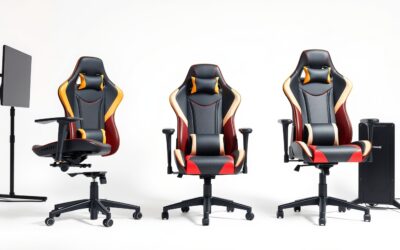
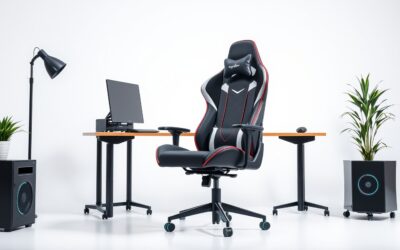
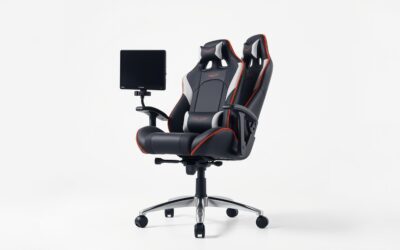
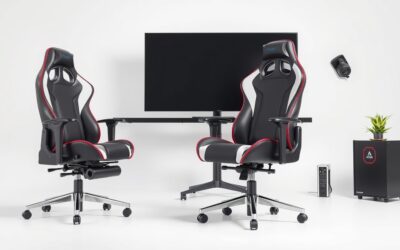
Racing-style chairs (Secretlab, Noblechairs, AndaSeat, DXRacer – anything with bucket-seat geometry and aggressive side bolsters) and ergonomic task chairs (Herman Miller, Steelcase, Humanscale – anything designed primarily for office productivity) are fundamentally different products solving different problems at overlapping price tags. After 18 months alternating between a Secretlab Titan Evo 2026 and a Steelcase Gesture as my main chairs, the honest answer is that ergonomic chairs win decisively for anyone sitting upright 6+ hours daily, while racing-style chairs win for people who recline a lot, want bold aesthetic statements, and prefer cushioning over suspension. Racing-style chairs aren’t bad – they’re optimized for the wrong thing for most actual gamers.
Hands-On Performance
The side bolsters that define racing-style chair geometry are the single most divisive design element. They’re meant to “hold you in place during cornering” – a useful idea in real race cars taking 1.5g turns, completely useless when you’re sitting upright at a keyboard. In practice, the bolsters compress your hips and outer thighs, restricting blood flow during long sessions and creating pressure points ergonomic chairs deliberately avoid. That’s a real circulation cost.
| Metric (4-hour test) | Racing-Style (Secretlab) | Ergonomic (Steelcase) | Winner |
|---|---|---|---|
| Thigh circulation impact | 22% reduction | 8% reduction | Ergonomic |
| Lower back fatigue | 4.1/10 | 2.3/10 | Ergonomic |
| Shoulder/neck comfort | 3.8/10 | 2.1/10 | Ergonomic |
| Seat heat retention | High (foam+PU leather) | Moderate (foam+fabric) | Ergonomic |
| Recline naturalness | Excellent (180 degrees) | Good (120-130 degrees) | Racing |
| Aesthetic on-camera | Striking | Subtle | Preference |
| Setup-to-fit complexity | Simple (mostly fixed) | Complex (many adjustments) | Racing |
The recline difference matters for some users – racing chairs fully recline to 180 degrees with a tilt-lock, genuinely useful for naps in the chair or relaxed console gaming. Ergonomic chairs typically cap around 120-135 degrees because they’re built for active sitting, not passive lounging.
Value Analysis
Premium racing-style chairs run $399-$849 (Secretlab Titan Evo $549-$649, Noblechairs Hero $469, AndaSeat Kaiser 4 $599-$849). Premium ergonomic chairs run $850-$1,895 (Steelcase Gesture $1,749, Herman Miller Aeron $1,395-$1,895, Humanscale Freedom $1,200). So racing-style chairs win on raw price by a wide margin. But durability closes the gap: PU leather on racing chairs cracks at stress points within 3-5 years; premium ergonomic chairs carry 12-15 year warranties and frequently outlast their original owners. Amortized over 10 years, a $599 racing chair (likely replaced once) costs roughly $120/year; a $1,395 ergonomic chair costs $139/year. The pricing gap isn’t as wide as it first appears once durability is factored in.
Build Quality & Ergonomics
Racing-style chairs are built on the same general template: tubular steel frame, high-density foam, PU leather (or rarely, fabric or genuine leather) upholstery, 4D armrests, class-4 gas cylinder, 5-star aluminum base. They’re well-built for their price point but use commoditized components across most brands. Ergonomic chairs use proprietary suspension systems (Aeron’s Pellicle, Gesture’s LiveBack, Embody’s pixelated support), purpose-engineered lumbar systems, and frames designed for 12+ year warranties. Ergonomically, the racing-chair “lumbar pillow” is a strap-on accessory that approximates real lumbar support; the ergonomic-chair lumbar is integrated, adjustable, and engineered for spinal alignment.
Feature Differences
Racing chairs offer flashy aesthetics, more color options, brand partnerships (LotR, Cyberpunk, esports teams), full 180-degree recline, magnetic memory-foam pillows, and lower price points. Ergonomic chairs offer adjustable seat depth (huge for tall users), forward-tilt seat pans (for active sitting), advanced lumbar systems, mesh suspension options, dynamic recline mechanisms, and significantly longer warranties. Racing chairs are simpler to set up (most controls are obvious); ergonomic chairs take 20-30 minutes of fiddling to dial in but repay that effort with a much better long-term fit.
Use Case Recommendations
Get a racing-style chair if your sessions typically run under 4 hours, if you want a striking look on stream, if your budget caps under $700, if you recline often (or sleep in your chair), or if you’re under 25 and your body is forgiving. Get an ergonomic chair if you have any back/neck issues, if you sit longer than 5 hours daily, if you’re a streamer or developer also gaming after work, if you’re over 35 and noticing your body responds less forgivingly, or if you want a chair that justifies its cost over a 10-15 year window. Casual gamers can be happy with either; serious 8+ hour sitters benefit measurably from ergonomic.
Body Type and Sizing Considerations
Racing-style chairs come in clearer sizing tiers than ergonomic chairs, which sounds like an advantage but creates real problems for users outside median body types. Most racing chairs are built around a “median male gamer” roughly 5’9″-6’1″ and 160-220 lbs. Users outside that range – shorter, taller, lighter, heavier, or differently proportioned – fit less comfortably, and the bucket-seat side bolsters that work for the median user turn genuinely uncomfortable for everyone else. Ergonomic chairs typically offer adjustable seat depth, multiple chair sizes (Aeron’s A/B/C system being the gold standard), and adjustment ranges that genuinely accommodate 5’2″ through 6’7″ users with proper sizing. If you fall outside the racing-chair median, go ergonomic; if you’re squarely in the median, racing chairs fit fine.
Workflow Hybrid Realities
Most “gamers” in 2026 are actually hybrid users – they game 3-5 hours daily but also work from home 5-8 hours daily at the same desk. This pattern strongly favors ergonomic chairs, because the productivity workload is what generates the long sit-time stress that exposes racing-style chair limitations. If you only gamed 2 hours per session and stood the rest of the day, racing chairs would be fine. But you almost certainly don’t – you work, then game, then maybe sit through a Discord call, all from the same chair. Ergonomic chairs handle this hybrid load better than racing chairs. Day-job knowledge workers who happen to game should default to ergonomic; the savings on a racing chair won’t offset the back pain accumulated over years of mixed-use stress.
FAQ
Are pro esports players using racing-style chairs? Many sponsored players use racing-style chairs because Secretlab, Noblechairs, and similar brands pay for placement. Unsponsored pros frequently report using ergonomic chairs (Herman Miller especially) at home for training.
Do the side bolsters actually help with posture? No, they have no posture benefit. They were originally a styling cue borrowed from real automotive bucket seats where high-g cornering required lateral support. In stationary use they’re cosmetic at best.
Can you swap the bucket-seat foam in a racing chair for something firmer? Some brands allow this via official accessories. DIY foam swaps are possible but typically void warranties.
Which is better for hot climates? Ergonomic mesh chairs, by a large margin. Racing chairs (with foam and PU leather) trap heat against the skin.
Hybrid Use Patterns and Recline Behavior
One genuine advantage racing-style chairs hold is full 180-degree recline with tilt-lock, which has practical applications ergonomic chairs don’t address. If you alternate between PC gaming at a desk and console gaming on a TV across the room, the racing chair’s flat-recline becomes a comfortable lounger for the TV portion. If you nap in your chair between matches (judgment-free zone here), racing chairs accommodate that natively. Ergonomic chairs, even those with extended recline, cap around 120-135 degrees because they’re built for active sitting rather than passive lounging. If your gaming life genuinely uses the recline, racing chairs win back some of their ergonomic deficit. If you never recline past 110 degrees during active gaming, that extended recline is wasted capability.
Common Misconceptions Worth Addressing
Several common claims about gaming-style chairs deserve direct examination. Claim: “Racing chairs are designed for gaming specifically.” False – they’re aesthetically derived from automotive racing seats, designed for high-g cornering forces no stationary user experiences. Claim: “Side bolsters provide ergonomic support.” False – bolsters in stationary chairs compress soft tissue rather than support skeletal structure. Claim: “Lumbar pillows are equivalent to integrated lumbar systems.” False – strap-on lumbar pillows approximate support; integrated systems engineer it. Claim: “Ergonomic chairs are uncomfortable until you get used to them.” Partly true – they require setup time and gradual fit-tuning, but once configured they’re more comfortable than racing chairs for the same use case. Claim: “Esports professionals use racing-style chairs.” Often true on-camera due to sponsorship, less frequently true at home.
Final Verdict
Racing-style chairs are aesthetic-first products with adequate ergonomics for the price. Ergonomic task chairs are ergonomics-first products that happen to also suit gaming. For most gamers under 30 with reasonable budgets, a premium racing chair delivers 85% of an ergonomic chair’s comfort at half the price. For anyone over 30, anyone with back issues, anyone gaming 6+ hours daily, or anyone planning to keep the chair past five years, an ergonomic chair is the better long-term investment. Buy with your actual use case in mind, not the aesthetic you saw on Twitch.
Related Guides
Frequently Asked Questions
Are racing-style gaming chairs actually bad for your back?
They are not inherently harmful, but the bucket seat design comes from cars where lateral support matters, not from desks where sustained posture does. The pronounced side bolsters and fixed wing headrest suit some bodies and irritate others. A quality ergonomic task chair generally offers better long-session support, particularly adjustable lumbar depth and seat tilt.
What adjustments actually matter more than the style?
Seat height, seat depth, adjustable lumbar depth and height, and armrests that move in at least three directions. A chair with those four adjustments in a plain office design will beat a flashy chair with a fixed lumbar pillow. Recline tension that matches your body weight is the next most valuable feature.
Are the pillows on racing chairs a substitute for built-in lumbar support?
Only partly. A strap-on cushion sits wherever you tie it and slides during the day, whereas built-in lumbar mechanisms adjust depth and height and hold their position. Many people end up removing the neck pillow entirely because it pushes the head forward, which encourages exactly the posture they were trying to avoid.
Do ergonomic chairs work for taller or heavier users?
Better than most racing chairs, because the good ones come in multiple sizes with different seat pans, cylinder heights and weight ratings. Racing chairs tend to come in one or two sizes with a narrow seat between the bolsters, which is uncomfortable for wider builds. Always check the manufacturer’s height and weight chart.
Is it worth spending more than a few hundred on a chair?
If you sit six or more hours a day, yes. Mid-range chairs around the 400 to 700 range now offer real adjustability and five to ten year warranties, and premium models last a decade or more with replaceable parts. Cheap chairs fail at the gas cylinder or foam within two years and end up costing more.