- Top Pick: ASUS ROG Strix G16 (2025) Gaming Laptop, 16” FHD+ 16:10 165Hz/3ms, NVIDIA® GeForce RTX™ 5060, Intel® Core™ i7 Processor 14650HX, 16GB DDR5, 1TB Gen 4 SSD, Wi-Fi 7, Windows 11 Home, G615JMR-AS74
- Best Value: Acer Nitro 16S AI Copilot+ PC Gaming Laptop | AMD Ryzen AI 9 365 Processor | NVIDIA GeForce RTX 5070 Ti Laptop GPU | 16" WQXGA IPS 180Hz Display | 32GB DDR5 | 2TB Gen 4 SSD | Wi-Fi 6E | AN16S-61-R5K4
- Premium Choice: ASUS TUF Gaming F16 Gaming Laptop, 16” FHD+ 144Hz IPS-Level 16:10 Display, Intel® Core™ 5 210H, NVIDIA® GeForce RTX™ 4050, 16GB DDR5, 512GB PCIe Gen4 SSD, Wi-Fi 6, Win11 Home, FX607VU-SS53
Shopping for a gaming laptop in 2026 means wading through dozens of near-identical spec sheets, confusing GPU naming schemes, and “deal” prices that change daily. It’s easy to overpay for marketing buzzwords or underspend and end up with a machine that chokes on the latest titles at anything above low settings.
- Watch: Best Gaming Laptop Deal — Video Review
- How to Choose a Gaming Laptop Deal (2026)
- The Best Gaming Laptop Deal (2026)s Reviewed
- How to Read a Gaming Laptop Spec Sheet
- Which Gaming Laptop Should You Buy?
- Common Mistakes When Buying a Gaming Laptop
- Quick Checklist Before You Order
- Related Guides
- Frequently Asked Questions
- Final Thoughts
- Related Articles
This guide breaks down six current gaming laptop options across a range of budgets and performance tiers, from entry-level builds to RTX 5070 Ti powerhouses, so you can match the right machine to your games, your budget, and how long you want it to stay relevant.



As an Amazon Associate we earn from qualifying purchases at no extra cost to you.




🎮 Get More From Your Setup — Free
Prime Gaming gives you free PC games every month, in-game loot, and a free Twitch channel sub — plus fast free shipping on all the gear above. New members get a 30-day free trial.
Watch: Best Gaming Laptop Deal — Video Review
How to Choose a Gaming Laptop Deal (2026)
- GPU tier: The graphics card determines your frame rates more than any other spec — prioritize it over CPU or RAM if your budget is tight.
- Display refresh rate: Look for at least 144Hz if you play competitive or fast-paced games; 165Hz+ panels offer a noticeably smoother edge.
- RAM and storage: 16GB DDR5 is the current sweet spot for gaming; 32GB helps with streaming or heavy multitasking, and a 1TB+ SSD avoids constant uninstall-reinstall cycles.
- Cooling and build quality: Sustained performance under load matters more than peak benchmark numbers — check for reputable cooling designs, especially in thinner chassis.
- Price vs. future-proofing: A cheaper laptop with a weaker GPU may need replacing sooner; weigh upfront savings against how long you want the machine to handle new releases.
The Best Gaming Laptop Deal (2026)s Reviewed
ASUS ROG Strix G16
The Strix G16 pairs an RTX 5060 with a 165Hz FHD+ panel and a 14650HX processor, making it a well-balanced pick for players who want strong 1080p-to-1440p performance without stepping up to flagship pricing. Wi-Fi 7 and a Gen 4 SSD round out a genuinely modern spec sheet.
Acer Nitro 16S AI Copilot+ PC
This is the enthusiast’s choice of the lineup, combining an RTX 5070 Ti with a sharp 180Hz WQXGA display and 32GB of DDR5 RAM. It’s built for players who want headroom for high-refresh 1440p gaming and heavier creative workloads alike.
ASUS TUF Gaming F16
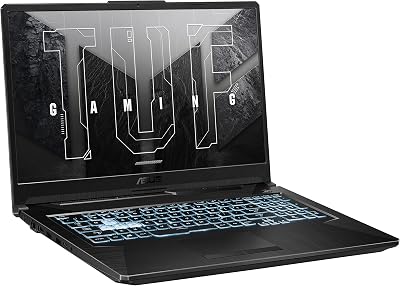
With an RTX 4050 and Intel Core 5 210H, the TUF F16 is aimed at gamers who want a durable, mid-range machine for esports titles and AAA games at 1080p on high settings rather than max settings.
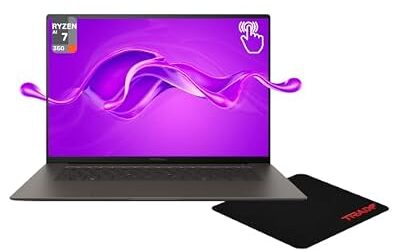
KAIGERR 2026 Gaming Laptop
Built around integrated Radeon RX Vega 8 graphics and a Ryzen 7 H255 chip, this is a budget-first option best suited to older or less demanding titles, emulation, and general use rather than modern AAA gaming.
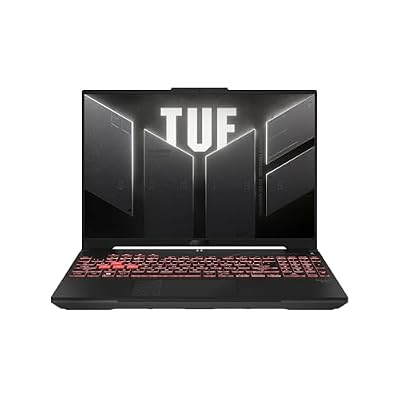
ASUS TUF Gaming A16
The A16 sticks with a proven formula — Ryzen 7 7445HS and RTX 4050 — for reliable 1080p gaming at a 145Hz refresh rate, making it a solid alternative to the F16 for buyers who prefer AMD’s platform.
How to Read a Gaming Laptop Spec Sheet
GPU Wattage Matters More Than the Name
Two laptops can carry the same GPU name and perform very differently, because manufacturers set the total graphics power (TGP) themselves. NVIDIA lists the RTX 5060 laptop GPU as configurable from roughly 45 W to 100 W, and ASUS publishes 75 W to 115 W ranges for its own RTX 5060 and RTX 5070 models. Both GPUs carry 8 GB of GDDR7 memory according to NVIDIA, so a high-wattage RTX 5060 can match or beat a heavily limited RTX 5070. Look for the TGP in the detailed specifications, not just the GPU name.
Memory, Storage, and Panel
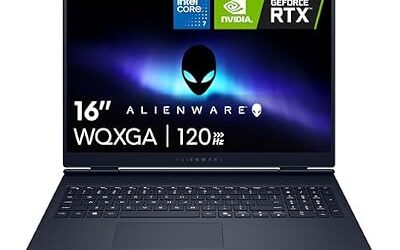
DDR5 memory is faster than DDR4, and 16 GB is the practical floor for current games. A 1 TB SSD fills quickly because modern titles often exceed 100 GB. For the screen, 1920×1080 at 144 Hz is common on entry-level models, while a WQXGA panel such as the one in the Alienware 16 Aurora listing is 2560×1600 and needs more GPU power to hold high frame rates.
Integrated Graphics Versus a Discrete GPU
The jumper listing names a Ryzen processor, 16 GB of DDR4, and a 1 TB NVMe SSD, but its heading does not name a discrete graphics card. Confirm on the listing whether the machine relies on integrated graphics, since that changes which games can run.
Cooling and Battery Behavior
Gaming laptops commonly cut GPU power on battery, so frame rates drop when unplugged. Thin chassis often run hotter or louder than thick ones. Look at owner reports for thermals rather than relying on marketing terms.
Which Gaming Laptop Should You Buy?
| If you… | Choose… |
|---|---|
| Want a large screen with an RTX 5060, 16 GB DDR5, and 1 TB SSD | ASUS TUF A18 Gaming Laptop |
| Want a 16-inch machine with an RTX 5070 and an Intel Ultra 9 processor | HP OMEN 16 |
| Prefer a 16-inch with a WQXGA panel | Dell Alienware 16 Aurora |
| Want a 17.3-inch 144 Hz screen and accept an older 2023 design | ASUS TUF Gaming A17 (2023) |
| Want the ROG line in a 16-inch frame | ASUS ROG Strix G16 |
| Want a Copilot+ laptop that also games | Acer Nitro 16S AI Copilot+ PC |
| Want a 16-inch TUF model | ASUS TUF Gaming F16 |
| Need basic gaming and general use, and will verify the graphics hardware first | jumper 2026 Gaming Laptop or KAIGERR 2026 Gaming Laptop |
Common Mistakes When Buying a Gaming Laptop
- Comparing GPU names without TGP. A lower-wattage 5070 can trail a higher-wattage 5060.
- Treating 8 GB of VRAM as future-proof. Some newer titles at high texture settings can exceed it.
- Weighing the processor label over graphics. In games, the GPU usually limits frame rates first.
- Overlooking an older model year. A 2023 design may lack newer ports or GPU generations.
- Ignoring the display. A fast GPU is wasted on a slow panel, and a sharp panel can overwhelm a modest GPU.
Quick Checklist Before You Order
- Find the GPU’s TGP in the specifications and compare it across similar models.
- Confirm the VRAM figure, since 8 GB is common on the RTX 5060 and 5070 laptop GPUs.
- Check whether memory is soldered or sits in replaceable slots, because that decides future upgrades.
- Look for a second SSD slot if you expect a large game library.
- Match the display refresh rate to the GPU; a 144 Hz panel suits mid-range graphics well.
- Note the charger wattage and the warranty and return terms in the listing.
Listings that carry a model year in the title may refer to hardware released one or two generations ago, so compare the GPU and processor generation, not just the year.
Related Guides
- Dell Inspiron Vs Dell Xps Laptop: Full Comparison (2026)
- 14.1 Screen Size Laptop (2026)
- 2 Display Laptop (2026)
- Best Economical Laptop For Gaming (2026)
- Docking Station For Laptop Mac (2026)
Frequently Asked Questions
How much should I spend on a gaming laptop in 2026?
Budget-focused laptops around integrated graphics work for casual or older games, but for modern AAA titles at solid frame rates, plan on a discrete GPU tier like the RTX 4050 or higher for the best long-term value.
Is an RTX 5070 Ti overkill for most gamers?
Not necessarily — it’s excellent for 1440p gaming and content creation, but if you mainly play at 1080p or stick to esports titles, a lower tier like the RTX 4050 or 5060 will deliver similar smoothness for less money.
Does more RAM actually improve gaming performance?
Beyond 16GB, extra RAM mostly benefits multitasking, streaming, and background apps rather than raw frame rates, so 32GB is a “nice to have” rather than essential for pure gaming.
Should I prioritize CPU or GPU when choosing a gaming laptop?
For most games, GPU has the bigger impact on frame rates, but a weak CPU can bottleneck a strong GPU in CPU-intensive titles, so aim for a reasonably balanced pairing rather than maxing out one spec alone.
Final Thoughts
For most buyers, the ASUS ROG Strix G16 offers the best balance of price and performance, while the Acer Nitro 16S is the pick for gamers who want serious 1440p headroom and don’t mind paying more. Budget-conscious shoppers who mainly play lighter titles should look to the ASUS TUF Gaming A16 for dependable, no-frills performance.