🛒 Best Price Today on Amazon
Prime members get fast, free shipping on everything above, plus member-only deals. New members get a 30-day free trial — cancel anytime.
- Best TVs for Sports at a Glance
- What Makes a TV Good for Sports
- Best TVs for Motion: What Reviewers Look For
- Best TVs for Sports by Tier
- Mid-Range Tier
- Budget Tier
- VA vs IPS vs OLED: Viewing Angles for Game Day
- Best Brightness for Sports: How Bright Is Bright Enough?
- Best Football TVs and Best Sports Bar TVs
- Best 55-Inch TVs for Sports, and Which Size to Choose
- Best 4K and HD TVs for Sports
- Tuners and ATSC 3.0 for Live Sports
- Pick X If You Want Y: Decision Table
- Alternatives Worth a Look
- Frequently Asked Questions
Updated November 2026 – The best TVs for watching sports are the Samsung QN90F for bright, sunlit rooms, the LG C5 OLED for dark rooms and wide seating, the Sony Bravia 8 II for premium motion handling, the Hisense U8QG and TCL QM7K for value, and the Samsung S90F and LG G5 for buyers who want an OLED with extra brightness or glare control.
The best TVs for watching sports share four traits: a native 120Hz panel, clean motion processing, enough brightness to beat room light, and a wide viewing angle so everyone on the couch sees the same picture. This guide ranks current models by those traits, explains the trade-offs between VA, IPS and OLED panels, and covers size, seating distance and tuner questions. Every spec below is attributed to the maker or to a reviewing outlet, and panel behavior varies between sizes within the same series.
Best TVs for Sports at a Glance
| Model | Panel type | Best for | Key stated traits | Limits |
|---|---|---|---|---|
| Samsung QN90F | Mini LED (VA-type LCD) | Bright living rooms | Anti-glare screen; 120Hz native as the maker lists | Narrower viewing angle than OLED; premium tier |
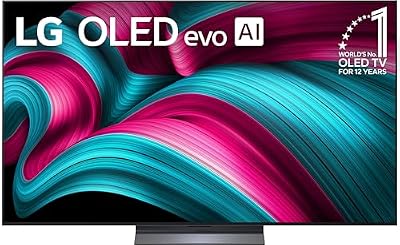
| LG C5 | OLED | Dark rooms, wide seating | 120Hz native; four HDMI 2.1 ports as the maker lists | Reflections in sunlit rooms, per reviewers |
| Sony Bravia 8 II | QD-OLED | Premium motion and color | Sony motion processing; Google TV | Premium tier; reflective screen, per CNN Underscored |
| Samsung S90F | OLED | Smaller rooms, gaming plus sports | Gaming-focused spec list; Tizen | Less peak brightness than mini LED |
| LG G5 | OLED (brighter tier) | Bright-ish rooms with OLED contrast | Maker lists a brighter panel than the C5 | Premium tier |
| Sony Bravia 7 | Mini LED | Mid-range Sony motion | Mini LED backlight; Google TV | Fewer dimming zones than top-tier mini LED |
| Hisense U8QG | Mini LED | Value brightness | High brightness per reviewers; high-refresh gaming support | Viewing angle typical of LCD |
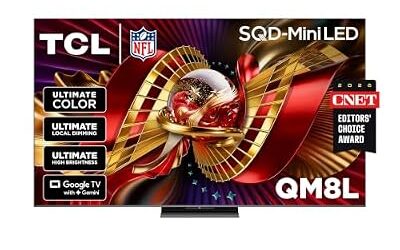
| TCL QM7K | Mini LED (QLED) | Budget big screens | Two of four HDMI ports are 2.1, per Digital Trends | Fewer features than the QM8K |
| TCL QM8K | Mini LED (QLED) | Value flagship brightness | 144Hz as the maker lists; very high brightness per Tom’s Guide | Mid-range to premium tier |
What Makes a TV Good for Sports
Sports are among the hardest content for a TV because the camera pans quickly across a bright field, the scoreboard graphics stay static, and the room is usually lit. That combination rewards four things.
- Native 120Hz panel. Most broadcast sports run at 60 frames or fields per second, so a 120Hz panel mainly gives the motion processor room to work and lets 60fps content map cleanly. Look for the words “native 120Hz” on the maker’s spec sheet rather than “effective” or “motion rate” figures, which are marketing numbers.
- Motion processing that can be tuned. Reviewers consistently suggest turning off aggressive motion smoothing and using a low judder and blur reduction setting instead, which reduces blur on a fast ball without the soap-opera look. TechRadar reports using a low setting on the Samsung QN90F, and CNN Underscored reported no motion-smoothing issues on the LG C5 during a basketball broadcast.
- Brightness. Daytime games in a room with windows need a bright panel or a good anti-glare coating. Mini LED sets lead here, and OLED sets trade some peak brightness for deeper contrast.
- Viewing angles and seating. A game-day crowd rarely sits dead center, which is where the panel type matters most. See the viewing-angle section below.
Best TVs for Motion: What Reviewers Look For
The best TVs for motion combine a fast-responding panel with a processor that handles 24, 30 and 60 frame-per-second sources without adding artifacts. OLED pixels switch state very quickly, which is why OLED sets are often praised for clean blur on fast pans, while mini LED sets rely on high refresh and processing. Reviewers generally describe the Sony Bravia 8 II and the LG C5 as strong on motion, and the Samsung QN90F as excellent for a mini LED set. Variable refresh rate (VRR) and auto low latency mode (ALLM) matter for consoles, not for cable or streamed sports, so they are a bonus rather than a reason to choose a model.
One practical point: sports streamed over an app may be encoded at lower quality than a cable or satellite feed, and no TV can add detail that is missing from the stream. If motion looks soft, test the same game from a different source before blaming the panel.
Best TVs for Sports by Tier
Premium Tier
Premium sets suit buyers who watch many games, have a dedicated viewing room, and want the strongest motion handling and contrast.
Samsung QN90F – Best for Bright Rooms
Mini LED · anti-glare screen · 120Hz native as the maker lists · Tizen smart platform · Dolby Vision not supported (Samsung uses HDR10+)
TechRadar named the QN90F its favorite TV for sports, citing high brightness, the anti-glare screen and excellent motion handling for a mini LED set. It suits an afternoon game in a room with unshaded windows. The trade-off is the narrower viewing angle that comes with an LCD panel, and Samsung does not support Dolby Vision, which matters more for movies than for live sports. Newer Samsung lines have appeared in 2026 lists, so treat the QN90F as a previous-generation model that remains widely sold.

Samsung 55-Inch Class Neo QLED 4K QN90F Series, Vision AI, Mini LED Smart TV (2025 Model, 55QN90F) Neo Quantum HDR+, Object Tracking Sound+ w/Dolby Atmos, Glare Free, Gaming Hub, Alexa Built-in
Included for 'Best TVs for Watching Sports in 2026 (Motion, Brightness and Viewing Angles)' as a representative home product in this roundup; selection reflects the product set returned for this topic.
View on AmazonSony Bravia 8 II – Best for Premium Motion and Color
QD-OLED · Google TV · Sony picture processing · premium tier
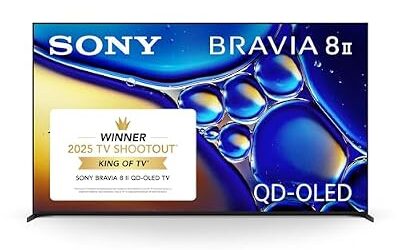
CNN Underscored describes the Bravia 8 II as a premium set with great color, detail and motion, and notes that it can be as reflective as the LG C5. That makes it a better fit for dim or controlled rooms. Sony markets its processor as the main reason for its motion handling, and reviewers generally agree that its broadcast upscaling is a strength. The price tier is the main limit: it costs notably more than the LG C5 for similar day-to-day sports use.

Sony 65 Inch BRAVIA 8 II QD OLED 4K HDR Smart Google TV (K-65XR80M2) | Sony’s brightest OLED with max color, XR Processor with AI Technology, Ultra Slim Design, 4K movie credits included
Included for 'Best TVs for Watching Sports in 2026 (Motion, Brightness and Viewing Angles)' because the listing lists an explicit depth/thickness, which is the attribute this article compares.
View on AmazonLG G5 – Best for OLED With Extra Brightness
OLED · 120Hz native · webOS · brighter panel than the C5 as the maker lists · four HDMI 2.1 ports as the maker lists
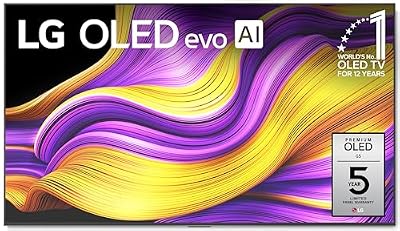
The G5 is LG’s brighter OLED tier, and the maker positions it as the choice for rooms with more light. A newer G6 line has appeared in 2026 lists, which makes the G5 a previous-generation pick that is often easier to find. For pure sports use, the gain over the C5 is about brightness and glare, so buyers in dark rooms can skip the premium.

LG 65-Inch OLED evo AI 4K G5 Series Smart TV (OLED65G5WUA, 2025) | Super Upscaling, Dolby Atmos, Vision, HDR10, Filmmaker Mode, Wow Orchestra, Alexa Built-in
Included for 'Best TVs for Watching Sports in 2026 (Motion, Brightness and Viewing Angles)' as a representative home product in this roundup; selection reflects the product set returned for this topic.
View on AmazonMid-Range Tier
Mid-range sets give most of the sports benefits, including 120Hz panels and strong brightness, at a lower tier than flagships.
LG C5 – Best for Dark Rooms and Wide Seating
OLED · 120Hz native · four HDMI 2.1 ports as the maker lists · Dolby Vision and HDR10 · webOS
The LG C5 is the all-rounder in most 2026 sports rankings. TechRadar calls it the best-value OLED for sports while noting reflection problems, and CNN Underscored reported accurate colors and no motion-smoothing issues during a basketball game. OLED panels keep their color and contrast when viewed from the side, so a crowded sofa sees a consistent picture. The weak point is a bright room, where glare can wash out the screen. A newer C6 exists in some 2026 lists, which makes the C5 a previous-generation model.

LG 65-Inch OLED evo AI 4K C5 Series Smart TV (OLED65C5PUA, 2025) | Dolby Atmos, Dolby Vision, HDR10, AI Super Upscaling 4K, FILMMAKER Mode
Included for 'Best TVs for Watching Sports in 2026 (Motion, Brightness and Viewing Angles)' as a representative home product in this roundup; selection reflects the product set returned for this topic.
View on AmazonSamsung S90F – Best for Smaller Rooms and Gaming Plus Sports
OLED · 120Hz native · Tizen · gaming-focused spec list · smaller sizes available
What Hi-Fi calls the S90F Samsung’s best small TV, with a warm, detailed picture and strong gaming specs. It is a fit for a den or bedroom where the same screen does double duty for console games and a Sunday game. Samsung also lists an S95H successor for 2026, so confirm which generation is on the shelf. Sports-specific testing of this set is thinner than for the C5, so the case for it rests on the OLED panel rather than on published sports results.

Samsung 65-Inch Class OLED S90F 4K Smart TV (2025 Model) NQ4 AI Gen3 Processor Upscaling Pro HDR +, Motion Xcelerator 144Hz, Vision Alexa Built-in
Included for 'Best TVs for Watching Sports in 2026 (Motion, Brightness and Viewing Angles)' as a representative home product in this roundup; selection reflects the product set returned for this topic.
View on AmazonSony Bravia 7 – Best for Mid-Range Sony Motion
Mini LED · Google TV · Sony processor · mid-range tier
The Bravia 7 sits below the Bravia 8 II and uses a mini LED backlight to reach bright-room performance. Sony lists a processor in this tier aimed at smoother upscaling, and buyers who prefer Sony’s natural motion style can find it here at a lower tier than the OLED. As with other mini LED sets, wide-angle seating is a compromise. Reviewers have reported less brightness than the top Samsung and TCL models, so look at room light before committing.

Sony 65 Inch BRAVIA 7 Mini LED QLED 4K HDR Smart Google TV (K-65XR70) | XR Processor with AI Technology, Dolby Vision/Atmos, PS5 Features, XR Backlight Master Drive, 4K movie credits included
Included for 'Best TVs for Watching Sports in 2026 (Motion, Brightness and Viewing Angles)' because the listing lists an explicit depth/thickness, which is the attribute this article compares.
View on AmazonBudget Tier
Budget here means lower than the flagships, not entry-level. These two mini LED sets give strong brightness for sports at a modest tier.
Hisense U8QG – Best for Value Brightness
Mini LED · QLED color · high-refresh gaming support as the maker lists · Google TV or Fire TV depending on region and model
TechRadar called the U8QG one of the best mini LED TVs it tested in 2025, and Tom’s Guide describes it as a set with incredible brightness and color saturation. That makes it a good option for a bright living room when an OLED is out of budget. Hisense lists a newer U8 generation, so the U8QG is previous-generation and is often discounted. Viewing angles are typical of LCD, so sit as close to center as the room allows.

Hisense 65" U8 Series ULED Mini-LED 4K UHD Smart Google TV (65U8QG) - QLED, Native 165Hz, VRR 288, Up to LD5600, 5000 Nits, HDR10+, Dolby Vision IQ · Atmos, IMAX Enhanced, 4.1.2 Ch Audio
Included for 'Best TVs for Watching Sports in 2026 (Motion, Brightness and Viewing Angles)' as a representative home product in this roundup; selection reflects the product set returned for this topic.
View on AmazonTCL QM7K – Best for Budget Big Screens
Mini LED · QLED · two of four HDMI ports are 2.1, per Digital Trends · Google TV
Tom’s Guide describes the QM7K as keeping most of the best parts of the QM8K at a lower tier, and TechRadar listed a 75-inch version as a budget World Cup pick. Large sizes are its strength: a 75-inch or bigger screen is often the cheapest way to get an immersive game-day picture. The limit is the number of HDMI 2.1 ports, which matters if a console, a soundbar and a streaming box compete for inputs.

TCL 65 Inch Class QM7K Series | Mini LED QLED 4K HDR | 65QM7K, 2025 Model | 120HZ-144HZ Anti Reflective Screen Smart Google TV Dolby Atmos Onkyo Audio | Voice Remote Alexa Gaming Streaming Television
Included for 'Best TVs for Watching Sports in 2026 (Motion, Brightness and Viewing Angles)' because the listing lists an explicit depth/thickness, which is the attribute this article compares.
View on AmazonTCL QM8K – Best for Value Flagship Brightness
Mini LED · QLED · 144Hz as the maker lists · Google TV
Tom’s Guide calls the QM8K the best TCL mini LED model and reports brightness above 3,000 nits. It is a strong choice for sports in a bright room at a lower tier than the Samsung QN90F, and it is the usual rival to the Hisense U8 line. Large dimming-zone counts help scoreboards and bright grass without major blooming, though no mini LED set matches OLED black levels.

TCL 65 Inch Class QM8K Series | Mini LED QLED 4K HDR | 65QM8K, 2025 Model | 120HZ-144HZ Anti Reflective Wide Angle Screen Smart Google TV Dolby Atmos | Voice Remote Alexa Gaming Streaming Television
Included for 'Best TVs for Watching Sports in 2026 (Motion, Brightness and Viewing Angles)' because the listing lists an explicit depth/thickness, which is the attribute this article compares.
View on AmazonVA vs IPS vs OLED: Viewing Angles for Game Day
Most mini LED and LED TVs use a VA panel, which gives good contrast head-on but loses color and contrast when seen from the side. IPS-type LCD panels hold color better from an angle but have weaker contrast, and some manufacturers use wide-angle layers to compensate. OLED has the best side-on consistency because each pixel emits its own light.
| Panel type | Viewing angle | Brightness in a lit room | Best seating setup |
|---|---|---|---|
| VA mini LED | Narrower; shifts when seen from the side | Highest | Seating mostly in front of the screen |
| IPS-type LCD | Wide, with weaker contrast | Moderate to high | Wide couches and mixed seating |
| OLED / QD-OLED | Widest, consistent color | Lower peak, strong contrast | Dark rooms and wide seating |
If a group will watch from a wide arc, an OLED such as the LG C5 is usually the safer answer. If a room has large windows, a mini LED such as the Samsung QN90F or TCL QM8K will usually look better in daylight.
Best Brightness for Sports: How Bright Is Bright Enough?
Brightness numbers quoted in reviews are peak figures for small highlights, and sports use a lot of full-field bright content like grass and ice. Reviewers describe mini LED sets as clearly brighter than OLED in this kind of content. For a room that is lit during the day, favor a mini LED or a brighter OLED tier such as the LG G5, and pair it with an anti-glare screen like the one on the Samsung QN90F. For evening viewing in a dim room, OLED brightness is generally sufficient and contrast does more for the picture than extra nits.
Best Football TVs and Best Sports Bar TVs
The best football TVs handle a bright, fast, green-heavy picture: the Samsung QN90F, Hisense U8QG and TCL QM8K are bright-room picks, and the LG C5 is the dark-room pick.
The best sports bar TVs are a different category. Venues generally use commercial-grade models, because consumer warranties are written for home use. Read the maker’s terms before mounting a consumer set in a business. For a home bar, the consumer mini LED sets above fit, and an anti-glare finish helps with overhead lights.
Best 55-Inch TVs for Sports, and Which Size to Choose
The best 55-inch TVs for sports are the smaller sizes of the LG C5, Samsung S90F and TCL QM7K lines, which suit apartments and bedrooms. A 55-inch screen works well at a viewing distance of roughly seven to eight feet, a rule of thumb used by many reviewers rather than a maker specification.
| Screen size class | Typical seating distance | Good fit |
|---|---|---|
| 55 inch | About 7 to 8 feet | Apartments, bedrooms, LG C5 or Samsung S90F |
| 65 inch | About 8 to 10 feet | Most living rooms; the common sweet spot |
| 75 inch | About 9 to 12 feet | Larger rooms; TCL QM7K or Hisense U8QG |
| 85 inch and up | About 11 feet or more | Dedicated rooms and bars |
Check the VESA pattern and weight on the maker’s spec sheet before buying a wall mount, and plan for the extra depth of OLED sets that mount flush.
Best 4K and HD TVs for Sports
For sports, choose 4K on any screen over about 40 inches. Most broadcast sports are still delivered in 1080p or 720p, so the TV upscales much of what you watch, which is another reason to favor a strong processor over an HD-only set.
Tuners and ATSC 3.0 for Live Sports
If you plan to use an antenna for local broadcasts, check whether the TV lists a built-in ATSC 3.0 (NextGen TV) tuner. In the United States many sets include only an ATSC 1.0 tuner, and an external ATSC 3.0 receiver may be needed on models that do not list one. Because makers change tuner specs between model years and sizes, read the specification sheet for the exact size you are buying and keep the instruction manual for setup steps.
Pick X If You Want Y: Decision Table
| Pick this | If you want |
|---|---|
| Samsung QN90F | The brightest, least reflective picture for daytime games |
| LG C5 | OLED contrast and wide-angle seating in a dim room |
| LG G5 | An OLED that gives up less in a lit room |
| Sony Bravia 8 II | Sony processing and top-tier color for a controlled room |
| Sony Bravia 7 | Sony motion style on a mini LED panel |
| Samsung S90F | An OLED that doubles as a console display in a smaller room |
| Hisense U8QG | Strong brightness at a value tier |
| TCL QM7K | A very large screen without a premium budget |
| TCL QM8K | Near-flagship mini LED brightness with 144Hz gaming support |
Alternatives Worth a Look
- Newer 2026 lines. Some 2026 guides list the Samsung S95H and LG G6 and C6 ahead of the models above. If you can find them at a comparable tier, read current reviews for the exact size, since the older models in this guide are previous-generation picks.
- Hisense U7 and TCL QM6K. Both are lower-tier mini LED options that can work for a secondary room, with fewer dimming zones and fewer HDMI 2.1 ports than the models above.
Frequently Asked Questions
What is the best TV for watching sports overall?
The LG C5 is the most common all-round pick, and the Samsung QN90F is the pick for bright rooms. TechRadar names the QN90F its favorite sports TV, while multiple outlets rank the C5 as the best-value OLED for sports. Choose by room light and seating width.
Is OLED or mini LED better for sports?
Mini LED is better in bright rooms, and OLED is better in dark rooms and for wide seating. Mini LED sets such as the Samsung QN90F and TCL QM8K reach higher peak brightness, while OLED sets such as the LG C5 hold color from the side and give deeper contrast.
Do I need a 120Hz TV for sports?
A native 120Hz panel is strongly preferred but not essential. Most broadcast sports run at 60Hz, so a 120Hz panel mainly helps the motion processing and any console gaming on the same screen. Read the spec sheet for the words “native 120Hz.”
Should I turn on motion smoothing for football?
A low setting usually looks best. Reviewers generally suggest a small amount of judder and blur reduction, and TechRadar reports using a low setting on the QN90F. Heavy smoothing can add a soap-opera look and visible artifacts around fast-moving players.
What size TV is best for a living room sports setup?
A 65-inch screen is the common sweet spot for a seating distance of about eight to ten feet. Go to 75 inches or more for larger rooms, and 55 inches for apartments. These distances are reviewer rules of thumb rather than maker specifications.
Do I need ATSC 3.0 to watch live sports?
No. Live sports stream and broadcast through standard channels, and an ATSC 3.0 tuner only matters if you use an antenna for NextGen TV broadcasts in your area. Many TVs list only an ATSC 1.0 tuner, so read the spec sheet for the exact model if the tuner matters to you.