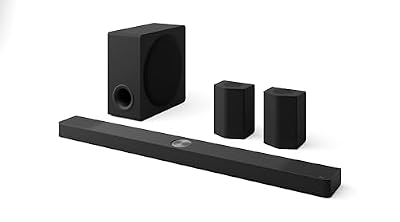
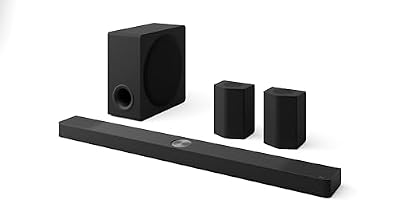
🛒 Best Price Today on Amazon
Prime members get fast, free shipping on everything above, plus member-only deals. New members get a 30-day free trial — cancel anytime.
- Best Home Theater Speakers at a Glance
- Do You Need an AV Receiver for a Home Theater Speaker System?
- Budget Tier: Home Theater Speakers for Small Rooms
- Mid-Range Tier: Best Surround Speakers and Receiver Bundles
- Premium Tier: Best Atmos Speakers for Home Theater
- 5.1 vs 7.1: Which Surround Layout Makes Sense?
- Best Rear Speakers and Surround Speakers for Home Theater
- Best 5.1 Atmos Speakers: How to Add Height to a 5.1 System
- How to Place Home Theater Speakers
- Pick X If: Decision Table
- Alternatives Worth Considering
- Frequently Asked Questions
Updated November 2026 – For the best home theater speakers, the Yamaha YHT-4950U suits buyers who want a receiver and speakers in one box, the Klipsch Reference Cinema 5.1.4 suits buyers who want Atmos from day one, the Polk T Series 5.1 suits buyers who want tower speakers, and the Sony HT-S40R suits buyers who want real rear speakers without a receiver.
The best home theater speakers are the ones that match your room, your TV or console setup and your receiver. A 5.1 package gives you left, center and right speakers across the front, two surrounds beside or behind the seats and a subwoofer for effects. A 7.1 layout adds two rear-surround speakers, and a 5.1.2 or 5.1.4 layout adds height speakers for Dolby Atmos. This guide sorts the main options into budget, mid-range and premium tiers, explains when you need an AV receiver, and answers the long-tail questions buyers ask about rear speakers, surround speakers and 5.1 Atmos setups. Product details below come from the makers’ listings and from review roundups, and most roundups for this category are affiliate-style, so treat any ranking as one opinion.
Best Home Theater Speakers at a Glance
| Product | Tier | Best for | Layout as listed | Main limit |
|---|---|---|---|---|
| Monoprice Premium 5.1 package | Budget | First passive system on a tight allowance | 5.1 with a powered sub | Needs a separate AV receiver |
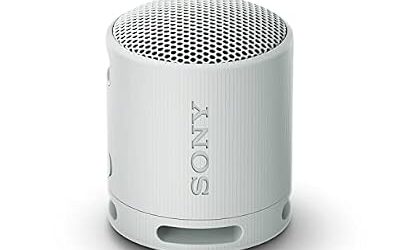
| Sony HT-S40R | Budget | Wireless rear speakers, no receiver | 5.1 soundbar with sub and rear speakers | Limited upgrade path |
| Yamaha YHT-4950U | Mid-range | All-in-one receiver bundle | 5.1 with receiver included | Bundle speakers are compact |
| Polk T Series 5.1 | Mid-range | Tower-speaker fronts | T50 towers, T30 center, PSW10 sub | Floor space, receiver needed |
| ELAC Debut 2.0 B6.2 | Mid-range | Front pair or surrounds | Bookshelf pair | Pair only, not a full package |
| Klipsch Reference Cinema 5.1.4 | Premium | Atmos with height modules | 5.1.4 package | Needs a 5.1.4-capable receiver |
| Klipsch Reference R-26FA | Premium | Atmos-enabled towers | Tower with built-in up-firing driver | Large, needs room to breathe |
| Klipsch RP-500SA II | Premium | Atmos add-on or surround | Angled dual-role speaker | Best with a flat ceiling |
| Sony BRAVIA Theater System 6 (HT-S60) | Mid-range | Sony TV owners | Soundbar, sub, rear speakers | Soundbar-style, closed ecosystem |
Do You Need an AV Receiver for a Home Theater Speaker System?
You need an AV receiver for almost every passive speaker package, because passive speakers have no amplifier of their own. The receiver takes video and audio from your TV, console or streamer over HDMI and sends power to each speaker through speaker wire. Soundbar-style systems such as the Sony HT-S40R skip this step because the bar and subwoofer contain their own amplifiers and the rear speakers connect wirelessly to the sub or bar, according to the maker.
If you choose passive speakers, match the receiver to the layout you want. A 5.1 package needs five amplified channels. A 5.1.2 or 5.1.4 Atmos layout needs seven or nine channels and Dolby Atmos decoding, which the receiver maker lists in the specifications. For gamers, an HDMI input with eARC or ARC support on the TV matters, and so does HDMI pass-through for consoles and PCs. The Yamaha bundles listed below include a receiver, which removes most of the matching work.
Budget Tier: Home Theater Speakers for Small Rooms
Monoprice Premium 5.1 – Best for a Low-Cost Passive Start
Specs: passive 5.1 package · powered subwoofer · speaker-wire connections · receiver required.
Review roundups name the Monoprice Premium 5.1 package as a budget and compact pick, and say the larger Premium 5.1.4 set is the Atmos-ready option when the receiver supports height channels. The appeal is straightforward: you get matched speakers and a subwoofer at the lowest tier, and you can upgrade the receiver or swap individual speakers later. The trade-off is that you must buy and set up an AV receiver, and that small satellites do not fill a large room. Buyers should read the maker’s current product page for the exact model and driver details before ordering, because Monoprice sells several 5.1 packages under similar names.

Monoprice Premium 5.1 Channel Home Theater System with Subwoofer - 100 Watt Speakers, 200 Watt Subwoofer, Black
Included for 'Best Home Theater Speaker Systems in 2026 (5.1, 7.1 and Atmos)' as a representative home product in this roundup; selection reflects the product set returned for this topic.
View on AmazonSony HT-S40R – Best for Wireless Rear Speakers Without a Receiver
Specs: 5.1-channel soundbar system · wireless subwoofer · two rear speakers · HDMI ARC and Bluetooth, as the maker lists.
The Sony HT-S40R is the budget 5.1 pick in several roundups because it ships with a soundbar, a subwoofer and dedicated rear speakers, which most soundbars do not include. The rear speakers connect to the bar system without long speaker runs across the room, and the whole setup plugs into a TV with a single cable. It suits apartments, bedrooms and living rooms where a receiver and wire runs are not realistic. The limits are that you cannot swap individual speakers, you cannot add height speakers, and the sound is tuned for TV and movies rather than for music or for loud gaming sessions in large rooms.

Sony HT-S40R 5.1ch Home Theater Soundbar System,black
Included for 'Best Home Theater Speaker Systems in 2026 (5.1, 7.1 and Atmos)' as a representative home product in this roundup; selection reflects the product set returned for this topic.
View on AmazonMid-Range Tier: Best Surround Speakers and Receiver Bundles
Yamaha YHT-4950U – Best for an All-in-One 5.1 Bundle
Specs: 5.1 package · receiver included · five speakers and a subwoofer · HDMI inputs, as listed by the maker.
The Yamaha YHT-4950U is described in roundups as the best all-inclusive 5.1 value because the receiver, five speakers and powered subwoofer arrive together. That means the receiver and speakers are already compatible, and the maker’s setup guide covers speaker placement and calibration. It is a good fit for buyers who want a proper receiver-based system without researching impedance, channel counts and amplifier power. Yamaha also lists the YHT-4970U and YHT-5960U, which roundups mention for 8K HDMI and MusicCast streaming. Read the maker’s page for the exact HDMI standards on the model you buy, since the numbers change between generations.
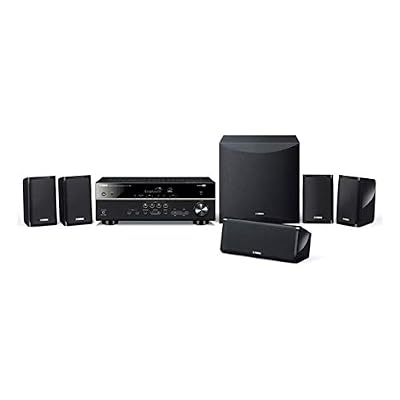
Yamaha Audio YHT-4950U 4K Ultra HD 5.1-Channel Home Theater System with Bluetooth, black
Included for 'Best Home Theater Speaker Systems in 2026 (5.1, 7.1 and Atmos)' as a representative home product in this roundup; selection reflects the product set returned for this topic.
View on AmazonPolk T Series 5.1 – Best for Tower Speakers Up Front
Specs: T50 tower speakers · T30 center channel · PSW10 10-inch powered subwoofer · passive speakers, receiver required.
The Polk T Series 5.1 is named the best tower-speaker bundle in a 2026 roundup, built around T50 towers, a T30 center and a 10-inch PSW10 subwoofer. Tower speakers move more air than compact bookshelf speakers, so they handle music and action scenes with less strain in a medium-to-large room. They also take up floor space and need a few inches of breathing room from the wall. As with any passive set, you need an AV receiver, and Polk lists the amplifier power range each speaker is designed for. Match the receiver to that range and keep levels sensible to avoid distortion.
ELAC Debut 2.0 B6.2 – Best for a Front Pair or a Step-Up Surround Pair
Specs: 2-way bookshelf speaker · 6.5-inch woofer · 1-inch tweeter · sold as a pair, as the maker lists.
The ELAC Debut 2.0 B6.2 is a bookshelf pair, not a full package, and review roundups rank it as a premium bookshelf pick. It makes sense when you want better front left and right speakers or a pair of surrounds that match the tone of the fronts. Because it is a pair, you still need a center speaker, a subwoofer and a receiver to build 5.1. Buyers who plan to grow a system over time sometimes start with the front pair and add other pieces later, though matching the center speaker to the same family keeps dialogue consistent.

ELAC Debut 2.0 B6.2 Bookshelf Speakers, Black (Pair) - 1” Cloth Dome Tweeter & 6.5” Aramid Fiber Woofer - 2-Way Bass Reflex - Up to 35,000 Hz Response
Included for 'Best Home Theater Speaker Systems in 2026 (5.1, 7.1 and Atmos)' as a representative home product in this roundup; selection reflects the product set returned for this topic.
View on AmazonSony BRAVIA Theater System 6 (HT-S60) – Best for Sony TV Owners
Specs: soundbar with wireless subwoofer · rear speakers · HDMI eARC support · integration with Sony BRAVIA TVs, as the maker lists.
Roundups recommend the Sony BRAVIA Theater System 6 for people who already own a Sony TV, because the maker designs the pair to work together with features such as a shared remote and audio-handoff settings. It is a soundbar-style system, so it belongs in the same decision group as the HT-S40R: simpler to place and calibrate, but less customizable than separates. If your TV is another brand it can still connect over HDMI eARC or optical, but some brand-specific features may not work.

Sony BRAVIA Theater System 6 5.1ch Soundbar with Subwoofer & Rear Speakers | Dolby Atmos & DTS:X Surround Sound Home Theater, Bluetooth, Center Channel for Clear Dialogue, Multi Stereo, HT-S60
Included for 'Best Home Theater Speaker Systems in 2026 (5.1, 7.1 and Atmos)' as a representative home product in this roundup; selection reflects the product set returned for this topic.
View on AmazonPremium Tier: Best Atmos Speakers for Home Theater
Klipsch Reference Cinema 5.1.4 – Best for Atmos From Day One
Specs: 5.1.4 layout · Klipsch Reference speakers · horn-loaded tweeters · four height channels, per the maker and roundups.
The Klipsch Reference Cinema 5.1.4 shows up in roundups as the standout complete theater package, and one guide pairs it with an Onkyo TX-RZ30 receiver. The package is built around Klipsch’s horn-loaded tweeter design, which the maker says is aimed at dynamic, efficient sound in movie playback. The .4 refers to four height channels, and the receiver must support 5.1.4 processing and have enough amplified channels, so confirm that on the receiver maker’s page. It suits buyers who want a ready Atmos layout in a medium or large room and who are comfortable with a separate receiver and speaker wire.

Klipsch Reference Cinema Dolby Atmos 5.1.4 System
Included for 'Best Home Theater Speaker Systems in 2026 (5.1, 7.1 and Atmos)' as a representative home product in this roundup; selection reflects the product set returned for this topic.
View on AmazonKlipsch Reference R-26FA – Best for Atmos-Enabled Towers
Specs: tower speaker · built-in up-firing Atmos driver · Klipsch Reference series · passive, receiver required.
Roundups call the R-26FA 5.1 pack the best choice for dedicated enthusiasts who want room-filling sound with Atmos-enabled towers. The up-firing driver sits inside the tower, so you do not need separate height speakers on top of the front speakers. The drawbacks are size and positioning: towers need space, and up-firing drivers depend on a ceiling that reflects sound reasonably well. If your ceiling is very high, angled or heavily textured, the maker suggests other approaches such as ceiling speakers.

Klipsch Reference R-26FA Floorstanding Speaker, Black, Pair | Includes 2 Floorstanding Speakers, front grilles and top grilles for Dolby Atmos, home theater and immersive audio
Included for 'Best Home Theater Speaker Systems in 2026 (5.1, 7.1 and Atmos)' as a representative home product in this roundup; selection reflects the product set returned for this topic.
View on AmazonKlipsch RP-500SA II – Best for an Atmos Add-On or Surround
Specs: 5.25-inch cerametallic woofer · 1-inch titanium LTS tweeter · switchable Atmos or on-wall mode, as listed in roundups.
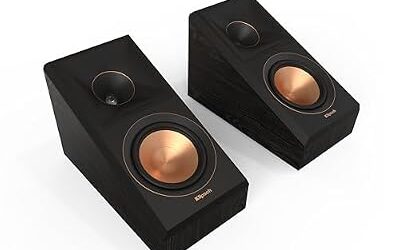
The RP-500SA, and its newer RP-500SA II, is the most frequently named Atmos add-on in 2026 roundups. Its angled design lets it function as an up-firing Atmos module sitting on top of a speaker, or as an on-wall surround or elevation speaker. The cost is that it works best with a flat, reflective ceiling and sits above the most basic Atmos add-ons in cost. If you only need height channels for a small room, a simpler module may be enough. For more detail on up-firing and ceiling options, the Dolby Atmos speaker guide on this site covers placement and ceiling-height limits.

Klipsch Reference Premiere RP-500SA II Ebony Surround Sound Speakers
Included for 'Best Home Theater Speaker Systems in 2026 (5.1, 7.1 and Atmos)' as a representative home product in this roundup; selection reflects the product set returned for this topic.
View on Amazon5.1 vs 7.1: Which Surround Layout Makes Sense?
A 5.1 layout is enough for most living rooms, and a 7.1 layout makes sense when the seats sit away from the side walls or the room is wide. In 5.1, two surround speakers sit beside the seating position. In 7.1, those side surrounds stay in place and two more rear-surround speakers sit behind the seats, which helps wide rooms and rows of seating. Most receivers can decode both, and Dolby Atmos content adds height channels on top. If your receiver has seven amplified channels, a 5.1.2 layout (five bed speakers, one sub, two height speakers) is a common alternative to 7.1.
| Layout | Speakers | Best for | Receiver channels needed |
|---|---|---|---|
| 2.1 | Two speakers plus sub | Desk or small TV room | 2 plus sub output |
| 5.1 | Front trio, two surrounds, sub | Most living rooms | 5 plus sub output |
| 7.1 | 5.1 plus two rear surrounds | Wide rooms, multiple seat rows | 7 plus sub output |
| 5.1.2 | 5.1 plus two height speakers | Starter Atmos | 7 plus sub output |
| 5.1.4 | 5.1 plus four height speakers | Full Atmos in medium to large rooms | 9 plus sub output |
Best Rear Speakers and Surround Speakers for Home Theater
The best rear speakers for a home theater are the ones that match the tone of your front speakers, and a matching pair from the same series is the safest choice. Mixing brands can cause the sound to jump when effects pan around the room. If your fronts are Klipsch Reference speakers, the RP-500SA II or a Reference bookshelf pair makes a natural surround. If your fronts are Polk T-series towers, a Polk bookshelf from the same range is the logical match, and ELAC Debut speakers pair well with other Debut models.
Placement matters as much as the model. Surrounds usually sit slightly behind and beside the main seat at or above ear height, and rear surrounds in a 7.1 layout sit behind the seats. Dipole-style surrounds spread sound more diffusely, while direct-radiating bookshelf speakers give more focused effects. Search phrases that mention car-sized speaker dimensions or car brands refer to automotive audio, which is a different product category from the home speakers covered here.
Best 5.1 Atmos Speakers: How to Add Height to a 5.1 System
The easiest way to turn a 5.1 system into a 5.1.2 Atmos system is to add two up-firing modules or two ceiling speakers, provided your receiver supports Atmos and has two spare amplified channels. Up-firing speakers bounce sound off the ceiling and need a flat, reasonably low ceiling, which roundups put at roughly 8 to 9 feet, though the maker’s manual gives the supported range. Ceiling speakers give more precise overhead placement but require cutting into the ceiling and running wire, so they suit new installs and renovations better than rentals.
How to Place Home Theater Speakers
- Front left and right: sit them roughly equal distance from the TV, angled slightly toward the main seat, with the tweeters near ear height.
- Center channel: put it directly above or below the screen, as close to the screen center as possible, since it carries most dialogue.
- Surrounds: place them beside the main seat, slightly behind and at or above ear height.
- Rear surrounds (7.1): place them behind the seating row, facing forward.
- Height speakers: mount them above the seating position, or use up-firing modules on top of the front and surround speakers.
- Subwoofer: start near the front of the room, then try a few spots, because bass changes significantly with position.
Most receivers include an automatic room-calibration routine that uses a supplied microphone to set distances and levels. Read your receiver’s manual to use it correctly and to confirm the crossover setting for each speaker.
Pick X If: Decision Table
| Pick this | If you |
|---|---|
| Sony HT-S40R | want real rear speakers and no receiver or speaker wire |
| Yamaha YHT-4950U | want one box that includes the receiver and speakers |
| Polk T Series 5.1 | want tower speakers and are happy buying a receiver |
| Klipsch Reference Cinema 5.1.4 | want Atmos height channels in the first package |
| Klipsch Reference R-26FA | want Atmos from the towers themselves |
| Klipsch RP-500SA II | already own a 5.1 system and want to add height |
| ELAC Debut 2.0 B6.2 | want better fronts or matching surrounds for an existing system |
| Monoprice Premium 5.1 | want the lowest-tier passive system to learn on |
Alternatives Worth Considering
- Enclave CineHome PRO: roundups mention it as a true wireless 5.1 option for rooms where running speaker wire is impractical.
- ULTIMEA Skywave X50 and Poseidon M60: soundbar systems with Atmos and surround speakers, listed as budget picks. Treat them as lighter options than the Klipsch or Yamaha systems above.
- Polk Monitor XT90: a Polk Atmos module that roundups name as a value Atmos add-on when the rest of your system is Polk.
Frequently Asked Questions
What are the best home theater speakers for a small room?
A soundbar-style system such as the Sony HT-S40R or a compact 5.1 package such as the Monoprice Premium 5.1 suits a small room. The room is too small to benefit from towers or a large subwoofer. Keep the subwoofer size modest and avoid placing it in a corner if the bass sounds boomy.
What are the best Atmos speakers for a 5.1 system?
The Klipsch RP-500SA II is the most frequently named add-on in 2026 roundups, and the Polk Monitor XT90 is a value alternative if your system is Polk. You need an Atmos-capable receiver with two or four spare amplified channels. Read the receiver and speaker makers’ pages for supported ceiling heights.
Do I need rear speakers for a home theater?
You need surround speakers for a 5.1 layout and rear speakers only for 7.1. Surrounds beside the seating position carry most side and rear effects. Rear speakers behind the seats add detail in wide rooms or rooms with several rows of seating.
Can I mix speaker brands in a home theater?
You can mix brands, but matching the front three speakers from the same family gives the most consistent tone as sound pans across the screen. Surrounds are more forgiving, since they carry ambient effects. If you do mix, run the receiver’s calibration and keep crossover settings sensible.
Are Atmos ceiling speakers better than up-firing speakers?
Ceiling speakers place sound directly overhead and do not depend on the ceiling reflecting sound, so they suit high or unusual ceilings. Up-firing speakers are easier to install and need no wall work but depend on a flat, reasonably low ceiling. Makers publish supported ceiling heights, so read the manual before choosing.
Is a soundbar system or a passive speaker system better for gaming?
A passive speaker system with an AV receiver offers more upgrade options and handles HDMI pass-through for consoles and PCs. A soundbar system is simpler and takes less space. Choose based on whether you want a one-cable setup or a system you can grow over time.