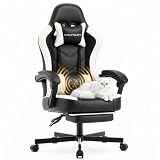
The question of whether a gaming chair or an office chair makes sense for your setup has generated more forum arguments than most GPU comparisons. The reason is simple: the answer depends almost entirely on how many hours you sit, what your body needs, and whether you care about aesthetics. In 2026, the gap between the two categories has narrowed on the ergonomic front, but meaningful differences remain in adjustability, durability expectations, and price-to-comfort ratios.
The Short Answer
If you sit for six hours or fewer per day and want a chair that looks like part of your setup, a mid-tier gaming chair delivers reasonable comfort. If you sit for eight or more hours, work from home, or have any lower back sensitivity, an ergonomic office chair from a dedicated seating manufacturer will serve you better in nearly every measurable way. The exception is that many modern gaming chairs have adopted ergonomic office chair DNA, making the category boundary blurrier than it was a decade ago.
What Is Actually Different
| Attribute | Gaming Chair (typical) | Ergonomic Office Chair (typical) |
|---|---|---|
| Price range for comfortable tier | $150 to $350 | $350 to $900 |
| Adjustment axes (headrest, lumbar, seat depth, recline lock) | 3 to 5 | 5 to 8 |
| Lumbar support mechanism | Often a pillow or bolt-on pad | Frequently integrated, adjustable in depth and height |
| Upholstery | PU leather or fabric hybrid, tends to degrade at 3 to 5 years | Mesh, knit, or high-density foam, often rated 7 to 12 years |
| Warranty | Typically 2 to 5 years | Typically 8 to 12 years |
| Frame construction | Sheet metal or plastic with foam shell | Aluminum or reinforced polymer with engineered flex |
| Aesthetic intent | Coordinating with RGB builds and racing-style design | Neutral, professional, or minimal |
| Seat pan shape | Bolstered wings for “racing” look, can restrict hip movement | Waterfall edge, generally wider, no lateral wings |
Real-World Impact
Casual Gaming (3 to 6 hours daily)
At this usage level, the difference between a $200 gaming chair and a $400 office chair is minimal for most people. Gamers Nexus, in their ergonomic setup commentary, has noted that comfort for shorter sessions is dominated by seat cushion thickness and backrest angle rather than fine-grained lumbar adjustment. If you are in this range, buy the chair that looks good in your room and has at least an adjustable lumbar pillow.
Extended Work and Play (8 to 12 hours daily)
This is where the categories diverge sharply. Tom’s Hardware, in their office chair buyer guides, consistently recommends chairs with adjustable seat depth and multi-directional armrests for anyone sitting more than six hours. The bolstered “racing” wings common on gaming chairs press against your hips during long stretches and can restrict circulation. Mesh-backed ergonomic chairs from manufacturers like Herman Miller or Steelcase (whose products frequently anchor Tom’s Hardware and Hardware Unboxed recommendations) distribute load across the entire back rather than concentrating it on two or three foam points.
Body Type and Height Considerations
Gaming chairs are generally sized for a medium build. Hardware Unboxed has observed in peripheral and setup content that users under 5’4″ or over 6’2″ often find gaming chair seat pans either too deep or too shallow. Ergonomic office chairs with adjustable seat depth solve this directly. If you are outside the median height range, a quality office chair is not a preference; it is a practical necessity.
When It Matters and When It Doesn’t
It matters if you have existing back pain, a sedentary job, or plan to keep the chair for five or more years. It also matters if your budget can stretch to the $400-plus tier, where ergonomic office chairs begin to outperform gaming chairs in every functional metric.
It does not matter much if you are a teenager sitting at a desk for two hours of after-school gaming, or if you are pairing the chair with a standing desk where total seated time stays under four hours daily. In those cases, the gaming chair’s lower entry price and visual coherence with a themed setup are legitimate advantages.
Recommendation by User Type
Streamers who sit for 10 to 14 hours a day should prioritize an ergonomic office chair with mesh back, adjustable seat depth, and at least an eight-year warranty. The extra cost pays for itself in avoided posture problems.
Competitive gamers who play 4 to 6 hours daily can be satisfied with a gaming chair that has real lumbar adjustment (not just a pillow) and fabric upholstery, since PU leather degrades faster with daily sweat exposure.
Home office workers who game occasionally should buy an office chair and accept the aesthetic tradeoff. The same chair supports a spreadsheet, a Zoom call, and a two-hour evening session equally well.
Budget-conscious buyers under $200 should look at used ergonomic chairs from office liquidators before buying a new gaming chair in that price range, where foam density and frame quality drop off sharply.
FAQ
Do gaming chairs cause back problems?
Not inherently. Poorly fitted chairs of any type cause back problems. The specific risk with gaming chairs is that the fixed bolstered wings and shallow seat depth can force an unnatural hip angle for taller or wider users, and the typical pillow-based lumbar support shifts during recline, leaving the lower back unsupported at the most common resting angle.
Is PU leather really worse than mesh for durability?
Yes. Gamers Nexus and TechSpot have both noted in long-term peripheral and setup coverage that PU leather on budget gaming chairs tends to crack and peel at the seat edges within three to five years, particularly under daily use with clothing that generates friction. Mesh shows far less visible degradation over the same period, though it can sag if the frame quality is poor.
Can I make a gaming chair ergonomic with aftermarket accessories?
Partially. A quality external lumbar support cushion and a seat wedge can improve the geometry of a budget gaming chair. However, aftermarket parts cannot fix a seat pan that is too deep, too narrow, or shaped with restrictive wings. If the frame geometry does not match your body, no amount of padding makes it a true ergonomic solution.
Are expensive gaming chairs just rebranded office chairs?
Some are. TechPowerUp’s setup and workspace coverage has pointed out that several “premium” gaming chairs in the $500 to $700 range are functionally identical to ergonomic office chairs with cosmetic racing-stripe overlays. If you want the ergonomic performance of a $600 office chair but prefer a darker, more angular aesthetic, those rebranded options can make sense. Just compare the adjustment feature list line by line before paying a markup for the design language.
Sources and Methodology
Price ranges, durability observations, and ergonomic recommendations in this article reflect consensus assessments found in the following outlets’ published content: Tom’s Hardware (office chair buyer guides and long-term product testing), Gamers Nexus (ergonomic setup commentary and workspace video coverage), Hardware Unboxed (peripheral and desk setup reviews), TechSpot (furniture and accessories reviews), and TechPowerUp (workspace and lifestyle product coverage). No figures presented here are measured by this site. All numbers are approximate ranges derived from aggregate published observations across those sources. Warranty and adjustment-axis counts reflect manufacturer specifications as reported in those outlets’ reviews.