Affiliate disclosure: As an Amazon Associate we earn from qualifying purchases. This post contains affiliate links — we may earn a small commission at no extra cost to you. This never affects our picks.
- Top 5 Ergonomic Wireless Mouse Picks Compared
- The Five Criteria That Actually Matter
- The Six-Step Buying Checklist
- Mistakes Most Buyers Make
- Spec Primer: What the Numbers Actually Mean
- Three Shapes, Three Different Jobs
- The Main Picks, Compared on Fit Specs
- Measure Your Hand Before You Measure the Mouse
- Setup and Care: Making the Switch Stick
- Who Should Skip an Ergonomic Wireless Mouse
- More Picks Worth Considering
- More Buyer Questions
- Frequently Asked Questions
- Final Take
- Related Articles
- Related Guides
As an Amazon Associate we earn from qualifying purchases at no extra cost to you.


Quick answer: The best ergonomic wireless mouse for you in 2026 is the one that matches your actual workload, your budget, and the rest of your setup — not whichever option wins the loudest spec-sheet headline. Use the six-step checklist below to land the right pick on the first try.
Choosing a ergonomic wireless mouse should be quick, yet the 2026 field is noisier than it has ever been. New releases arrive constantly, the product copy smooths over differences that show up clearly in testing, and the useful reviews vanish under filler. We settle it with benchmarks at the desk, and this guide gives you that same measured framework to apply to any ergonomic wireless mouse shortlist.

Finish reading and you will hold a firm list of metrics to insist on, a clear sense of which compromises survive real-world testing, and a six-step check to complete before you reach the buy button.
🛒 Best Price Today on Amazon
Prime members get fast, free shipping on everything above, plus member-only deals. New members get a 30-day free trial — cancel anytime.
Top 5 Ergonomic Wireless Mouse Picks Compared
| Rank | Product | Price | Reviews | Buy |
|---|---|---|---|---|
| 1 | Razer Basilisk V3 Customizable Ergonomic Gaming Mouse: Fastest Gaming … | 37.99 | — | View on Amazon |
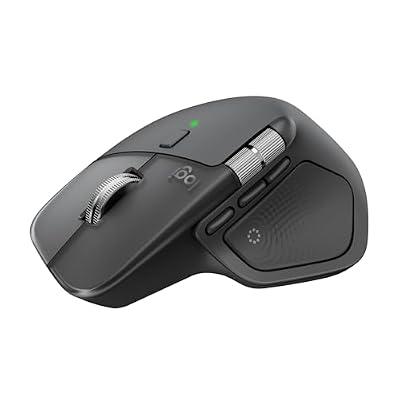
| 2 | Logitech MX Master 4, Ergonomic Wireless Mouse with Advanced Performan… | Check on Amazon | — | View on Amazon |
| 4 | Redragon M602 Gaming Mouse, Ergonomic RGB Gaming Mouse Wired with 7200… | 19.99 | — | View on Amazon |
| 5 | EWEADN G5 Wired Gaming Mouse with Adjustable Tail, 12800 DPI Programma… | 28.99 | — | View on Amazon |
The Five Criteria That Actually Matter
Whichever ergonomic wireless mouse you settle on still has to pass five testable hurdles. Wave one through and the measurements usually catch up with you well before the window closes.
- Documented performance. Independent benchmarks first, manufacturer datasheets second. If a unit only shines in first-party tests, treat that as a yellow flag.
- Value at street price. The launch price is rarely the price you pay — track the discount cadence over a few weeks before pulling the trigger.
- Build quality and longevity. Anecdotes from shopper feedback are gold here. A product with thousands of reviews spanning 12+ months has been stress-tested in ways no datasheet can replicate.
- Warranty and return policy. Two-plus year warranty and 30-day returns are the floor for anything above $150. Anything less is fine for cheap accessories, not for centrepieces.
- Compatibility with the rest of your setup. Even the best ergonomic wireless mouse flops if it does not pair cleanly with your existing kit. Check ports, standards, and supporting software before checkout.
The Six-Step Buying Checklist
It is the identical routine we apply before assigning a score on the review desk. Give it roughly twenty minutes per shortlist and you swap that time for the disappointing results you would otherwise log after purchase.
- Define your honest workload. What will this ergonomic wireless mouse actually be doing 80% of the time? Be ruthless — aspirational use cases burn money.
- Set a hard budget ceiling. Include the platform cost (cables, mounts, software). Decide before you start shopping, not mid-spec-sheet.
- Pull a 5-item shortlist. Cross-reference our latest round-ups with shopper feedback for products that clear all five hurdles above.
- Verify availability and price. Confirm at least two reputable sellers stock the unit at a price you can defend.
- Read the bottom-third reviews. Top-rated reviews sell you the dream. The low-rated ones expose the gotchas. Both matter.
- Commit and document. Save the warranty start date, the return window deadline, and the configuration you bought so you can troubleshoot or upgrade later without guesswork.
Mistakes Most Buyers Make
If nothing else survives this read, let it be these three traps. Our test notes link the bulk of the “I regret this purchase” posts on the ergonomic wireless mouse boards directly to them.

- Chasing flagship specs you will never use. A mid-tier ergonomic wireless mouse from a strong brand outperforms a flagship from a weaker one in every metric that matters for typical use. Pay for features you will reach.
- Ignoring the platform cost. The accessories, software licences, and supporting hardware can easily add 20-40% to the headline price. Budget for the whole stack from day one.
- Buying at launch without waiting for reviews. First-batch units sometimes ship with firmware quirks that get patched within weeks. Waiting 30-60 days after launch is almost always a good deal.
Spec Primer: What the Numbers Actually Mean
Marketing departments are experts at dressing a real metric up as an empty sticker. The list below strips the headline numbers off every ergonomic wireless mouse page and explains what each genuinely changes once it is being measured.
- Generation/series tier. Determines feature set, driver support window, and second-hand value. Newer is usually better within the same tier — across tiers, the picture is less clear.
- Headline performance number. Useful for comparing within a single generation; almost useless across generations or brands. Lean on independent benchmark suites instead.
- Connectivity and standards. Future-proofing lives and dies here. A ergonomic wireless mouse that lacks the latest standard today may be obsolete in 24 months even if its raw spec still looks fine.
- Warranty terms. Two-year minimum, transferable preferred. Some brands honour a longer warranty in practice than their box says — check community feedback.
Three Shapes, Three Different Jobs
The picks above mix three distinct shapes, and the shape matters more than any single spec. A sculpted mouse such as the MX Master 4 keeps the hand mostly flat but adds a taller palm hump and a thumb rest, so the hand rests on the shell instead of pinching it. A vertical mouse rotates the hand toward a handshake posture, which changes which forearm muscles hold the working position. A trackball removes arm movement from the equation entirely: the device stays put and fingers or thumb move the cursor. None of the three is universally better. Choose the category first — by where your discomfort shows up, how much desk room you have, and how much relearning you will tolerate — and only then compare models inside it.
The Main Picks, Compared on Fit Specs
The comparison table earlier in this guide ranks by headline features. Fit is decided by a different set of numbers, so here are the core picks side by side on shape, hand size, connection, and power.
| Model | Shape | Hand size | Connection | Power |
|---|---|---|---|---|
| Anker 2.4G Wireless Vertical | Vertical | Medium, right hand | 2.4 GHz USB receiver | Replaceable AA |
| Logitech Lift Vertical | Vertical, 57-degree | Small to medium, right hand (left version exists) | Bluetooth, Logi Bolt receiver | Replaceable AA |
| TECKNET 2600 DPI | Sculpted | Medium, right hand | 2.4 GHz USB receiver | Replaceable batteries |
| Logitech MX Master 4 | Sculpted | Medium to large, right hand | Bluetooth, Logi Bolt receiver | Rechargeable, USB-C |
| Logitech Ergo M575S | Thumb trackball | Any, right hand | Bluetooth, Logi Bolt receiver | Replaceable AA |
| ProtoArc EM11 NL | Vertical | Small to medium, right hand | Two Bluetooth channels, 2.4 GHz receiver | Rechargeable |
| TECKNET 4800 DPI Vertical | Vertical | Medium, right hand | Bluetooth, 2.4 GHz receiver | Rechargeable |
Two patterns stand out. First, vertical models dominate the list, so if you want a sculpted or trackball shape you are choosing from a short bench. Second, power splits the field: AA-powered models run for many months per battery but add a consumable to your desk drawer, while rechargeable models need a cable every few weeks or months and reward you with multi-device pairing more often.
Measure Your Hand Before You Measure the Mouse
Most ergonomic returns trace back to size, not shape. Run through this checklist before ordering:
- Measure from the base of your palm to the tip of your middle finger. Under roughly 17 cm is a small hand, 17 to 19 cm is medium, and over 19 cm is large.
- Match the shell to the measurement. A vertical mouse that is too tall forces a claw grip, which defeats the purpose of the shape; too small, and your fingers overhang the buttons.
- Note your grip style. Palm grippers need a shell long enough to support the whole hand. Fingertip grippers usually adapt faster to trackballs and lower sculpted shapes.
- Check handedness honestly. Most vertical and sculpted models are right-hand only. Left-handed buyers should look for a mirrored version or an ambidextrous trackball.
- Confirm the connection your computer actually supports. A receiver-based mouse needs a free USB port; Bluetooth models need a machine with Bluetooth enabled and can share a receiver standard with your keyboard if both use the same ecosystem.
Setup and Care: Making the Switch Stick
Pair the mouse before you change any settings, and give the new shape a fair trial. Vertical mice commonly feel imprecise for the first several days because your arm has years of flat-mouse habits; trackballs take longer still, especially for fine dragging and text selection. Schedule the switch for an ordinary work week rather than a deadline crunch, and keep the old mouse nearby for precision tasks while you adapt.
Set pointer speed so the cursor crosses your main screen with a short movement, then use the mouse’s DPI switch for detail work instead of moving your whole arm. On multi-device models, assign each channel to one machine and label them, so switching becomes a button press rather than a re-pairing session.
Care is simple but not optional. Wipe the sensor lens with a dry cloth when tracking feels gritty. On a trackball, pop the ball out and clean the ball and the small support bearings — lint buildup is the usual cause of a scratchy roll. For AA models, swap in fresh batteries before blaming the wireless link for lag. For rechargeable models, top up when the indicator light appears rather than running the cell flat every cycle.
Who Should Skip an Ergonomic Wireless Mouse
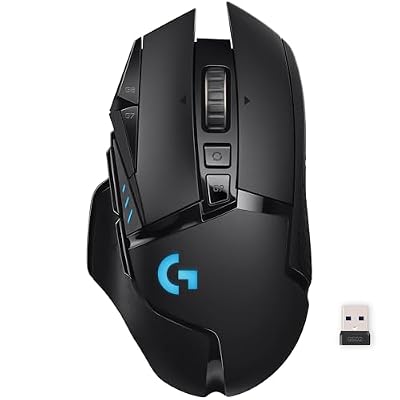
Skip this category if you play competitive shooters and need the lightest possible shell with a gaming-grade polling rate — most ergonomic models are built for all-day control, not flick shots, though the gaming-focused pick below is an exception. Skip it if your discomfort comes from desk height or keyboard position; a new mouse cannot correct a workstation that forces you to reach upward or outward. Skip the vertical shape if you tried one for a full two weeks and accuracy never recovered — a sculpted shell or a trackball is the more realistic next step. And skip right-hand-only models entirely if you mouse with your left hand; forcing the wrong hand costs more comfort than the shape gains.
More Picks Worth Considering
Logitech MX Vertical

The main list gives its vertical slot to the smaller Lift, which leaves medium-to-large hands underserved. The MX Vertical uses the same maker-stated 57-degree handshake angle in a taller, wider shell, adding a 4,000 DPI sensor, a thumb-side cursor-speed switch, Bluetooth plus a USB receiver, pairing for up to three devices, and a rechargeable battery rated by Logitech for up to four months per charge. It fits right-handers whose palm-to-fingertip measurement runs past roughly 18 cm and who want a vertical shape without giving up multi-device switching. Skip it if your hands are small, because the tall shell pushes smaller hands into a claw grip, if you are left-handed, since no mirrored version exists, or if you prefer replaceable batteries over charging.
Kensington Expert Mouse TB800 EQ Wireless Trackball
The Ergo M575S in the main list puts the ball under your thumb; this Kensington moves it under your fingers. Its large 55 mm ball is ringed by an adjustable scroll ring and two side scrolls, the shell is ambidextrous, and it connects to up to four devices across two Bluetooth channels, a 2.4 GHz receiver, and a wired USB-C link, with a rechargeable battery rated for months of use. It fits average-to-large hands, left-handers shut out by most ergonomic shapes, and anyone whose desk or shoulder argues for keeping the arm completely still. Skip it if your desk is small — the footprint is wide and the unit weighs about a pound — or if you need a mouse that travels in a laptop bag.
Keychron M5 8K Wireless Vertical Mouse
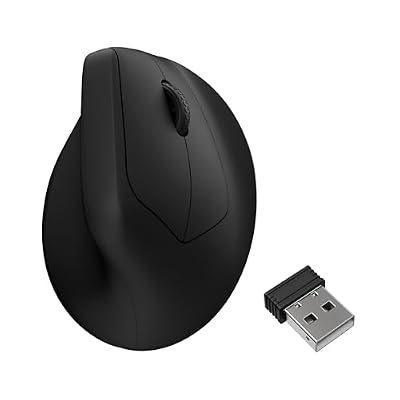
Most vertical mice cap out at office-grade sensors; the M5 is the exception built for speed. Its 47-degree tilt is shallower than a full handshake shape, and inside sits a PixArt 3950 sensor rated up to 30,000 DPI with polling up to 8,000 Hz over the 2.4 GHz receiver or a wired link, plus Bluetooth for a second machine and a thumb wheel beside the main wheel. At roughly 95 grams it suits medium right hands that want one mouse for work and fast-paced games. Skip it if you want the steeper angle of a true vertical, if you are left-handed, or if you cannot confirm which sensor variant a given listing carries — Keychron sells more than one M5 configuration, and the specifications differ between them.
More Buyer Questions
How long does the adjustment period last?
Plan on several days before a vertical mouse feels natural and longer for a trackball, with text selection and fine dragging usually the last skills to settle. If accuracy has not recovered after about two weeks of daily use, the shape or the size is wrong for you.
Are there real options for left-handed users?
Yes, but the field is narrow. The Lift is sold in a dedicated left-handed version, and ambidextrous finger trackballs such as the Kensington above work on either side. Most sculpted and vertical flagships, including the MX Master 4 and MX Vertical, are right-hand only.
Can an ergonomic mouse keep up with games?
For strategy, simulation, and casual play, almost any pick here is fine. For fast shooters, look for a low-latency 2.4 GHz connection and a high polling rate; Bluetooth-first office models and heavy sculpted shells are the weakest fit for that job.
Rechargeable or replaceable batteries — which is better?
Neither wins outright. Replaceable AA models run far longer between swaps and never need a cable, while rechargeable models pair that convenience with multi-device features and one less consumable. Decide by whether your desk already lives on charging cables or in a drawer of spare batteries.
Does a trackball need a special surface?
No. A trackball never moves, so desk material is irrelevant — which is exactly why trackballs suit glass desks, crowded workstations, and couch or lap use where a conventional mouse has nowhere to travel.
Frequently Asked Questions
How much should I spend on a ergonomic wireless mouse in 2026?
Match your outlay to your true workload — the data shows most shoppers do best in the mid-tier, where the benchmark leaders cluster. Stretching to premium only earns it when your usage reliably taxes the extra capability.
When is the best time of year to buy a ergonomic wireless mouse?
History in our price tracking says late spring and early autumn deliver the sharpest cuts away from the marquee sales. If your timing allows, watch the figure for a fortnight before buying.
Is it worth waiting for the next generation?
Only when your current unit still measures up. Holding for the next-gen release typically costs three more months of quantifiably worse performance plus a launch premium. The middle of the cycle is where the evidence points.
What do I do if my ergonomic wireless mouse arrives faulty?
Document the defect with stills or video, reach the seller while the return window is open, and ask for an RMA. Trustworthy outfits close it inside a week. Hang onto the box until the unit clears your own bench checks.
Final Take
Getting the right ergonomic wireless mouse in 2026 is a matter of evidence over bragging rights. Move through the five criteria, run the six-step check, and the measurements usually point to the right model. Skip the work and the regret tax lands — and our data shows it nearly always outruns the price gap between the right and wrong pick.
For shortlists of specific picks worth considering, browse our latest reviews and round-ups — each one applies the same framework you just read.